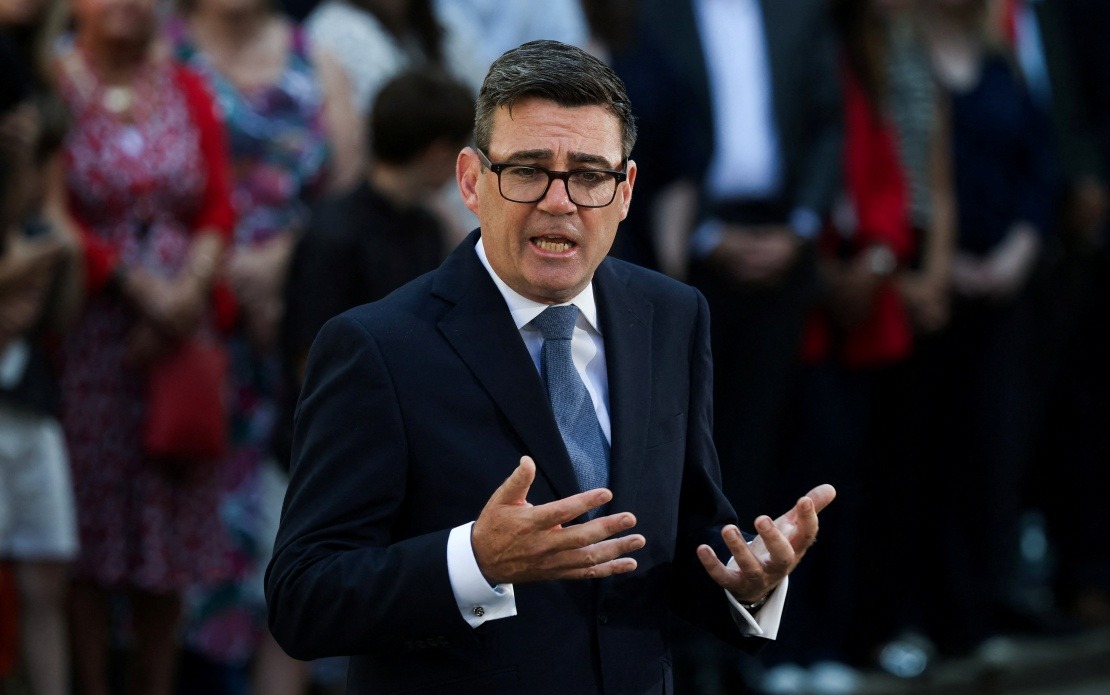
Prime Minister Datuk Seri Anwar Ibrahim has formally congratulated Andy Burnham following his appointment as the United Kingdom's seventh Prime Minister in a decade, signalling Malaysia's readiness to forge a closer partnership with Britain's new Labour administration. In remarks posted to his social media platform, Anwar expressed genuine enthusiasm about collaborating with Burnham to advance shared interests and modernise the two nations' strategic relationship, which remains rooted in historical ties stretching back decades.
The Malaysian Premier outlined an ambitious agenda for deepening Malaysia-UK engagement, prioritising the completion of a Digital Trade Agreement that would facilitate commerce in an increasingly digital economy. Beyond trade mechanics, Anwar emphasised the importance of joint ventures in artificial intelligence and digitalisation—sectors where both nations recognise significant growth potential and where complementary expertise could yield mutual benefits. Clean energy initiatives and defence cooperation were equally prominent in his vision, reflecting broader regional security concerns and the urgent global imperative to transition away from carbon-intensive economic models.
In a notably forthright observation, Anwar praised Burnham's willingness to acknowledge Britain's initial inadequate response to the Gaza crisis, framing this admission as demonstrating the moral clarity he believes should guide Western policy responses to humanitarian emergencies. This endorsement carries particular significance given Malaysia's historically vocal positions on Middle Eastern conflicts and its expectation that developed nations exercise principled leadership on global justice issues. Anwar's commendation suggested that Burnham's openness to reconsidering Britain's stance aligned with values Malaysia has consistently championed in international forums.
Anwar's characterisation of Burnham's renewed calls for intensified pressure on the Israeli regime reflected Malaysia's own diplomatic posture and underscored the degree to which Palestinian rights remain central to Malaysian foreign policy calculations. His statement that "many in the West have struggled to show the moral clarity this crisis demands" served as implicit criticism of other Western governments while positioning Malaysia as a nation unambiguous in its ethical commitments. This framing suggested that Malaysia views the new British government as potentially more receptive to perspectives prevalent in the Global South.
The timing of Anwar's outreach assumes additional significance given that 2025 will commemorate the 70th anniversary of Malaysia-UK diplomatic relations—a milestone Anwar explicitly identified as an opportune moment for both governments to reaffirm their partnership and chart renewed directions together. This historical marker provides a natural occasion for elevating bilateral engagement, particularly given the distance that now separates contemporary Malaysia and Britain from the colonial era that initially defined their relationship. The milestone suggests both nations view their connection as sufficiently resilient and valuable to warrant strategic investment.
An often-overlooked dimension of Malaysia-UK relations concerns defence cooperation and regional security architecture. Enhanced collaboration in this domain would address Malaysian concerns about great power competition in Southeast Asia, where both traditional maritime security challenges and emerging cyber threats demand sophisticated responses. Britain's AUKUS partnerships and defence commitments in the Indo-Pacific region create natural opportunities for coordination with Malaysia, particularly regarding freedom of navigation and territorial integrity in contested waters.
Anwar also extended appreciation to departing Prime Minister Keir Starmer, acknowledging his contributions to advancing Malaysia-UK ties during his tenure in office. This courtesy reflected diplomatic protocol while also recognising continuity in bilateral relations—an important signal that Malaysia's engagement with Britain transcends individual leaders and reflects institutional commitment. The acknowledgment offered Starmer well-wishes for future endeavours, maintaining goodwill across the political transition.
Burnham's path to the premiership represents a dramatic acceleration within British politics, having assumed Labour Party leadership on Friday before receiving official appointment as Prime Minister on Monday following Starmer's formal resignation at Buckingham Palace. This rapid succession reflects the volatility increasingly characteristic of contemporary British governance, where competing factions within major parties can engineer sudden leadership transitions. For Malaysia and other nations navigating relationships with Britain, such instability underscores the importance of cultivating institutional relationships alongside personal connections with individual leaders.
The appointment of Burnham occurs amid broader recalibration of Britain's international posture following the recent election cycle. Malaysia, as a significant Southeast Asian economy and increasingly influential voice within Commonwealth frameworks, occupies an important position in Britain's regional calculus. Enhanced engagement with Malaysia signals British commitment to deepening involvement in Southeast Asia beyond traditional allies, diversifying partnerships in a region where China's economic and strategic influence has substantially expanded.
For Malaysian policymakers, the transition represents an opening to advance specific national interests through active diplomacy. The Digital Trade Agreement represents a priority area where Malaysia possesses competitive advantages, particularly regarding digital services and technology infrastructure development. Collaboration on artificial intelligence governance could position Malaysia as a thoughtful voice in global discussions about responsible AI deployment, an issue where Malaysia currently lacks sufficient profile despite possessing relevant expertise and legitimate stake in outcomes.
Defence and security cooperation carries particular urgency given regional dynamics. Enhanced Malaysia-UK military coordination could strengthen Malaysia's capacity to address both traditional and unconventional security challenges while diversifying security partnerships beyond traditional alignments. This cooperation would also demonstrate Malaysia's ability to maintain balanced relationships across major powers—a delicate diplomatic balancing act that remains essential to regional stability.
The renewed emphasis on bilateral partnership serves Malaysian interests across multiple dimensions. Economically, enhanced trade ties and technology partnerships could generate opportunities for Malaysian firms and workers. Strategically, closer alignment with Britain reinforces Malaysia's position as a bridge between Commonwealth nations and broader Southeast Asian interests. Diplomatically, Anwar's proactive engagement signals Malaysia's commitment to active rather than passive international relations, positioning the nation as an initiator rather than merely respondent in bilateral conversations.

