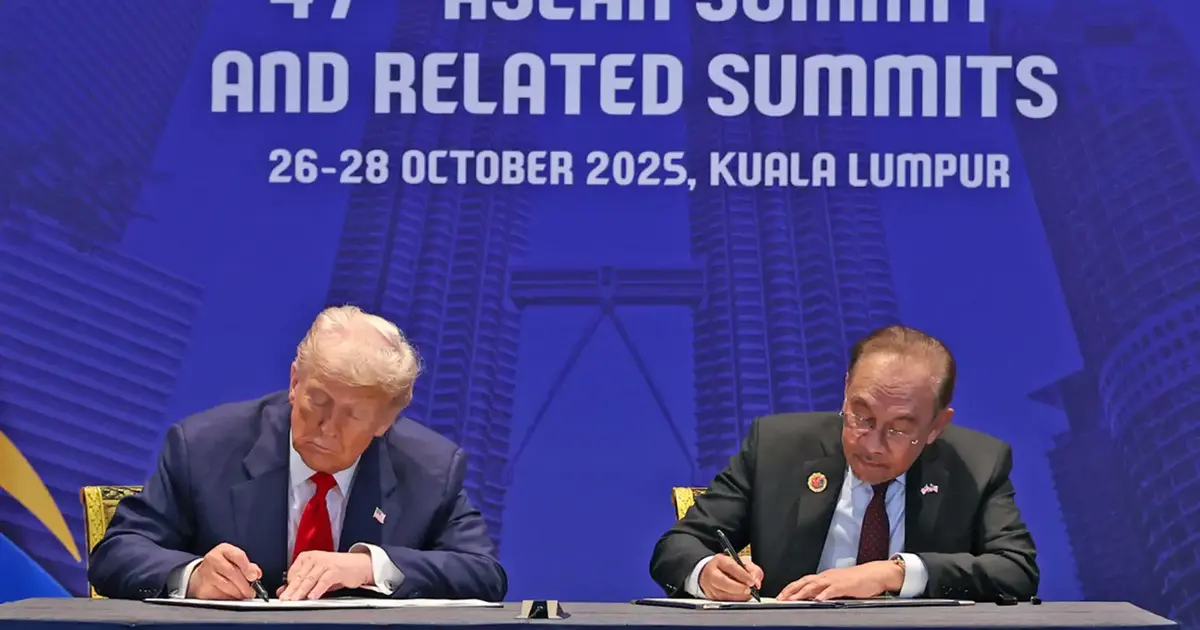
The Malaysian government under Prime Minister Anwar Ibrahim has moved aggressively to terminate legal proceedings initiated by opposition parliamentarians who are questioning the validity of a reciprocal trade agreement with the United States. By filing an application to strike out the case, the administration is attempting to remove the challenge at the procedural stage, preventing the matter from advancing to substantive hearings where the trade deal's constitutionality would be fully examined.
The opposition MPs' legal challenge represents a significant escalation in parliamentary scrutiny of trade policy. Beyond their primary lawsuit, the legislators have simultaneously lodged a separate application with the courts seeking a referral of constitutional questions to the Federal Court. This dual-pronged strategy suggests the MPs believe the Malaysia-US trade arrangement may contravene constitutional safeguards or exceed executive authority in ways that require the nation's highest judicial body to clarify the law.
The reciprocal trade agreement between Malaysia and the United States carries substantial implications for the nation's economic relationship with its largest security ally and a crucial trading partner. Such bilateral arrangements typically involve tariff reductions, market access commitments, and regulatory harmonisation across multiple sectors. For Malaysia, a trade agreement with Washington has traditionally been viewed as economically beneficial, opening American markets to Malaysian exports while granting Malaysian consumers access to competitive American goods and services.
However, opposition MPs appear concerned that the government may have exceeded its constitutional powers in negotiating or ratifying this arrangement without adequate parliamentary consultation or approval. In many Westminster-derived systems such as Malaysia's, trade agreements of significant scope may require legislative action or at minimum parliamentary oversight. The constitutional questions being raised likely centre on whether the Prime Minister and his Cabinet possess unilateral authority to enter such binding international commitments, or whether Parliament must formally approve the terms.
The government's decision to seek dismissal on procedural grounds rather than engage with the substantive arguments reflects a common litigation strategy. By arguing that the case lacks proper standing, contains fatal procedural defects, or should never have been filed, the administration avoids having to defend the trade agreement's merits in open court. However, this approach risks amplifying perceptions that the government fears judicial scrutiny of its trade policy decision-making process.
The Federal Court referral application indicates the opposition believes the questions at stake transcend ordinary commercial or administrative law matters. Constitutional referrals are typically reserved for issues of fundamental importance regarding the distribution of governmental powers, the protection of citizens' rights, or the interpretation of constitutional text. The fact that MPs consider this trade deal significant enough to warrant Federal Court involvement suggests deeper concerns about the balance between executive prerogative and parliamentary sovereignty in Malaysia's constitutional framework.
From a regional perspective, this legal challenge reflects broader Southeast Asian concerns about trade policy transparency and democratic accountability. As nations throughout the region negotiate increasingly complex agreements with major powers, questions about appropriate parliamentary involvement have become more pressing. Malaysia's situation may influence how other ASEAN members approach trade negotiations and the degree of legislative oversight they impose on their executives.
The timing of this dispute is noteworthy given the current political context in Malaysia. The Prime Minister has sought to stabilise his government and maintain legislative coalitions necessary for passage of economic policies. An ongoing trade deal dispute, particularly one headed to constitutional court, could complicate his political position and distract from the administration's economic agenda. The application to strike out may reflect urgency to resolve the legal challenge before it gains further traction or media attention.
The opposition MPs' simultaneous pursuit of constitutional questions demonstrates they anticipate the government's procedural challenge. By establishing a parallel track through the Federal Court, they ensure that even if the primary case is dismissed on technical grounds, the underlying constitutional issues may still receive judicial attention. This two-track approach provides backup momentum if one avenue closes.
The broader stakes extend beyond this single trade agreement. How Malaysian courts ultimately handle this case will establish precedent for future challenges to executive trade policy decisions. If the government successfully blocks judicial review through procedural means, future opposition efforts to scrutinise major trade deals will face similar obstacles. Conversely, if courts permit such challenges to proceed, Malaysian executives may face heightened constraints in negotiating international agreements without extensive parliamentary engagement.
For Malaysian businesses and workers, the resolution of this legal dispute carries practical consequences. Uncertainty about the trade agreement's validity could complicate business planning in sectors expecting preferential US market access. Companies may hesitate to make investment decisions or restructure operations around anticipated benefits until the courts clarify whether the agreement remains binding and enforceable.
The constitutional questions being raised also deserve substantive examination regardless of procedural outcomes. Malaysia's framework for trade policy decision-making merits clarity so that both government and opposition understand the proper constitutional limits on executive authority. This dispute, while contentious, may ultimately strengthen Malaysia's democratic institutions by forcing explicit articulation of how trade powers are properly distributed among the branches of government.

