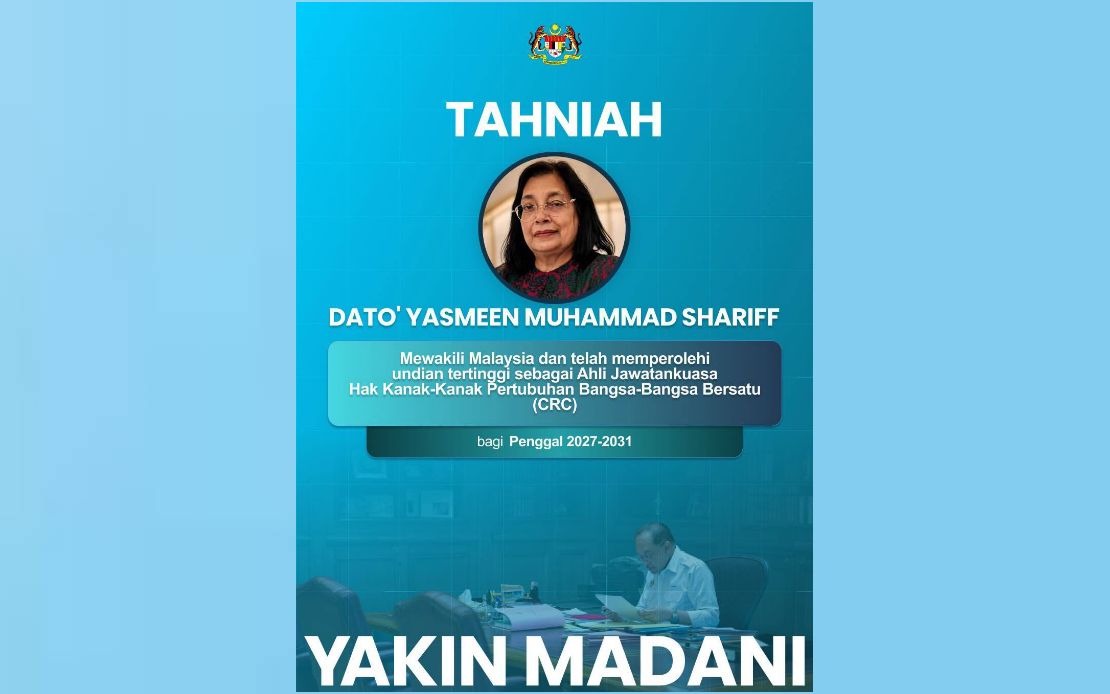
Prime Minister Datuk Seri Anwar Ibrahim has extended his congratulations to Datuk Yasmeen Muhamad Shariff following her successful election as a member of the United Nations Committee on the Rights of the Child (CRC), a position she will hold during the 2027-2031 term. The premier took to social media to acknowledge what he characterised as a significant achievement for both the individual and the Malaysian state apparatus, particularly the Ministry of Women, Family and Community Development (KPWKM), which oversaw her candidacy.
According to Anwar, Yasmeen's selection to this influential international body underscores the broader confidence that the global community has placed in Malaysia's engagement with multilateral institutions and the nation's demonstrated commitment to advancing children's rights on the world stage. This framing places the achievement within a larger narrative about Malaysia's international standing and soft power diplomacy. The premier expressed his expectation that this milestone would serve as a springboard for Malaysia to deepen its involvement in global affairs, strengthen its reputation among UN member states, and pursue even more ambitious objectives in international cooperation.
Yasmeen's election was secured through a robust electoral process, garnering 136 votes from the 189 States Parties that participated in voting at the 21st Meeting of States Parties to the Convention on the Rights of the Child. This meeting took place at UN headquarters in New York on Tuesday, representing a formal recognition of her expertise and the credibility Malaysia maintains within the UN system. The voting margin demonstrates substantial support from the international community, reflecting confidence not only in Yasmeen's qualifications but also in Malaysia's commitment to child protection standards.
This marks the second occasion on which Yasmeen has ascended to membership within the CRC committee, having previously served during the 2013-2017 term. Her re-election suggests continuity in Malaysia's engagement with this particular mechanism and signals recognition of her prior contributions to the committee's work. The fact that she has been selected twice underscores her standing among peer experts and validates the expertise she has developed through her previous tenure addressing international child rights issues.
As a committee member, Yasmeen will operate in her personal capacity as an independent expert rather than as a formal government representative. This distinction carries significance within UN terminology, as it emphasises that her decisions and votes on committee matters will be guided by her professional judgment and commitment to the committee's mandate, rather than direct instructions from the Malaysian government. Committee members typically bring diverse professional backgrounds in law, child psychology, education, and social development, and they work collaboratively to monitor state compliance with the Convention on the Rights of the Child.
The Committee on the Rights of the Child represents one of the more consequential UN treaty bodies, tasked with examining reports submitted by countries that have ratified the Convention on the Rights of the Child. The committee issues concluding observations and recommendations aimed at improving child protection practices, education systems, and social welfare frameworks within member states. Malaysia, which ratified the Convention in 1995, regularly undergoes these review cycles, making participation on the committee itself an opportunity to influence international discourse on child protection standards.
Yasmeen's appointment carries particular relevance for Southeast Asia, a region where children's rights remain an area of active policy development and implementation. Her involvement in the committee positions Malaysia as a thought leader on these issues within the region and provides a platform for advancing perspectives shaped by Asian and Malaysian experiences with child welfare, education, and protection systems. The region faces distinct challenges including child labour in certain sectors, access to education across socioeconomic divides, and protection of vulnerable children including migrants and those in informal settlements.
The KPWKM's successful stewardship of Yasmeen's candidacy reflects the ministry's enhanced profile in international child welfare discourse. The ministry, which consolidated functions related to women's affairs, family services, and community development, has positioned itself as a key player in articulating Malaysia's policy framework on these interconnected issues. This international platform provides the ministry with both visibility and opportunities to learn from global best practices that could inform domestic policy refinements.
From a diplomatic perspective, Malaysia's successful placement of a national on influential UN committees contributes to its broader standing within the multilateral system. Countries typically view such placements as validating their commitment to international norms and as opportunities to shape discussions in ways that align with national interests and values. For Malaysia, having representation on bodies addressing rights and welfare issues demonstrates engagement with the human rights agenda, an area where the country has sometimes faced international scrutiny and where proactive participation signals receptiveness to international dialogue.
The timing of this appointment, occurring in mid-2025 for a term beginning in 2027, provides a transition period during which Yasmeen can prepare for her responsibilities while continuing any existing professional commitments. Committee members typically participate in two or three annual sessions held at UN offices in Geneva, where they review state reports, engage with government delegations, and develop recommendations. The workload is considerable, requiring expertise in interpreting international law, comparative analysis of national legislation, and understanding of implementation challenges across diverse political and economic contexts.
Yasmeen's background and previous committee service position her to contribute meaningfully to discussions on issues ranging from education access and quality, protection from violence and exploitation, to the rights of children in vulnerable circumstances. Her personal capacity as an independent expert means she will engage with colleagues from other nations in frank discussions about implementation gaps and emerging challenges in child rights protection, unfiltered by diplomatic constraints that might otherwise apply.
The broader implications of this appointment extend to Malaysia's positioning within international human rights frameworks. By maintaining active participation in such committees, Malaysia signals that it views engagement with global standards and monitoring mechanisms as constructive rather than restrictive. This stance contrasts with approaches that treat international scrutiny with suspicion, instead framing participation as an opportunity to contribute expertise while also benchmarking domestic practices against international experience.
For Malaysian civil society organisations working on child welfare and protection issues, Yasmeen's placement on the committee creates potential avenues for influence, as these organisations often submit shadow reports and participate in stakeholder consultations when countries undergo UN review processes. Her understanding of the Malaysian context and international standards positions her to provide informed guidance on translating global recommendations into locally appropriate and effective policies.

