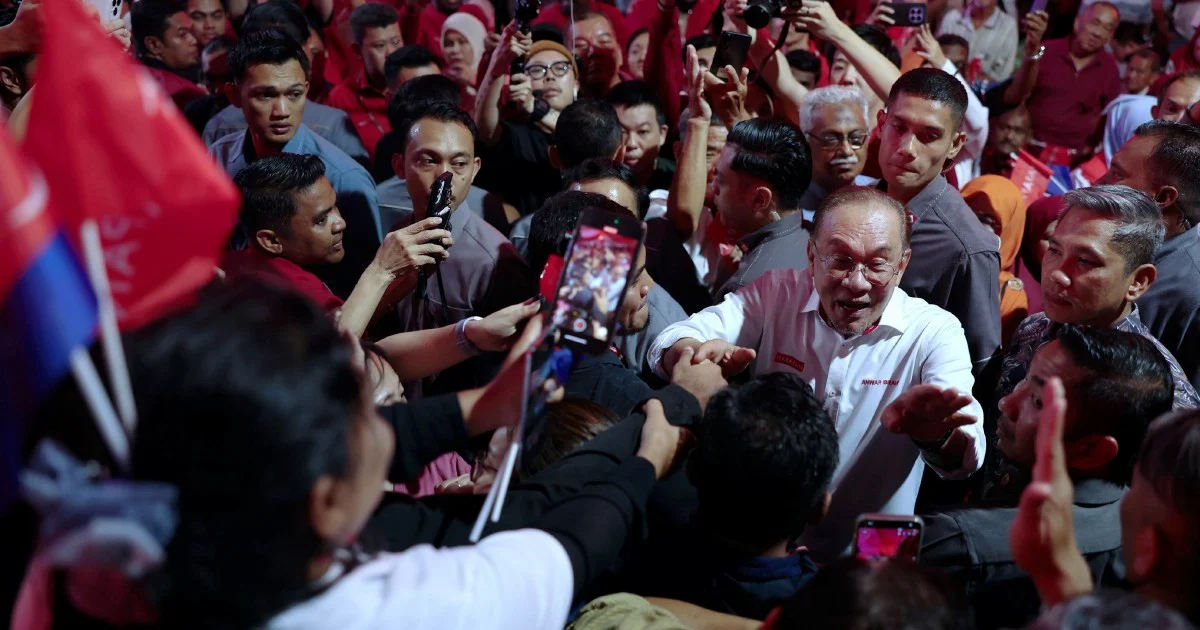
Pakatan Harapan threw down its gauntlet in one of Malaysia's most politically consequential contests, unveiling a complete slate of 56 candidates for the Johor state election on July 11. The move, announced by coalition chairman Datuk Seri Anwar Ibrahim during a gathering in Tangkak, signals the opposition's determination to mount a serious challenge in a state where electoral dynamics have undergone seismic shifts in recent years.
Johor represents far more than a routine state election in Malaysia's political landscape. As the nation's second-largest state by population and a traditional stronghold of Barisan Nasional dominance, control of Johor carries symbolic weight that extends well beyond the state's borders. The 56-seat configuration means Pakatan Harapan must secure a significant portion of constituencies to deny any single coalition an outright majority, reshaping the state's governance structure.
Anwar's direct involvement in unveiling the candidates underscores the strategic importance Pakatan Harapan attaches to this contest. As Prime Minister and party leader, his public endorsement of the full lineup signals party unity and confidence in the chosen representatives. This personal engagement also demonstrates that the coalition views Johor not as a secondary battleground but as a critical test of its political machinery and organizational capacity ahead of the next general election.
The candidate announcement timing carries tactical significance. With July 11 as the polling date, the two-month campaign window allows sufficient time for grassroots mobilization while maintaining momentum. Pakatan Harapan's decision to release all 56 names simultaneously, rather than rolling them out gradually, reflects confidence in their readiness and desire to establish narrative control early in the campaign cycle.
Johor's political trajectory has transformed markedly over the past decade. Once considered impregnable Barisan Nasional territory, the state has become increasingly competitive. The 2022 general election demonstrated substantial shifts in voter preference, particularly in urban and semi-urban areas, where Pakatan Harapan made significant inroads. These demographic and geographic patterns inform the coalition's candidate selection strategy, likely concentrating resources and high-profile candidates in battleground constituencies.
The candidate slate likely reflects careful internal negotiations among Pakatan Harapan's component parties—PKR, DAP, Amanah, and potentially smaller allies. Coalition mathematics in Johor require balancing geographic representation, demographic considerations, party strength in specific regions, and the need to field candidates with both local credibility and organizational backing. Each component party would have advocated for adequate representation while accepting the overall coalition strategy.
State elections in Malaysia serve as crucial intermediate contests between general elections, offering opportunities for parties to gauge voter sentiment and test campaign strategies in real-world conditions. For Pakatan Harapan, the Johor election provides a platform to demonstrate effective governance in states where it holds power, while also showing voters in non-PH states what an opposition government might deliver. The performance here will inevitably influence perceptions of the coalition's readiness for future national contests.
The opposition's focus on Johor reflects broader strategic calculations about Malaysia's political direction. Winning or significantly improving results in Johor would strengthen Pakatan Harapan's narrative of growing public support and institutional legitimacy. Conversely, disappointing outcomes could embolden critics questioning the coalition's durability and electoral appeal beyond its traditional support bases in urban areas and among educated voters.
Campaign dynamics in Johor will inevitably revolve around governance performance, development priorities, and contrasting visions for the state's future. Pakatan Harapan will likely emphasize anti-corruption credentials and transparency commitments, areas where it has positioned itself as distinct from Barisan Nasional. The coalition must also address voter concerns about economic growth, employment, and public services in a state where traditional manufacturing industries face structural challenges and new economic opportunities remain limited.
The announcement also occurs within a complex national political context where coalition stability remains a persistent concern. Pakatan Harapan's ability to maintain unity during the Johor campaign—particularly managing any internal disputes over candidate selection or policy direction—will be closely scrutinized by observers and rival parties seeking signs of fracture. A cohesive, disciplined campaign could strengthen the coalition's credibility, while visible tensions might undermine its messaging.
For Malaysian voters, particularly those in Johor, this election offers a meaningful opportunity to influence their state's direction independent of national dynamics. State elections in Malaysia allow voters to make granular judgments about local governance quality, development priorities, and representation without the broader considerations that dominate general elections. The candidate quality, local roots, and demonstrated commitment to constituency-level issues will ultimately determine which candidates resonate with voters.
As Pakatan Harapan enters the campaign with its full candidate lineup in place, the opposition has clearly committed to a comprehensive strategy for Johor rather than a holding operation in a presumed Barisan Nasional stronghold. Whether this confidence translates into electoral success will depend on candidate performance, coalition unity, and whether voters judge that an opposition-led state government can deliver better governance than the incumbent administration.

