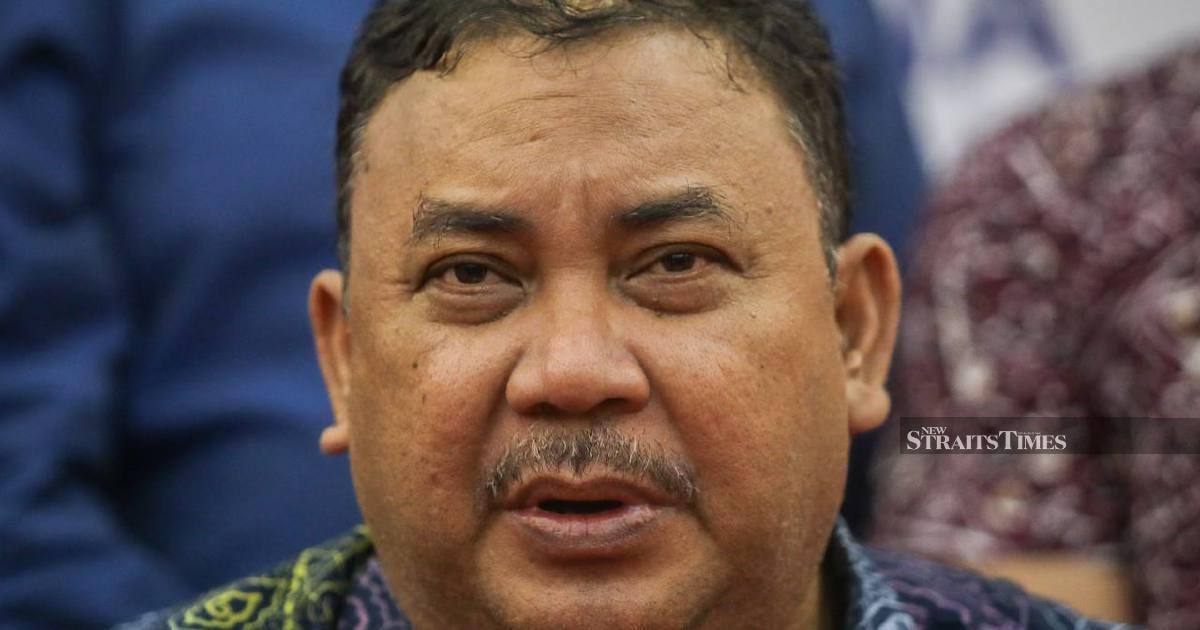
Prime Minister Datuk Seri Anwar Ibrahim has no intention of leveraging his position to advance Umno's standing while undermining his coalition partner DAP, according to his political secretary and Federal Territories PKR chief Datuk Azman Abidin. The clarification addresses mounting speculation within Malaysia's fractious political landscape about potential power dynamics shifting within the federal government, particularly as Umno and DAP navigate their complex partnership through the Pakatan Harapan coalition framework.
Azman's statement carries particular weight given his dual roles as both the prime minister's closest political confidant and leader of PKR's operations in the federal territories, positioning him at the intersection of coalition management and party politics. The denial comes amid broader concerns within DAP circles about the party's electoral prospects and its influence within a governing structure dominated numerically by Umno and supported by various Malay-based parties whose interests may not always align with the Chinese-majority DAP's policy agenda.
The question of resource allocation and political favour-seeking has become increasingly salient as the coalition government manages the competing demands of its diverse membership. Umno, which remains the largest party within the government despite its political eclipse following the 1MDB scandal, retains significant institutional power and grassroots reach. DAP, meanwhile, has positioned itself as the reform-minded contingent advocating for secular governance and transparency measures that periodically create tension with more conservative coalition members.
Zero-sum dynamics in Malaysian coalition politics historically emerge when parties perceive unequal gains in electoral positioning, ministerial portfolios, or policy implementation priorities. The specific concern about strengthening Umno at DAP's expense reflects fears that a government restructuring or policy pivot could marginalise the Democratic Action Party's influence disproportionately, particularly in states where both parties compete directly for ground-level political organisation and voter loyalty.
PKR's intermediary position between Umno and DAP gives it particular responsibility in managing coalition cohesion. As Anwar's party and the government's junior partner, PKR serves functionally as a balancing mechanism, its leader holding the prime minister's office and thereby wielding leverage to moderate demands from larger coalition members. Azman's intervention in this sensitive area suggests that either internal discussions were becoming problematic or external commentary was gaining sufficient traction to warrant formal pushback.
The political secretary's assurance needs contextualisation within recent governance trends. Over the past year, various policy decisions—from economic frameworks to administrative appointments—have sparked speculation about which coalition member was exerting greater influence. Such interpretations often reflect institutional paranoia more than deliberate strategy, yet they reveal genuine fault lines in how the government distributes resources and attention across its member parties.
For DAP specifically, the anxiety about relative weakness reflects structural disadvantages. Though the party won 40 parliamentary seats in 2022, it lacks the deep institutional infrastructure that Umno maintains through decades of governance dominance, particularly in rural and semi-rural constituencies. This gap means DAP remains susceptible to perceptions of marginalisation, even when government decisions are administratively neutral rather than strategically aimed at enhancing one party against another.
The coalition itself represents an unusual political arrangement in Malaysian terms. The partnership between PKR-Umno on one hand and DAP on the other represents a marriage of convenience rather than ideological alignment, united primarily by a shared commitment to prevent Perikatan Nasional's return to power. This negative coalition lacks the positive program that historically bound previous government coalitions together, making it vulnerable to defections and strategic repositioning.
Azman's defence of Anwar's impartiality carries implicit acknowledgment that the prime minister must actively demonstrate his commitment to protecting each coalition partner's interests. The very necessity for such clarification indicates a baseline of suspicion within the coalition about the prime minister's intentions and preferences. In this context, reassurance from a trusted aide functions as a signal not only to DAP but also to international observers and domestic commentators monitoring coalition stability.
Moving forward, the stability of Malaysia's government depends significantly on whether coalition members can credibly believe that power is being exercised in their mutual interest rather than for the aggrandisement of individual parties or leaders. Azman's statement represents an attempt to address these concerns, though whether it sufficiently allays DAP's anxieties about its long-term standing within the coalition remains uncertain. Coalition politics in Malaysia continues to operate as a high-stakes negotiation where perceptions of fairness and mutual benefit determine participants' willingness to remain invested in the overall arrangement.

