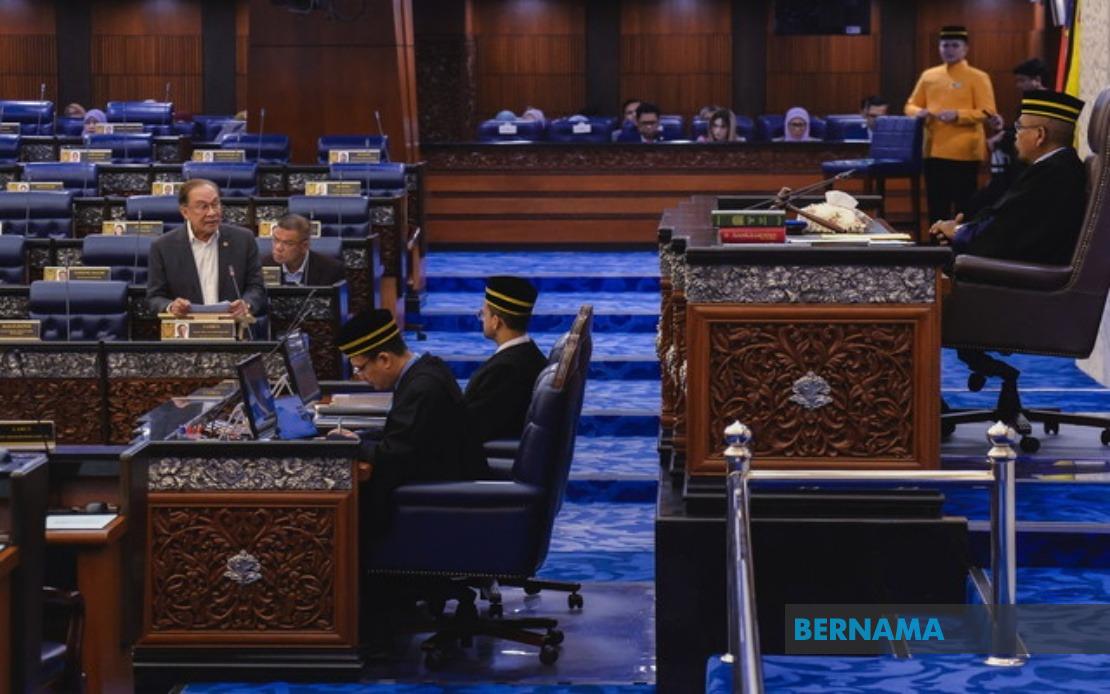
Prime Minister Datuk Seri Anwar Ibrahim has made clear that Malaysia's election laws strictly prohibit the announcement of new projects or policies while campaign activities are underway, reinforcing a principle he says remains fundamental to the country's electoral integrity. The restriction applies once nomination day has been declared and remains in force throughout the campaign period, he told Parliament during Minister's Question Time on June 30. This stance reflects the government's commitment to maintaining what it considers fair electoral competition, preventing the incumbency advantage that can arise when state or federal authorities use public platforms to unveil fresh initiatives during the heat of campaign season.
The legal foundation for this prohibition lies in Section 24B of the Election Offences Act 1954, which Anwar cited in his response. The provision exists to create a level playing field where voters are not swayed by announcements of new state-funded initiatives released during the campaign period itself. The restriction applies across all levels of government machinery, whether city councils, state governments, or federal authorities. Anwar emphasised that no entity within the government structure may circumvent this rule by announcing new projects or making fresh policy commitments targeting the state holding elections, once the nomination process has commenced.
Anwar's clarification came in response to Datuk Seri Dr Shahidan Kassim, the Perikatan Nasional MP for Arau, who sought confirmation that these restrictions would remain in effect ahead of the Johor, Melaka and Negeri Sembilan state elections. Dr Shahidan also asked how the government planned to enforce compliance with these rules. The timing of his question reflects ongoing scrutiny in Malaysian politics over whether authorities consistently apply electoral guidelines, particularly in states where the ruling coalition holds power. Such concerns are not unique to Malaysia; they reflect broader regional anxieties about using state resources during elections, especially in competitive multiparty democracies.
However, Anwar's position includes an important caveat that clarifies government operations without compromising electoral integrity. Projects or policies that have already been formally approved and received funding allocation under a previous federal budget may still be announced during campaign periods without violating election law. This distinction is crucial because it prevents the government from being paralysed administratively during elections. Development initiatives that have completed the budgetary approval process can proceed with their public announcements without triggering legal violations. The distinction between previously allocated projects and freshly announced ones thus creates a practical boundary that balances electoral fairness with the need for government to function continuously.
The implications of this framework extend beyond the mechanics of three state elections. Malaysia's approach reflects the tension inherent in managing elections in a federation where state and federal governments may not always align politically. The ruling coalition's federal government faces ongoing checks from an opposition that now holds power in several states. A strict ban on new announcements gives the opposition parties and independent candidates a measure of protection against what could otherwise become a potent campaign tool in states where the federal authorities maintain significant influence. Yet the allowance for previously budgeted projects prevents this principle from becoming unwieldy in practice.
For voters in Johor, Melaka and Negeri Sembilan, understanding these rules matters in assessing campaign promises. Announcements made after nomination day about new allocations, new infrastructure initiatives, or new policy commitments technically breach electoral law and should be evaluated with caution. Conversely, announcements about previously approved projects represent legitimate government operations continuing during the election period. This distinction should help voters distinguish between lawful government functioning and potentially improper use of state machinery for electoral advantage.
The broader regional context is relevant as well. Several Southeast Asian democracies grapple with similar issues during elections. Thailand's stringent electoral rules, Indonesia's detailed regulations on government announcements, and the Philippines' complex campaign finance frameworks all attempt to prevent incumbent advantage through state resources. Malaysia's approach under the Election Offences Act places it within a regional pattern of trying to regulate such conduct, though implementation and enforcement remain matters of ongoing public discussion.
Enforcement mechanisms remain somewhat opaque in the Prime Minister's response. Anwar did not elaborate on precisely how compliance would be monitored or what penalties would apply to violations. This gap in specificity reflects a broader challenge in Malaysian electoral administration: the Election Commission operates with significant technical capacity, but questions about its independence and enforcement consistency persist, particularly when federal and state governments align. The opposition parties have consistently called for more transparent enforcement procedures and perhaps stronger penalties for violations.
The Johor, Melaka and Negeri Sembilan state elections represent significant political contests, with substantial implications for both state and national politics. Johor particularly carries weight as one of the country's most populous and economically significant states. Any perception that election rules were applied unevenly in these contests could shape political trust and the ruling coalition's legitimacy in these regions. Anwar's explicit restatement of these principles appears designed to project commitment to fair process, even as questions about implementation persist among opposition parties and electoral observers.

