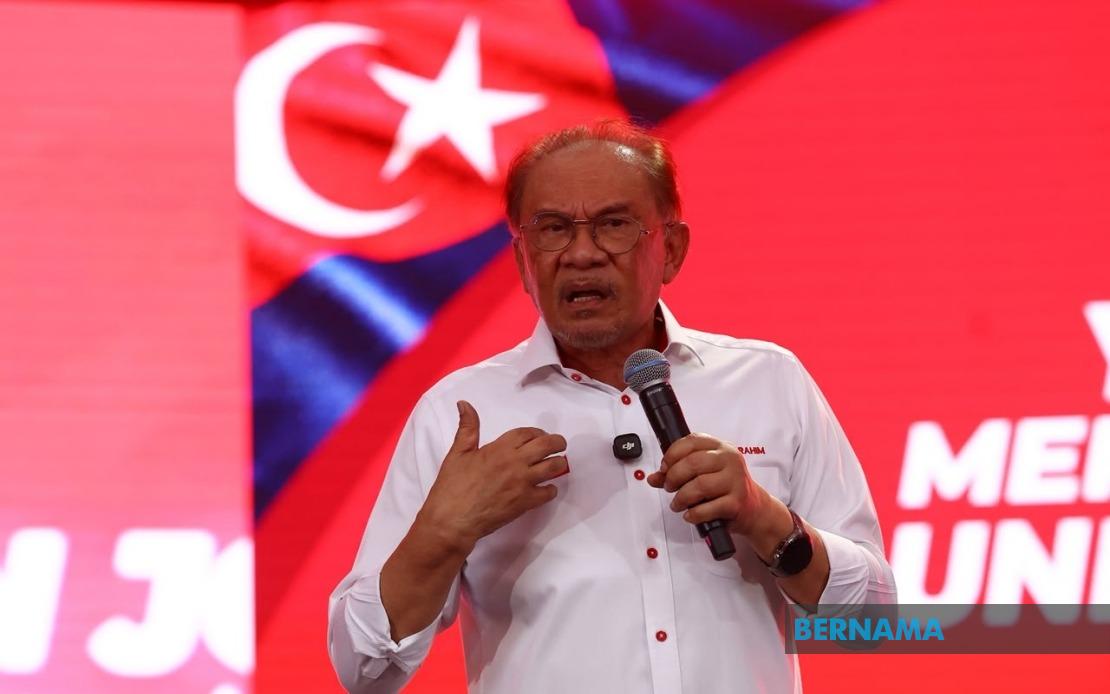
Prime Minister Datuk Seri Anwar Ibrahim has firmly rejected circulating claims on social media suggesting he had acquired a luxury BMW vehicle for his personal use, describing the allegations as baseless during a campaign event in Johor. Speaking at the 'Yok! Meriahkan Johor! Undi Harapan' programme in Senggarang on July 9, Anwar emphasised that the vehicle in question was not a recent purchase but rather an existing government asset, and questioned why such misinformation was being propagated.
The denial comes amid persistent online speculation about the ownership and provenance of vehicles used by the Prime Minister's office, reflecting broader public concern about the stewardship of state resources. Anwar's forceful pushback, which included a direct challenge to those spreading what he termed falsehoods, underscores the sensitivity surrounding executive perquisites in Malaysia's current political environment, where accountability and fiscal responsibility have become central themes in public discourse.
In clarifying the status of his current vehicle, Anwar stated that the Mercedes-Benz he utilises was bestowed upon him by His Majesty Sultan Ibrahim, King of Malaysia, as a gift rather than a personal acquisition. Crucially, he emphasised that ownership of the vehicle remains vested in the Prime Minister's Department rather than registered in his personal name, a distinction he highlighted as evidence of his commitment to proper governance and transparency in handling state assets.
This clarification carries particular weight given the historical context of Malaysian politics, where questions about the personal enrichment of senior officials have periodically surfaced during electoral campaigns and periods of political transition. By registering the royal gift under institutional rather than personal ownership, Anwar sought to demonstrate adherence to standards of separation between official assets and private property, a principle increasingly scrutinised by the Malaysian electorate.
The Prime Minister's Department and the Ceremonial and International Conference Secretariat Division (BIUPA) formally intervened on Monday with an official statement characterising the BMW as an existing government asset rather than a newly acquired official vehicle. This institutional confirmation provided official backing to Anwar's personal denial, establishing that the vehicle's presence in the Prime Minister's fleet predated recent controversy and reflected longstanding government logistics arrangements rather than recent acquisitive decisions.
The statement specifically identified the BMW as falling under BIUPA's administrative management and designated for official government logistics operations. This framing repositions the vehicle within routine administrative infrastructure rather than as an item of personal privilege, attempting to shift the narrative from questions of personal enrichment to matters of ordinary fleet management and operational necessity.
Anwar's comments occurred during active campaigning for the 16th Johor state election, where Pakatan Harapan is contesting all 56 state seats. The timing of both the allegations and Anwar's rebuttal within the campaign cycle suggests that vehicle ownership and personal wealth have become electoral pressure points, with opposition parties or activists weaponising questions of executive lifestyle to undermine government credibility among voters concerned about economic inequality and the perceived privileges of political elites.
The Johor election represents a significant test of Pakatan Harapan's political fortunes in a state that has been a traditional stronghold of the Barisan Nasional coalition. By addressing these claims directly during campaign appearances, Anwar sought to neutralise a potentially damaging narrative before it could consolidate into a broader perception of hypocrisy or double standards, particularly given his public emphasis on supporting lower-income Malaysians and reducing wealth disparities.
Senior party officials including Pakatan Harapan communications director Datuk Fahmi Fadzil, who also holds the portfolio of Communications Minister, were present at the Senggarang event alongside PH's state election candidates. Their presence alongside Anwar signalled unified party messaging and attempted to frame the vehicle controversy as a minor distraction rather than a substantive governance issue warranting serious internal party discussion.
The candidates contesting in the Senggarang, Semerah and Penggaram seats—Onn Abu Bakar, Mohd Khuzzan Abu Bakar and Felicia Poh Rui Ling respectively—were positioned as beneficiaries of Anwar's clarification, allowing them to campaign without association with controversies surrounding the Prime Minister's personal conduct or asset management. This staging reflected sophisticated campaign strategy aimed at compartmentalising leadership narratives from grassroots messaging.
The broader context reveals how vehicle acquisition and usage by Malaysia's highest-ranking officials has evolved into a political touchstone, reflecting deeper anxieties about whether political leadership genuinely prioritises serving ordinary citizens or has become detached from their economic experiences. The specificity of BMW allegations—luxury imports represent obvious symbols of wealth disparity in a country with persistent income inequality—amplifies the reputational damage such claims can inflict, even when factually questionable.
Polling for the Johor state election was scheduled for Saturday, with results anticipated to shape perceptions of Pakatan Harapan's electoral momentum heading into potential federal-level contests. How effectively Anwar's rebuttal neutralised the vehicle controversy among Johor voters would likely influence subsequent campaign dynamics and opposition messaging strategies across the country.
The incident highlights the intensified scrutiny applied to executive expenditures in contemporary Malaysian politics, where social media has democratised information distribution while simultaneously enabling rapid propagation of unverified claims. Officials must now contend with a political environment where even routine administrative arrangements risk becoming electoral liabilities unless proactively explained and contextualised through both official statements and public appearances.

