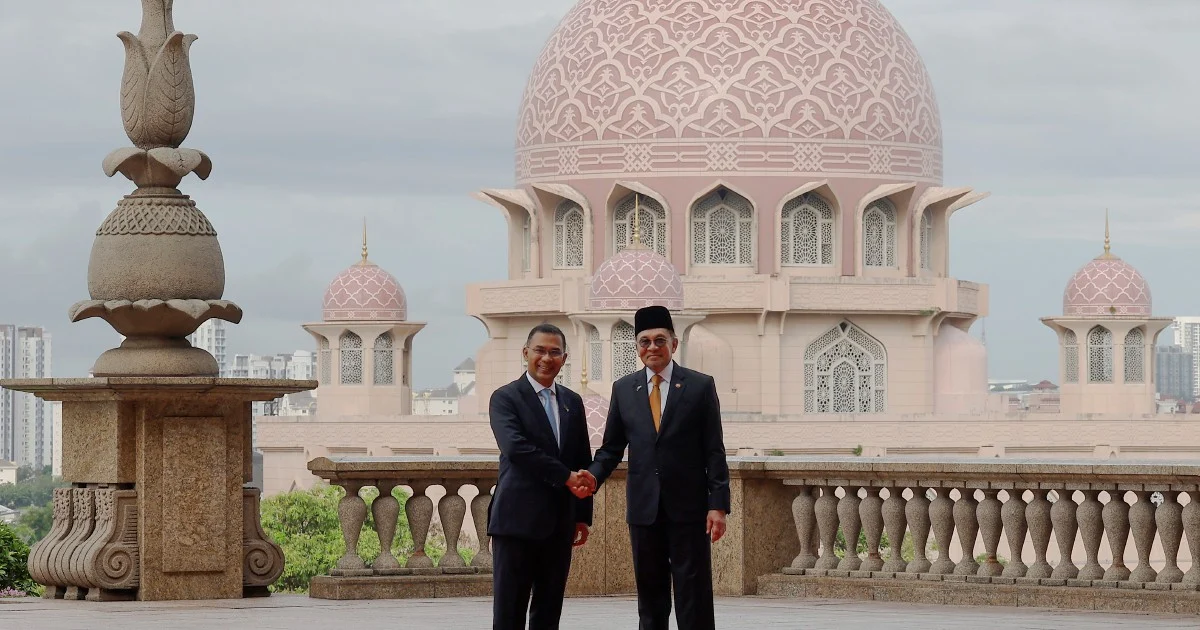
Malaysian Prime Minister Anwar Ibrahim extended a formal welcome to Bangladesh Prime Minister Tarique Rahman at the Perdana Putra Complex in Putrajaya today, marking the beginning of a significant bilateral engagement between the two nations. The visit, scheduled for two days, represents an important diplomatic moment for both Southeast Asian and South Asian relations, with Bangladesh seeking to strengthen ties across the region amid shifting geopolitical alignments. Rahman's arrival in Malaysia's federal capital underscores the growing importance of Bangladesh as a development partner and voice within the broader Indian Ocean and Asian political landscape.
The official reception at Perdana Putra, Malaysia's principal administrative headquarters, signals the high-level nature of this engagement. Such ceremonial welcomes are reserved for state visits and official tours of significant diplomatic consequence, indicating that both governments view this meeting as substantive rather than routine. The choice of venue—the symbolic centre of Malaysian governance—emphasises the seniority and formality of the discussions expected to take place during Rahman's stay. The timing of the visit also carries weight, arriving at a moment when regional nations are reassessing partnerships and exploring economic cooperation frameworks beyond traditional bilateral channels.
For Malaysia, hosting the Bangladeshi prime minister provides an opportunity to engage with a nation of over 170 million people experiencing rapid economic transformation and urbanisation. Bangladesh's strategic location along major maritime trade routes makes it a pivotal actor in regional stability and commerce. The country's textile and manufacturing sectors, along with its growing middle class, present both trade opportunities and avenues for investment partnerships. Malaysian businesses and investors have increasingly turned attention to Bangladesh as alternatives to more saturated markets, and diplomatic visits of this calibre often pave the way for enhanced economic cooperation agreements.
The broader context of this visit involves Bangladesh's complex regional positioning. As a nation navigating relationships with multiple regional powers while managing internal development challenges, Bangladesh benefits from cultivating partnerships with established Southeast Asian economies like Malaysia. Such engagements help diversify Bangladesh's diplomatic portfolio and create additional leverage in dealing with larger neighbours. For Malaysia, reciprocal engagement strengthens its standing as a responsible regional actor and maintains its relevance as an economic and political bridge between South Asia and Southeast Asia.
Bilateral relations between Malaysia and Bangladesh have historically been cordial but relatively subdued compared to interactions with other regional partners. This visit offers both nations a chance to elevate their relationship through concrete initiatives. Areas of potential collaboration include infrastructure development, where Malaysian expertise in urban planning and engineering could benefit Bangladesh's rapid growth; educational exchanges, which have traditionally strengthened diplomatic ties in the region; and sectoral partnerships in finance and technology. Joint ventures in manufacturing, particularly in industries where both nations have complementary advantages, represent a natural avenue for deepening economic interdependence.
From Bangladesh's perspective, engaging with Malaysia serves multiple strategic objectives. The country seeks to position itself as a crucial player in regional trade frameworks and regional security arrangements. By strengthening ties with established Southeast Asian nations, Bangladesh reinforces its own diplomatic influence and access to regional forums and organisations. Additionally, Bangladesh can benefit from Malaysia's experience in managing religious and ethnic diversity, an issue of considerable importance given its own complex demographic composition and historical experiences.
The two-day format of Rahman's visit suggests a comprehensive agenda touching multiple policy domains. Such visits typically include formal state dinners, bilateral talks involving multiple ministerial portfolios, business roundtable discussions, and possibly visits to development projects or cultural sites. The schedule allows sufficient time for detailed discussions on trade agreements, defence cooperation, people-to-people exchanges, and regional issues of mutual concern. Both nations face challenges related to maritime security, terrorism, climate change, and regional development, providing natural talking points for substantive dialogue.
Malaysia's reception of the Bangladeshi PM also reflects broader regional dynamics in which smaller and medium powers seek to maintain balancing relationships. By hosting significant delegations from both South Asian and Southeast Asian nations, Malaysia positions itself as a neutral meeting ground and a country valued by multiple diplomatic constituencies. This approach, refined over decades of Malaysian foreign policy, enhances the country's soft power and diplomatic influence far beyond what its population or military might would suggest.
The visit arrives at a time when Southeast Asian nations are collectively reassessing their approach to regional engagement and integration. Bangladesh, though geographically located in South Asia, has increasingly sought deeper integration with Southeast Asia through participation in forums, economic groupings, and bilateral partnerships. Malaysia, as a major economy and influential voice within ASEAN, plays a role in facilitating such integration and determining the pace at which South Asian nations gain access to regional mechanisms and partnerships. This visit may signal movement toward expanding Bangladesh's role within Southeast Asian economic and diplomatic circles.
Looking forward, the outcomes of Rahman's visit will likely be measured in terms of concrete deliverables—whether these manifest as trade agreements, cultural exchanges, investment commitments, or enhanced political dialogue. The presence of the Bangladeshi PM in Putrajaya, accorded full ceremonial honours, represents a statement by Malaysia that Bangladesh is a valued partner worthy of top-level diplomatic engagement. For observers of regional politics, this visit serves as a barometer of Malaysia's approach to strengthening relationships beyond its immediate ASEAN circle and toward building a more inclusive regional architecture that accommodates emerging voices from neighbouring South Asia.

