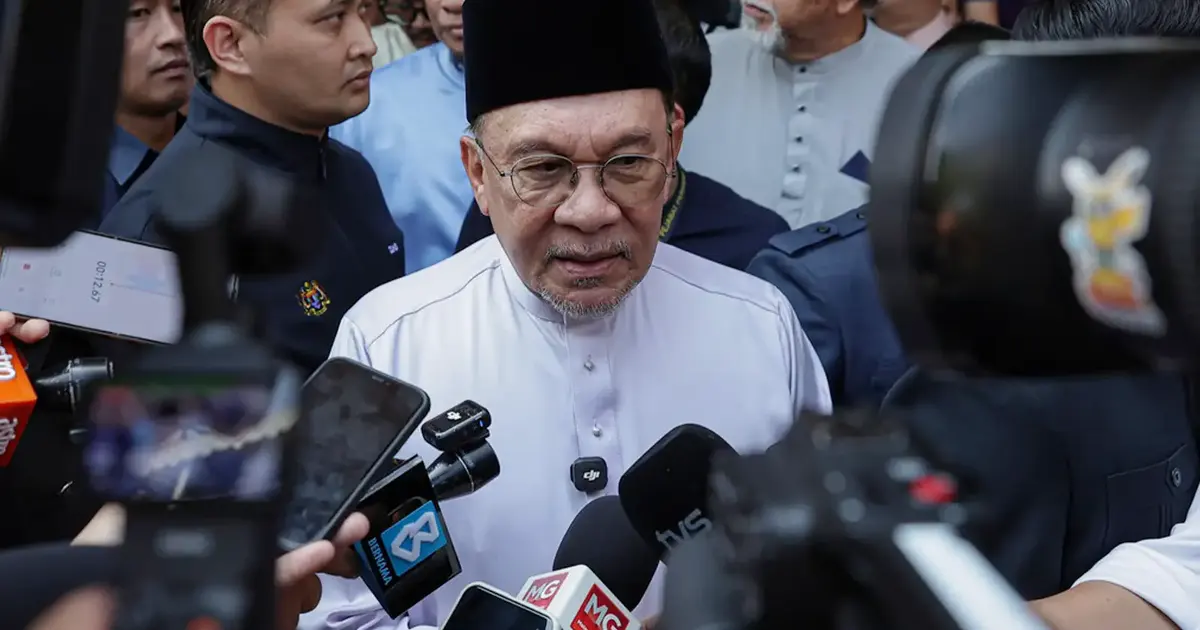
Prime Minister Anwar Ibrahim has used the government's leading position in the latest Merdeka Center public approval survey as an opportunity to emphasise continued dedication rather than political satisfaction, warning that strong polling figures must drive administrators to work harder for the Malaysian people.
The Merdeka Center survey, a respected independent barometer of public sentiment conducted among urban and suburban voters, has shown the administration in a favourable light. Rather than interpreting this outcome as validation for existing policies, Anwar has framed the results as both encouraging and cautionary, suggesting that positive ratings come with corresponding responsibility to deliver tangible improvements in citizens' lives.
This approach reflects broader trends in Malaysian politics where prime ministers increasingly feel pressure to demonstrate ongoing competence and responsiveness. Anwar's commentary indicates awareness that public approval in Malaysia remains volatile and dependent on concrete outcomes—whether inflation control, employment opportunities, or infrastructure development—rather than abstract political achievement. The statement also suggests the administration recognises the gap between survey approval and sustained electoral support.
The timing of Anwar's remarks carries particular significance given Malaysia's ongoing economic adjustments. The nation continues navigating post-pandemic recovery, managing inflationary pressures that have affected household budgets, and addressing structural economic challenges. Public sentiment inevitably reflects these material circumstances, and surveys measuring approval typically fluctuate alongside economic indicators. By emphasising that strong numbers represent a mandate for further effort rather than achieved success, Anwar positions his government as actively engaged in unfinished work.
Merdeka Center surveys have historically provided insight into how different demographic and geographic segments perceive government performance. Urban and suburban respondents—the survey's primary focus—represent increasingly influential constituencies in Malaysian politics, particularly in key states. Their assessment carries weight in shaping broader public discourse and informing media narratives about government effectiveness. An approval lead in this category suggests the administration has maintained credibility among economically active, politically engaged Malaysians.
Anwar's cautionary stance also addresses potential criticism that the government might rest on its laurels. Opposition figures and political analysts frequently scrutinise incumbent administrations for losing momentum or failing to capitalise on public goodwill. By preemptively stating that approval ratings should inspire rather than satisfy, the Prime Minister inoculates against accusations of complacency while simultaneously managing expectations—signalling that delivering on public expectations remains a challenging, ongoing endeavour rather than an accomplished goal.
The government's policy agenda encompasses multiple demanding areas simultaneously: economic restructuring, addressing youth employment concerns, managing healthcare and education provision, and navigating complex regional relationships. Each domain requires sustained political will and administrative resources. Anwar's emphasis on working harder implicitly acknowledges these competing demands and suggests priority given to translating public approval into measurable policy outcomes. This framing appeals to voters who judge governments on delivery rather than reputation.
Within the Malaysian political context, where coalition governments depend on multiple parties maintaining internal unity and public confidence, survey results carry operational significance beyond symbolic meaning. Strong approval ratings provide political cover for potentially unpopular but necessary reforms, facilitate parliamentary negotiations, and strengthen the administration's hand in managing coalition dynamics. Anwar's insistence that such ratings demand greater effort rather than justify reduced exertion reflects sophisticated understanding of how political capital functions in Malaysian governance.
The Merdeka Center survey methodology and respondent base mean its findings resonate particularly among educated, urban voters who follow political news regularly. These groups often hold disproportionate influence over public discourse through media engagement, professional networks, and social media presence. Their approval, as captured in surveys, frequently translates into broader narrative momentum. Anwar's engagement with these results demonstrates awareness that urban middle-class sentiment matters considerably for political sustainability.
Looking forward, the government's trajectory will likely be measured against whether approval ratings translate into electoral performance and policy achievements. By establishing that strong survey results represent opportunity rather than destination, Anwar sets a framework for accountability that extends beyond polling. This approach also potentially manages party expectations within his coalition, emphasising that maintaining public approval requires continuous delivery rather than periodic grand gestures.
The Prime Minister's comments reflect broader maturation in how Malaysian politics engages with public opinion research. Rather than celebrating approval ratings as vindication, sophisticated political leaders increasingly treat them as diagnostic tools indicating which policies resonate and where gaps remain. Anwar's response suggests he views the Merdeka Center survey as feedback prompting strategic recalibration rather than confirmation of success, a perspective that resonates with voters seeking active, responsive governance focused on concrete improvement in their daily circumstances.

