Prime Minister Datuk Seri Anwar Ibrahim has achieved a significant breakthrough in Malaysia-Russia energy cooperation, securing Moscow's commitment to guarantee long-term supplies of petroleum, oil, and gas during his two-day working visit to Kazan for the 35th ASEAN-Russia Commemorative Summit. The agreement represents a fundamental shift away from Malaysia's previous reliance on short-term contracts renewed annually or seasonally, toward a stable framework designed to provide predictable energy supplies across multiple years.
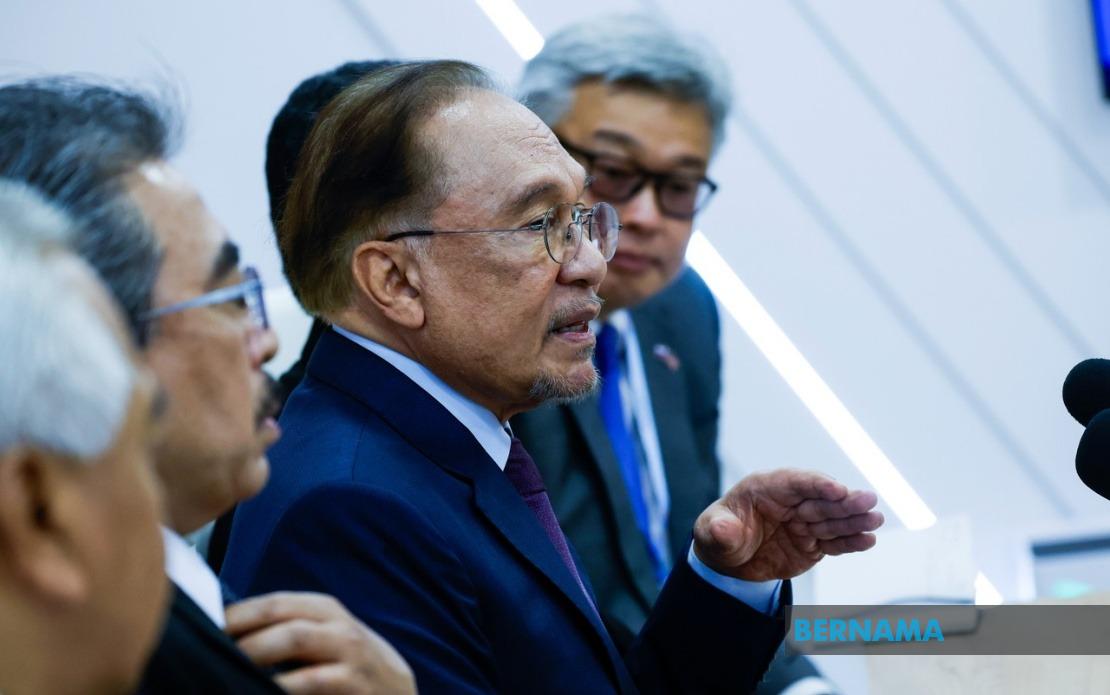
During closing remarks to Malaysian media, Anwar underscored the strategic importance of transitioning to long-term arrangements, explaining that both nations have moved beyond preliminary discussions into the final implementation phase. The broad outlines have already secured approval from relevant authorities, with company representatives from both sides already engaged in reviewing the technical and commercial details of the proposed framework. This acceleration signals the seriousness with which both governments view the arrangement and suggests that formal signing ceremonies could occur soon after Malaysia's delegation returns home.
The Prime Minister indicated that work on the long-term agreement has advanced sufficiently that only administrative and procedural hurdles remain. Draft agreements have been circulated, underlying principles have been mutually accepted, and the process now hinges on final delegated reviews and formal execution. Anwar committed to expediting these remaining steps immediately upon his return to Kuala Lumpur, suggesting he views this energy security initiative as a priority requiring immediate follow-up action at the highest levels.
This energy breakthrough emerged from Anwar's discussions with Russian President Vladimir Putin on Tuesday, during which the Prime Minister conveyed Malaysia's appreciation for Russian willingness to expand cooperation in this critical sector. The bilateral engagement also encompassed involvement of Petronas, Malaysia's national oil and gas company, which will play a central role in implementing and managing these long-term supply arrangements. Beyond energy, both nations agreed to expand bilateral mechanisms to encompass trade, investment, finance, and the halal economy—reflecting the comprehensive nature of the relationship Malaysia seeks to develop with Russia.
Anwar articulated a broader strategic vision during the visit, advocating for Malaysia to adopt a more assertive and proactive approach toward deepening economic ties with Russia and other emerging markets. He cautioned against allowing excessive caution to constrain Malaysia's international economic engagement, suggesting that the country must recalibrate its risk tolerance to capture opportunities presented by non-traditional partners. This rhetorical shift reflects evolving Malaysian thinking about energy security amid global geopolitical upheaval and the need to reduce dependency on any single supplier or region.
To support deeper people-to-people connections and tourism growth, Anwar called for implementation of visa-free travel arrangements between Malaysia and Russia, alongside establishment of direct flight connections. These practical measures address tangible barriers to civilian mobility and exchange, recognizing that strengthened diplomatic and commercial ties require corresponding improvements in accessibility and ease of travel. The emphasis on tourism and direct flights reflects broader ASEAN efforts to rebuild engagement with Russia following years of strained relations tied to international sanctions and geopolitical friction.
At the regional level, Anwar welcomed finalization of the ASEAN-Russia Strategic Programme on Trade and Investment Cooperation 2026-2035, characterizing this framework as essential groundwork for the next phase of economic collaboration between the Association and the Russian Federation. This regional architecture complements bilateral Malaysia-Russia initiatives and signals that energy cooperation will occur within a broader context of expanded ASEAN-Russia economic engagement. During 2024, total ASEAN-Russia trade reached US$18.1 billion, while Russian foreign direct investment in ASEAN members amounted to RM367.90 million (US$92.97 million), indicating that commercial relationships, though significant, remain underdeveloped relative to potential.
Malaysia specifically ranks as Russia's ninth-largest European trading partner, with 2025 bilateral trade valued at RM8.72 billion (US$2.04 billion). Malaysian exports to Russia center on electrical and electronic products, machinery, equipment and parts, and processed food, while imports are dominated by petroleum products, minerals, chemicals, and chemical-based products. This trade structure reflects Malaysia's manufacturing capabilities and Russia's resource endowments, with scope for deepening integration in value-added sectors such as downstream oil and gas processing, refining, and petrochemical production.
Anwar conducted a separate bilateral meeting with Rustam Minnikhanov, Head of the Republic of Tatarstan, one of Russia's most significant oil-producing regions. This discussion addressed diversification opportunities across trade, investment, education, tourism, the halal industry, technology, and talent development. The focus on Tatarstan specifically reflects recognition that important economic actors within the Russian Federation operate with considerable autonomy and represent potential partnership channels independent of Moscow-level engagement.
The energy sector dominated bilateral discussions with Tatarstan authorities, with Anwar highlighting opportunities in oil and gas exploration, production, and downstream activities including refining and petrochemical operations. Given Tatarstan's established position as a major hydrocarbon producer and its industrial base, this represents a logical focus for Malaysian investment and partnership. The discussion implicitly acknowledged that cooperation with Russian regions, not merely the federal government, will be essential for achieving Malaysia's long-term energy security objectives.
Anwar articulated an expansive vision of Malaysia-ASEAN-Russia cooperation potential, identifying priority areas including energy security, cybersecurity, agriculture, digital technology, scientific research, and higher education. This breadth suggests that while energy dominates current discussions, Malaysian policymakers envision a multifaceted partnership encompassing numerous domains. The identification of these sectors reflects Malaysia's strategic interests in securing energy supplies while simultaneously building complementary partnerships in technology and knowledge-intensive fields.
The Kazan visit served as the launching point for Anwar's broader Central Asian tour, with the Prime Minister subsequently departing for a two-day official visit to Turkmenistan. This itinerary reflects deliberate Malaysian strategy to pursue energy cooperation opportunities across multiple Central Asian suppliers simultaneously, reducing long-term dependency on any single source. Malaysia is actively strengthening and diversifying its energy supply portfolio amid escalating global uncertainty, supply chain fragmentation, and volatility in international energy markets driven by geopolitical tensions and fluctuating prices.
Anwar characterized the Kazan engagement as productive and successful while expressing confidence that the subsequent Turkmenistan visit would yield comparable or superior results. This sequential engagement strategy demonstrates Malaysia's serious commitment to establishing comprehensive energy partnerships across the Central Asian region, with each bilateral discussion building momentum for broader energy cooperation frameworks. The strategic pivot toward Russia and Central Asia represents a significant recalibration of Malaysia's energy diplomacy, reflecting recognition that traditional suppliers and partnerships require supplementation through new relationships with emerging partners capable of meeting Malaysia's long-term energy requirements at competitive terms.

