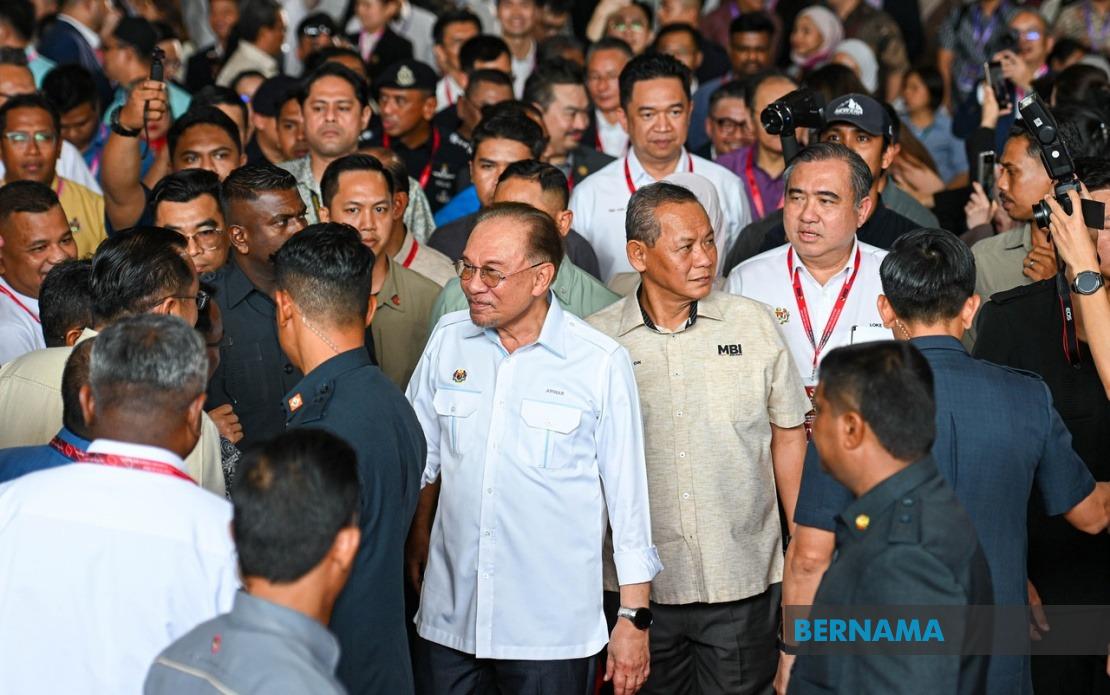
Prime Minister Datuk Seri Anwar Ibrahim is pushing back against Melaka DAP's abrupt decision to exit the state administration, arguing that the timing threatens to disrupt ongoing development efforts and undermine coalition cohesion at a critical juncture. Speaking at the Port Dickson Midport Smart Container Terminal inauguration on July 14, Anwar appealed directly to the DAP leadership to shelve their withdrawal announcement and continue governing until the next election, portraying the move as a distraction from the coalition's core agenda of economic growth and public welfare.
The intervention reflects the delicate political calculations required to maintain Pakatan Harapan's unity as it navigates disagreements between component parties over constitutional and procedural matters. Anwar, speaking in his dual capacity as Prime Minister and PH chairman, signalled he has already engaged DAP secretary-general Anthony Loke and Melaka Chief Minister Datuk Seri Ab Rauf Yusoh to broker a resolution, though his public appeal suggests those private conversations have yet to yield a breakthrough. The Prime Minister's decision to make his position known to journalists indicates the seriousness with which federal leadership views the situation and the pressure being applied on DAP to recalculate its strategy.
The trigger for DAP's withdrawal announcement was the Melaka State Legislative Assembly's passage of constitutional amendments permitting the appointment of nominated assemblymen—a measure that fundamentally alters the composition of the legislature without recourse to electoral processes. Melaka DAP chairman Khoo Poay Tiong justified the party's departure by framing it as a principled stand against what the party characterised as an assault on democratic principles and electoral legitimacy. For DAP, which has long positioned itself as democracy's stalwart, acceptance of such amendments would represent a serious compromise with core party values, making withdrawal appear not merely as political theatre but as a necessary act of conscience.
Yet Anwar's response exposes the tension inherent in coalition politics where one party's principled objection collides with another's preference for pragmatic continuity. The Prime Minister argued that disagreements over specific issues, even substantial ones, need not precipitate withdrawal from government when broader agreement exists on economic management and social welfare. This framing attempts to compartmentalise the dispute, treating the constitutional amendments as a discrete and manageable problem rather than symptomatic of deeper fractures within the ruling alliance. His implicit message—that perfect alignment across all policy areas is neither achievable nor necessary in a multiparty coalition—reflects a reality-based approach to coalition management but may ring hollow to parties genuinely troubled by constitutional erosion.
The Melaka situation carries implications extending beyond the state level, as it tests whether PH can withstand internal disagreements without fragmenting into competing fiefdoms. A successful resolution that allows DAP to remain whilst addressing its concerns about democratic safeguards could bolster the coalition's credibility as a functioning partnership capable of negotiating differences. Conversely, if DAP's withdrawal proceeds despite Anwar's intervention, it signals that federal leadership lacks sufficient leverage or political capital to prevent component parties from acting unilaterally on matters of conscience—a troubling signal for PH's long-term sustainability.
Anwar's emphasis on maintaining developmental continuity until the next election suggests the coalition remains focused on demonstrating governance competence to voters. The Prime Minister appears acutely aware that political instability at state level, particularly in Melaka where DAP holds significant influence, risks undermining the narrative of effective administration that PH seeks to project heading into electoral contests. The invocation of development and welfare—core themes in any government's re-election pitch—frames continued collaboration as mutually beneficial rather than as a surrender of principle by DAP.
The constitutional amendments themselves raise substantive questions about democratic governance that extend beyond internal coalition management. Appointed assemblymen, while not unprecedented in Malaysian federalism, do reduce the legislature's direct accountability to voters and create opportunities for backroom political manoeuvring outside the public mandate. DAP's concern that such mechanisms undermine electoral democracy reflects a principled position with broader resonance among reform-minded voters and civil society actors who view legislative appointments with suspicion. Anwar's request for postponement rather than withdrawal of the amendments themselves may suggest either that federal authorities view the changes as settled matters or that more ambitious constitutional reversals face insurmountable obstacles.
From a Southeast Asian perspective, the Melaka dispute illustrates challenges facing multiparty coalitions throughout the region as they attempt to balance ideological coherence with pragmatic governance. In Malaysia's context, where previous coalition arrangements like Barisan Nasional were often held together by patronage and power-sharing formulae rather than shared values, the DAP-led coalition's emphasis on principle even at the cost of administrative convenience represents a qualitatively different approach to political alliance-building. That such principled stands create governance complications underscores the complexity of managing coalition politics in democracies where component parties retain independent constituencies and policy positions.
The outcome of negotiations between Anwar's office, DAP leadership, and Melaka's state government will likely establish precedent for how future disputes are handled within the coalition. Should DAP successfully extract concessions on the constitutional amendments or secure explicit guarantees against further erosion of electoral principles, other parties may view the withdrawal threat as an effective negotiating tactic. Should the party proceed with withdrawal without securing meaningful concessions, it may embolden future such exits and fragment PH further. Anwar's public appeal represents the first move in what may become an extended negotiation, testing whether coalition members can afford the luxury of principled resignation from government or whether survival demands continuous compromise.

