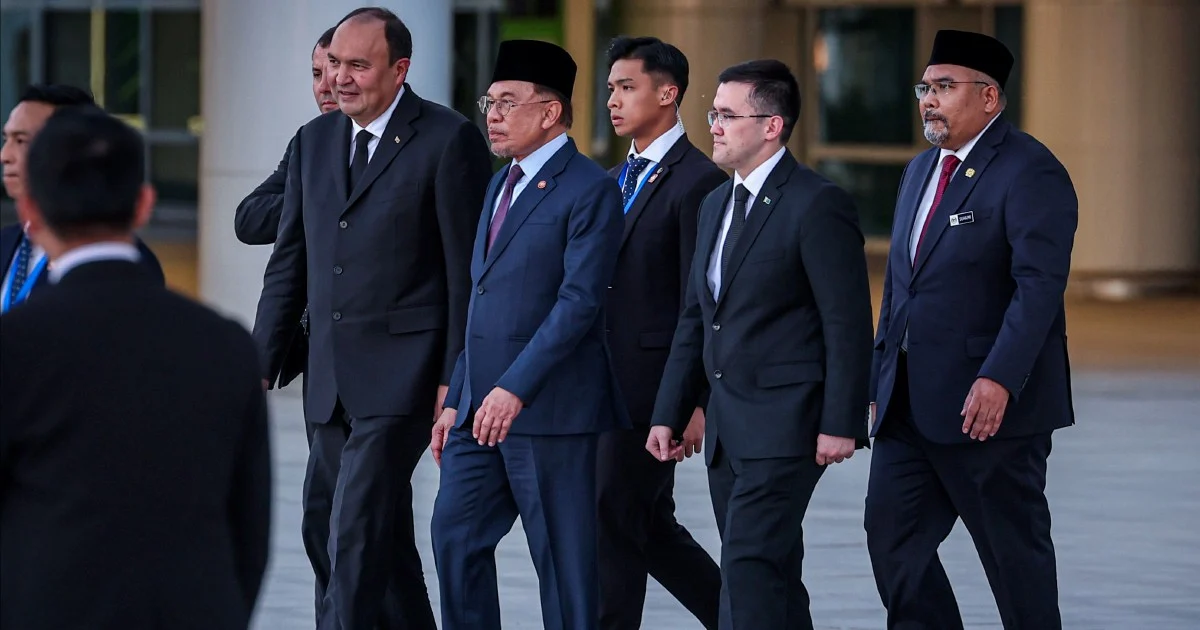
Prime Minister Datuk Seri Anwar Ibrahim is concluding his official visit to Turkmenistan with an agenda centered on strengthening economic partnerships and exploring fresh investment opportunities in the energy-rich Central Asian nation. The final day of his bilateral mission encompasses multiple high-level meetings designed to translate diplomatic goodwill into tangible commercial outcomes, reflecting Malaysia's broader pivot towards diversifying its economic engagement across emerging markets beyond traditional trading partners.
Turkmenistan, situated on the Caspian Sea's eastern shore, occupies a strategically significant position in Central Asia and increasingly features in Malaysia's regional economic calculations. The country's vast hydrocarbon reserves and its role as a transit corridor between Asia and Europe have made it an attractive destination for Malaysian businesses seeking alternative markets and investment pathways. Anwar's visit underscores the Malaysian government's commitment to exploring synergies with nations possessing complementary economic strengths and growth trajectories that align with Kuala Lumpur's own development ambitions.
The timing of this official visit carries particular significance given the evolving geopolitical landscape in Central Asia and the intensifying competition among major economic powers to establish deeper footholds in the region. Malaysia's engagement with Turkmenistan represents a measured but purposeful attempt to secure stable, mutually beneficial relationships that are not overshadowed by the strategic rivalries dominating great power competition in Asia. For Malaysian investors, particularly those in petrochemicals, renewable energy, and infrastructure development, a strengthened relationship with Turkmenistan could open doors to participation in major projects across the Central Asian bloc.
The bilateral talks scheduled for Anwar's final day in Ashgabat are expected to address multiple economic dimensions, from trade facilitation mechanisms to joint ventures in sectors where Malaysian expertise holds competitive advantage. Infrastructure development, particularly in transportation and logistics, stands as a natural area for cooperation given Malaysia's established strengths in port management and supply chain optimization. Similarly, discussions around energy efficiency, petrochemical processing, and value-added products derived from hydrocarbon resources could yield concrete collaboration frameworks that benefit both governments and their respective private sectors.
Turkmenistan's economy, heavily reliant on natural gas and petroleum exports, faces ongoing pressure to diversify revenue streams and modernize its industrial base. Malaysia, having navigated its own economic transition towards higher-value sectors, brings relevant experience in managing resource dependencies while gradually shifting towards knowledge-intensive industries. This convergence of economic challenges and aspirations creates a foundation for substantive cooperation extending beyond simple commodity trading into technology transfer, human capital development, and joint research initiatives.
The visit also reflects a broader Malaysian strategy of expanding diplomatic presence and economic influence across the Muslim-majority world, a constituency that remains central to Kuala Lumpur's foreign policy calculations. Turkmenistan, with a predominantly Muslim population, fits naturally within this outreach framework, though the emphasis remains distinctly on commercial rather than purely religious or cultural dimensions. This balanced approach allows Malaysia to deepen ties with regional partners while maintaining focus on pragmatic, economically rewarding outcomes that strengthen national interests.
Bilateral investment flows between Malaysia and Turkmenistan remain modest compared to Malaysia's engagement with more developed economies, presenting considerable untapped potential. Malaysian financial institutions and business conglomerates possess the expertise and capital capacity to participate meaningfully in Turkmenistan's ongoing infrastructure and industrial modernization projects. Conversely, Turkmenistan's energy resources and geographic positioning offer Malaysian companies opportunities to establish production bases or distribution networks serving broader Central Asian and Middle Eastern markets, effectively leveraging their peninsula position and existing trading relationships.
The series of high-level engagements planned during Anwar's final day will likely produce bilateral agreements or memorandums of understanding addressing specific sectors and establishing frameworks for future collaboration. Such instruments, while not immediately translating into massive capital transfers or trade volumes, serve the crucial function of reducing transaction costs, clarifying legal frameworks, and building bureaucratic channels through which private sector actors can more confidently pursue business opportunities. The institutional architecture created through such frameworks often proves more valuable long-term than any individual transaction.
Regional dynamics further enhance the relevance of Malaysia-Turkmenistan cooperation. As Central Asia experiences increasing connectivity through Chinese Belt and Road infrastructure projects and evolving transportation networks, positioning Malaysian entities strategically within these developing corridors could yield substantial advantages. Turkmenistan's role as a potential energy supplier to Asia, through both established and planned pipeline systems, creates opportunities for Malaysian enterprises to participate in downstream refining, distribution, and petrochemical value chains.
The visit demonstrates Anwar's personal commitment to advancing Malaysia's economic diplomacy agenda through direct engagement with counterparts in strategically important nations. Such high-level visitation signals seriousness to potential business partners while enabling the Prime Minister to gain first-hand understanding of local market conditions, regulatory environments, and investment opportunities. These insights subsequently inform policy adjustments and diplomatic messaging that facilitate smoother commercial interactions for Malaysian enterprises operating or seeking to establish presence in the Central Asian region.

