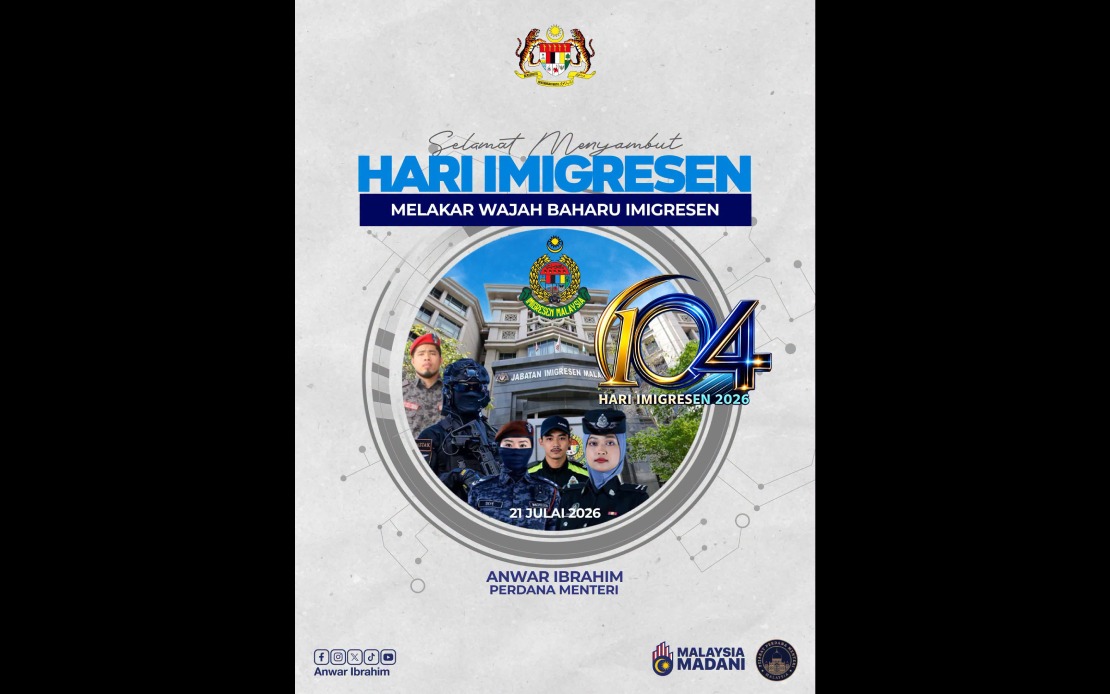
Prime Minister Datuk Seri Anwar Ibrahim has made a direct appeal to the Immigration Department's workforce to demonstrate unwavering integrity in their daily operations and to categorically reject any form of corrupt practice or administrative irregularity. In a message marking Immigration Day, Anwar underscored the critical importance of ethical conduct across the nation's immigration bureaucracy, signalling the government's commitment to rooting out misconduct within this strategically significant agency.
The Prime Minister's remarks come against the backdrop of ongoing efforts to strengthen governance and public sector accountability across Malaysia's civil service. Immigration officers occupy a frontline position in managing border security, visa processing, and population movement—functions that directly affect both national security and Malaysia's reputation as a welcoming destination for international visitors and skilled migrants. Anwar's emphasis on integrity suggests recognition that lapses in these areas can undermine public confidence and international standing.
Beyond the anti-corruption message, Anwar stressed that Immigration Department personnel must cultivate and demonstrate compassion when serving the public. This dual focus on ethical conduct and human-centered service delivery reflects a broader philosophical approach to governance that seeks to reconcile institutional accountability with citizen welfare. The directive implies that professionalism need not come at the expense of empathy, and that frontline officers should balance regulatory enforcement with understanding of individual circumstances.
The Prime Minister articulated hope that the department would continue to excel in fulfilling its constitutional mandate to safeguard national sovereignty. This statement reflects the traditional security-centric view of immigration administration, yet Anwar's framing suggests an evolution toward a more nuanced understanding of the agency's role. Modern immigration work extends beyond border control to encompass facilitation of legitimate travel, attraction of investment and talent, and management of international movement in ways that enhance rather than merely restrict national interests.
Immigration Day 2026 carries the theme "Charting a New Face for Immigration", signalling an institutional rebranding effort or strategic repositioning. This thematic choice suggests that Malaysia's immigration apparatus is undergoing or planning transformation in how it operates and presents itself to both domestic and international audiences. The new branding may reflect technological upgrades, process modernization, or a shift toward customer-centric service models that have become standard in peer nations.
Anwar's public commendation on this occasion serves multiple purposes. First, it acknowledges the often-underappreciated work of immigration staff who manage high-volume, repetitive tasks with complex legal and security implications. Second, it sends a unmistakable signal to the broader civil service that the Prime Minister personally monitors departmental conduct and expects adherence to ethical standards. Third, it provides political cover for the Immigration Department to pursue internal integrity initiatives without appearing defensive or reactive.
The emphasis on professionalism and courtesy carries particular relevance for Malaysia's tourism and business sectors. International visitors and business travellers often form first impressions of the country through interactions with immigration officials. A workforce trained to combine efficient processing with genuine courtesy can significantly enhance Malaysia's appeal as a regional hub for commerce, tourism, and academic exchange. Conversely, perceived bureaucratic indifference or corruption becomes a tangible disincentive for legitimate international engagement.
Corruption within immigration systems represents a particular concern in Southeast Asia, where officials can exploit their gatekeeping authority to extract bribes, facilitate document fraud, or enable illicit movements. Malaysia has worked to address these vulnerabilities through legislative reforms, internal controls, and enhanced recruitment standards. Anwar's public call reflects recognition that institutional safeguards must be reinforced through leadership messaging and cultural emphasis on values.
The Prime Minister's reference to "elevating Malaysia's name on the world stage" through immigration service excellence reflects understanding that a nation's administrative capacity shapes its international standing. Countries known for transparent, efficient, and fair immigration administration attract more legitimate investment, tourism, and skilled migration. Conversely, reputations for systemic corruption deter these flows and invite scrutiny from international observers and rating agencies concerned with governance quality.
Looking forward, the integration of integrity messaging with the department's 2026 theme suggests a coordinated effort to modernize both the substance and image of Malaysia's immigration administration. This may involve technology implementation such as biometric systems or digital visa platforms that reduce human discretion and opportunities for corruption, combined with enhanced training in customer service and ethical decision-making.
For Malaysian businesses and citizens, Anwar's message carries practical significance. Enterprises relying on international hiring, expatriate management, or cross-border operations depend on immigration efficiency and fairness. Citizens engaged in legitimate international travel or family reunification processes benefit from professional service delivery. The Prime Minister's public commitment to departmental integrity provides reassurance that systemic corruption will not be tolerated at the highest policy level.
The broader context matters too. Southeast Asia faces rising competition among nations seeking to position themselves as attractive destinations and partners in an increasingly interconnected regional economy. Immigration administration quality has become a measurable differentiator. By publicly emphasizing integrity, professionalism, and compassion in this sector, Anwar signals that Malaysia aims to lead rather than lag in this dimension of public governance and regional competitiveness.

