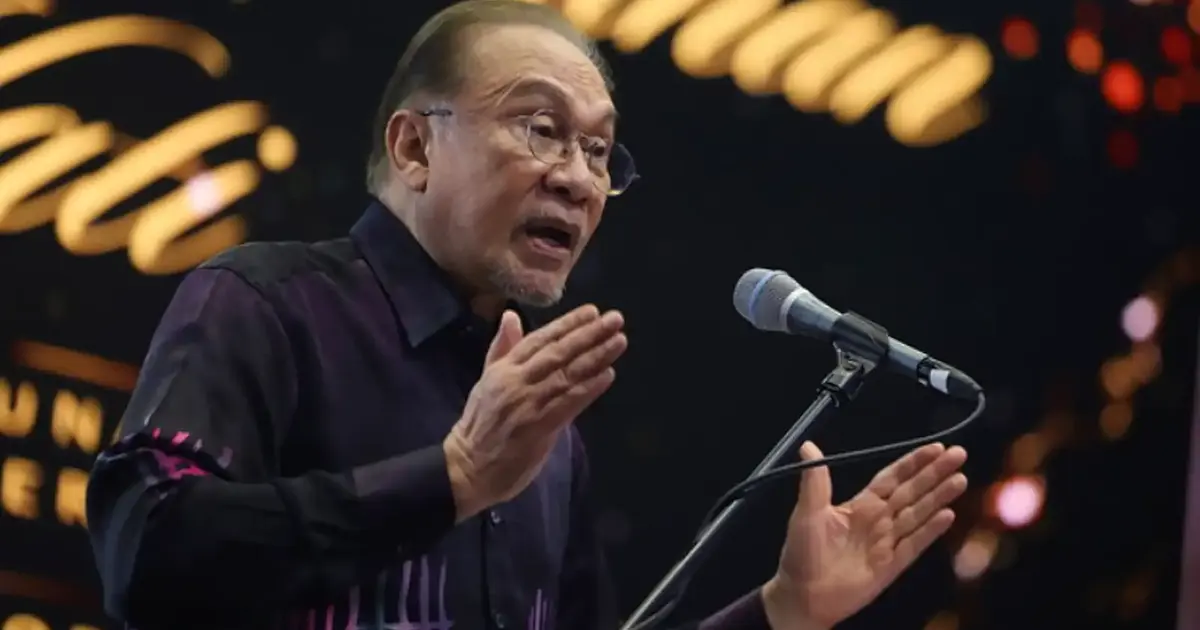
Prime Minister Anwar Ibrahim has made a fresh appeal to Malaysians to reject divisive messaging propagated by certain political figures, reinforcing his longstanding position that the country's multicultural fabric is essential to its identity and prosperity. In remarks that reflect growing concerns about the nature of political discourse in the lead-up to various electoral contests, Anwar emphasised that citizens must consciously choose to ignore inflammatory rhetoric designed to exploit communal sensitivities.
The Prime Minister's intervention underscores a persistent tension within Malaysia's political landscape, where appeals to narrow ethnic or religious interests periodically emerge despite the constitutional framework that underpins the social contract among Malays, Chinese, Indians, and other communities. Anwar's insistence that Malaysians should "rise above" such messaging suggests a recognition that certain political actors continue to employ divisive narratives despite warnings from the country's leadership and civil society organisations.
Anwar's characterisation of Malaysia's diversity as "one of its greatest strengths" reflects a foundational principle of the Malaysian nation-state. Unlike many countries that have struggled with multicultural integration, Malaysia has maintained relative stability through a delicate balance of constitutional provisions, affirmative action policies, and an implicit social contract negotiated at independence. This arrangement, while imperfect and periodically tested, has enabled a diverse population to coexist and contribute to shared economic and social development.
The economic dimension of this diversity argument carries particular weight in Malaysia's current context. As the country navigates post-pandemic recovery and seeks to maintain competitive advantage in regional markets, the cohesion and mutual trust between different ethnic and religious communities directly impact productivity, investment decisions, and the nation's ability to attract talent. Businesses operating across Malaysia's diverse consumer base benefit from multicultural management teams and understand intuitively that sectarian division weakens market confidence.
For Malaysian readers and observers across Southeast Asia, Anwar's remarks highlight the ongoing struggle between inclusive and exclusionary political narratives. Neighbouring countries including Singapore, Thailand, and Indonesia have each grappled with similar tensions, though Malaysia's constitutional framework and historical precedent provide distinct parameters for addressing communal politics. The Prime Minister's intervention signals that the government continues to regard divisive political messaging as a threat requiring active counter-speech rather than passive acceptance.
The timing of Anwar's statement reflects cyclical patterns in Malaysian politics where periods of relative stability can give way to opportunistic appeals to parochial interests. Certain political factions have historically sought to mobilise supporters by emphasising ethnic or religious grievances, calculating that such messaging resonates with particular constituencies. Anwar's call for citizens to reject such rhetoric implicitly acknowledges this strategic calculation while appealing to the better instincts of voters who may be tempted by divisive appeals.
From an international perspective, Malaysia's commitment to multiculturalism and the Prime Minister's vocal defence of diversity-based strength positions the country within a global conversation about managing plurality in democratic societies. Countries worldwide increasingly confront the challenge of maintaining social cohesion while respecting fundamental freedoms including expression and political participation. Malaysia's approach—rooted in constitutional design, institutional safeguards, and leadership exhortation—offers lessons and cautionary tales worth examining.
The practical challenge for Anwar and his government lies in translating rhetorical appeals into substantive policy and institutional mechanisms that protect minority rights, address legitimate grievances across communities, and create conditions where divisive messaging loses appeal because citizens enjoy tangible benefits from peaceful coexistence. Education initiatives, economic opportunities, and visible progress on issues affecting all communities regardless of ethnicity demonstrate commitment to inclusive governance beyond statements of principle.
For Malaysian civil society, media, and educational institutions, Anwar's remarks represent an invitation to reinforce counter-narratives emphasising shared interests, historical achievements of multiethnic cooperation, and the costs of sectarian conflict. Recent years have witnessed increased activism by civil society organisations promoting interfaith dialogue, multicultural understanding, and critical media literacy. These grassroots efforts complement leadership messaging and arguably prove more durable in shifting public consciousness.
The sustainability of Malaysia's multicultural model ultimately depends on whether successive generations of Malaysians—irrespective of ethnic or religious background—internalise the conviction that diversity strengthens rather than weakens national capacity. This requires continuous reinforcement through education, responsible political competition, and institutional design that rewards cross-community coalition-building rather than narrow sectarian appeal. Anwar's call for Malaysians to reject hate peddling thus extends beyond immediate political considerations to address the long-term institutional health and social cohesion upon which the nation's future prosperity rests.

