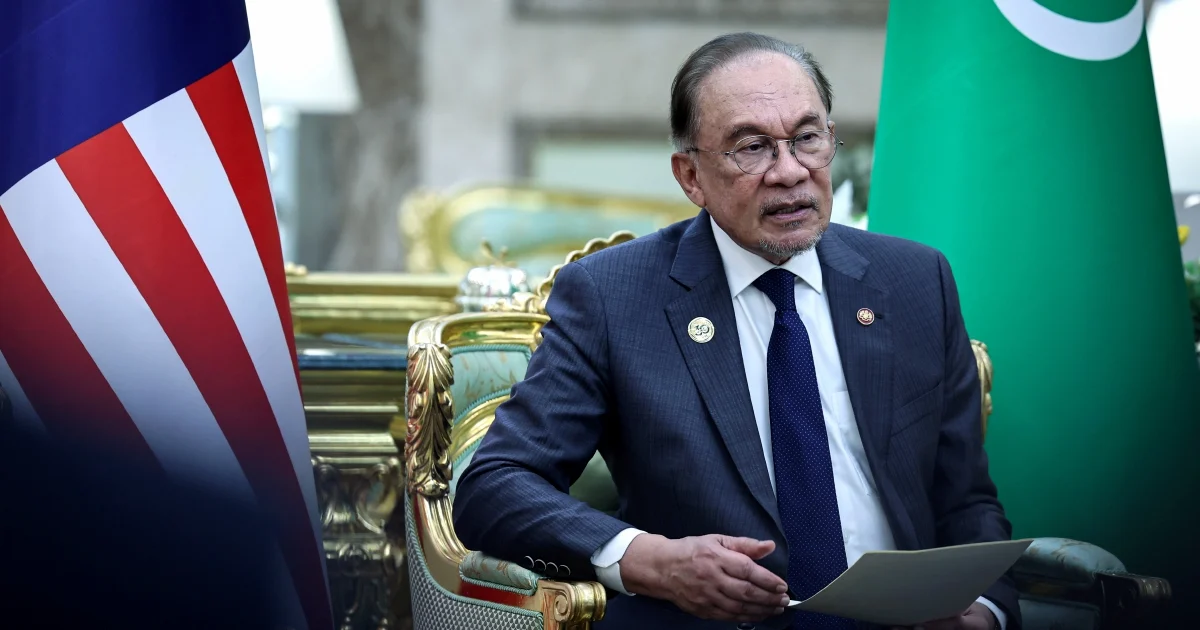
Prime Minister Datuk Seri Anwar Ibrahim has publicly endorsed emerging indications of a preliminary understanding between Washington and Tehran, characterizing the development as potentially beneficial for international relations and regional equilibrium. Speaking in Batu Kawan, the Malaysian leader framed the diplomatic progress as welcome news extending beyond immediate parties involved, suggesting implications for the broader geopolitical landscape in which his nation operates as a key Southeast Asian economy and middle power.
Anwar's remarks reflect Malaysia's historical diplomatic posture of cautious engagement with contentious international disputes, particularly those involving major powers whose actions ripple across global markets and security arrangements. As a Muslim-majority nation and a non-aligned movement participant, Malaysia maintains institutional interest in de-escalation mechanisms that might reduce tensions affecting oil markets, shipping lanes, and regional alliances. The Prime Minister's measured endorsement aligns with Kuala Lumpur's longstanding preference for negotiated settlements over confrontational stances that could destabilize Southeast Asia or create pressure for regional actors to choose sides in geopolitical rivalries.
The reported initial agreement between the United States and Iran carries particular significance for Malaysian policymakers given the Strait of Hormuz's critical importance to regional energy security. Through this chokepoint passes roughly one-third of seaborne traded petroleum, making the geopolitical temperature in the Persian Gulf a direct concern for Malaysian energy importers and downstream industries. Any reduction in US-Iran tensions theoretically eases pressure on global oil prices and reduces risks of supply disruptions that would disproportionately harm energy-dependent Southeast Asian economies.
Anwar's cautious optimism also reflects awareness that preliminary breakthroughs often encounter substantial obstacles en route to comprehensive settlements. His emphasis on hopes for lasting peace, rather than declarations of resolved conflict, suggests measured expectations appropriate for a longtime observer of Middle Eastern affairs. Malaysia's extensive experience mediating regional disputes and hosting important international forums has cultivated in its leadership a sophisticated understanding of negotiation dynamics and the gap between initial agreements and durable political settlements.
The timing of Anwar's statement carries weight within Malaysia's domestic political context, where foreign policy credentials serve as markers of statesmanship and competent governance. By positioning himself as welcoming voice for peace initiatives, the Prime Minister reinforces his government's commitment to rules-based international order and constructive problem-solving—positioning increasingly important as Malaysia navigates competition between major powers for influence within Southeast Asia. A leadership perceived as wise arbiter of international conflicts enhances credibility when addressing regional bilateral disputes or advocating for Malaysian interests in multilateral forums.
From a broader Southeast Asian perspective, reduced US-Iran antagonism potentially diminishes pressures on regional governments to take explicit positions in US-led strategic competition against China and other adversaries. Countries like Malaysia seek strategic autonomy and prefer avoiding binary choices that would limit diplomatic flexibility or damage profitable relationships. A more stabilized Middle East reduces one source of potential pressure on ASEAN nations to align more decisively with Western security frameworks or risk energy security complications.
The potential economic ramifications extend beyond energy markets to encompass investment flows and business confidence. Diplomatic thaw between major powers typically correlates with improved investor sentiment across emerging markets, including Southeast Asian economies that depend substantially on portfolio investment and foreign direct investment. Malaysia's position as an investment destination and financial hub depends partly on perceptions of global stability and predictable geopolitical environments.
Anwar's framing also acknowledges that sustainable peace requires commitment from all involved parties and sustained international attention. His reference to lasting peace rather than transactional agreements suggests understanding that durable Middle Eastern settlements must address underlying grievances and institutional structures, not merely suspend hostilities temporarily. This reflects Malaysian diplomatic experience in conflicts where superficial peacemaking repeatedly failed until fundamental interests received proper acknowledgment.
The statement demonstrates Malaysia's continuing engagement with global affairs despite having significant domestic policy challenges requiring attention. Anwar's willingness to comment on US-Iran developments signals that Malaysian leadership views international stability as interconnected with national welfare, even when direct Malaysian involvement remains limited. This outward-looking perspective reflects Malaysia's evolution as knowledge economy dependent on stable global trading systems and investment environments.
Looking forward, Malaysian diplomats and policymakers will likely monitor US-Iran negotiations' trajectory carefully, assessing implications for energy markets, shipping security, and broader great power competition dynamics affecting Southeast Asian strategic interests. Should sustained momentum toward comprehensive settlement develop, Malaysia would likely increase diplomatic visibility around potential roles in facilitating broader regional reconciliation, consistent with Kuala Lumpur's historical positioning as honest broker and ASEAN representative in international dispute resolution mechanisms.

