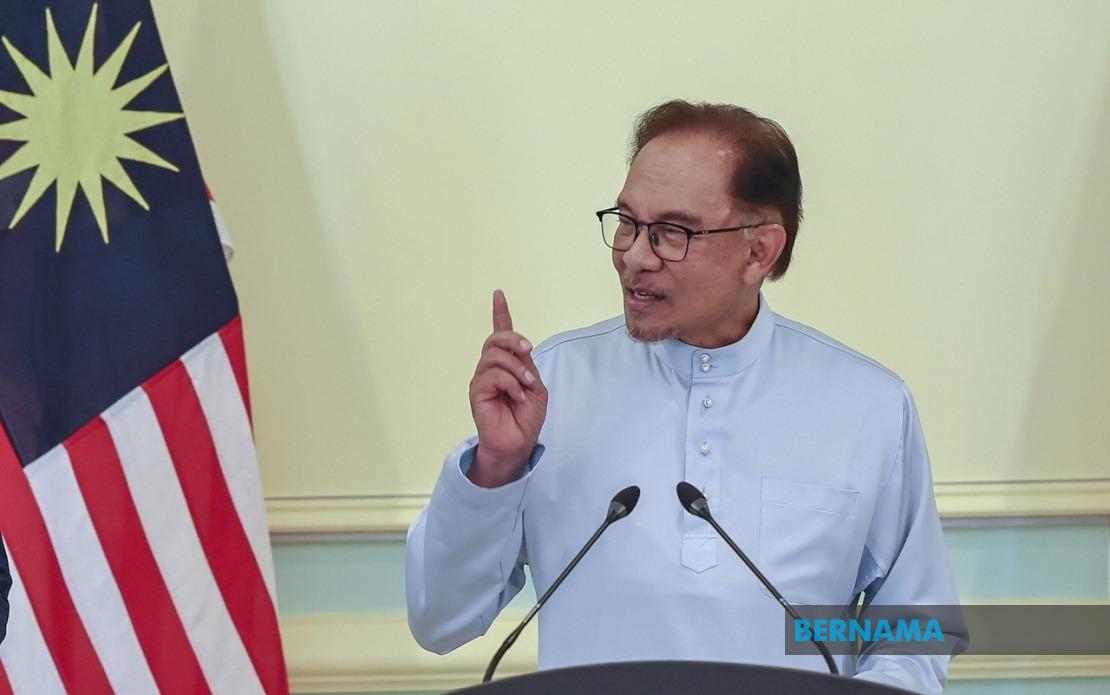
Prime Minister Datuk Seri Anwar Ibrahim's handling of the Gaza conflict represents a distinctive diplomatic posture that weaves together moral conviction, legal arguments, institutional pressure and humanitarian commitment, according to an assessment by Universiti Pertahanan Nasional Malaysia's Honorary Professor Dr Mizan Aslam. This multidimensional engagement reflects a sophisticated understanding of how middle-power nations can project influence on global crises that extend far beyond bilateral relations.
The Gaza situation has fundamentally transformed from a localised Israeli-Palestinian dispute into a profound indictment of the international system's structural failures, according to Mizan's analysis. The collapse of legal frameworks, institutional weaknesses and the unwillingness of major powers to intervene meaningfully have created a humanitarian catastrophe of unprecedented scale. This systemic breakdown carries implications for international order itself, particularly concerning how the global community addresses mass civilian harm and alleged breaches of fundamental humanitarian principles.
The human toll reveals the scale of destruction that has accumulated across the past three years. Official figures document 73,066 deaths and 173,514 injuries, while 5,400 individuals have experienced permanent disability through amputation or trauma. Children constitute a disproportionate segment of the casualties, with 21,730 killed and 45,113 wounded, creating a generation bearing lifelong physical and psychological scars. The orphaning of nearly 60,000 children signals a demographic catastrophe that will reshape Palestinian society for decades. These statistics transcend policy debate; they represent a breakdown in civilian protection on a scale that conventional diplomatic language struggles to adequately convey.
Physical destruction compounds human suffering. Over nine-tenths of Gaza's infrastructure now requires reconstruction, with 81 percent of all structures sustaining damage or total demolition. Residential housing has been overwhelmingly affected, with 92 percent of homes damaged. Water systems remain critically compromised, with 91 percent of households unable to access sufficient clean water for basic needs. This infrastructure collapse creates cascading public health crises that extend far beyond immediate trauma injuries. Disease outbreaks, nutritional deficiencies and communicable illnesses now pose threats potentially exceeding direct combat casualties.
Malaysia's participation in South Africa's Genocide Convention case before the International Court of Justice represents a deliberate choice to pursue accountability through established legal mechanisms rather than rhetorical condemnation alone. This judicial intervention signals that Malaysia views the crisis through the lens of international criminal responsibility and precedent-setting. The move distinguishes Malaysia's approach from purely symbolic solidarity, anchoring its position within binding legal frameworks that create documented records and potential consequences for alleged perpetrators. For a nation concerned with establishing predictable international norms, supporting such cases reinforces the principle that powerful states cannot act with impunity against civilian populations.
Anwar has channelled the Gaza question through multiple diplomatic forums, including the Arab-Islamic Extraordinary Summit, demonstrating sustained institutional engagement rather than episodic attention. These multilateral platforms amplify Malaysia's voice by aligning it with broader coalitions of like-minded states, transforming isolated national positions into collective demands for action. The emphasis on strengthening the United Nations Relief and Works Agency for Palestine Refugees in the Near East and restricting weapons supplies reflects practical policy objectives rather than abstract solidarity. These positions target specific mechanisms through which external actors can influence on-ground realities.
The RM100 million humanitarian allocation addresses immediate survival pressures affecting nearly two million people experiencing acute food insecurity. Within this vulnerable population, 641,000 face famine or catastrophic hunger conditions. Child malnutrition figures document 17,800 cases among those under five in 2025, rising to nearly 69,000 cases of severe malnutrition by May 2026. The 466 deaths linked to malnutrition demonstrate that starvation has become a direct cause of mortality, a metric typically associated with state collapse rather than conflict zones. Malaysia's financial commitment provides tangible resources for relief organisations attempting to sustain civilian populations in this deteriorating environment.
Gaza's healthcare infrastructure has suffered systematic targeting, with 40 hospitals and 158 primary health centres compromised through 825 documented attacks. These strikes have killed 1,723 healthcare workers and resulted in the detention of 362 others. A healthcare system rendered non-functional cannot address injuries, manage disease outbreaks or provide maternal care, effectively removing an entire category of civilian protection. The targeting of medical personnel represents violations of Geneva Convention protections, creating documentation of potential war crimes that inform future accountability processes.
Anwar's diplomatic framework extends beyond ceasefire demands to encompass comprehensive political settlement centred on Palestinian statehood. This position reflects the principle that temporary truces without political resolution perpetuate underlying conflicts. The advocacy for a sovereign, viable Palestinian state addresses root causes rather than symptom management. This approach aligns with Malaysia's broader foreign policy philosophy of 'active non-alignment', which permits the nation to adopt positions grounded in principle and values rather than great-power alignment. For Malaysia, championing Palestinian sovereignty reinforces its consistent anti-colonial stance and commitment to self-determination principles applicable to other regional contexts.
Malaysia's influence operates through sustained pressure across multiple channels simultaneously: international courts, global conferences, bilateral diplomacy and appeals to global conscience. While a middle-power nation cannot unilaterally resolve the crisis, it can ensure the issue remains elevated before mechanisms that create legal precedent and moral accountability. This approach translates abstract solidarity into concrete institutional actions that generate documentation, establish precedent and maintain international attention. The strategy recognises that influence accumulates through persistence and consistency rather than through individual dramatic gestures.
The analytics reveals a foreign policy posture that distinguishes between symbolic gestures and substantive engagement. Anwar's diplomacy demonstrates how nations can advance principle-based positions without commanding military or economic dominance. The strategy combines moral clarity with practical action, legal mechanisms with humanitarian response, and multilateral coordination with bilateral diplomacy. For Southeast Asian countries navigating great-power competition, this model suggests alternative pathways for advancing values and interests that do not require alignment with dominant powers. Malaysia's Gaza diplomacy models how middle powers can exercise principled agency on global questions while maintaining strategic autonomy.

