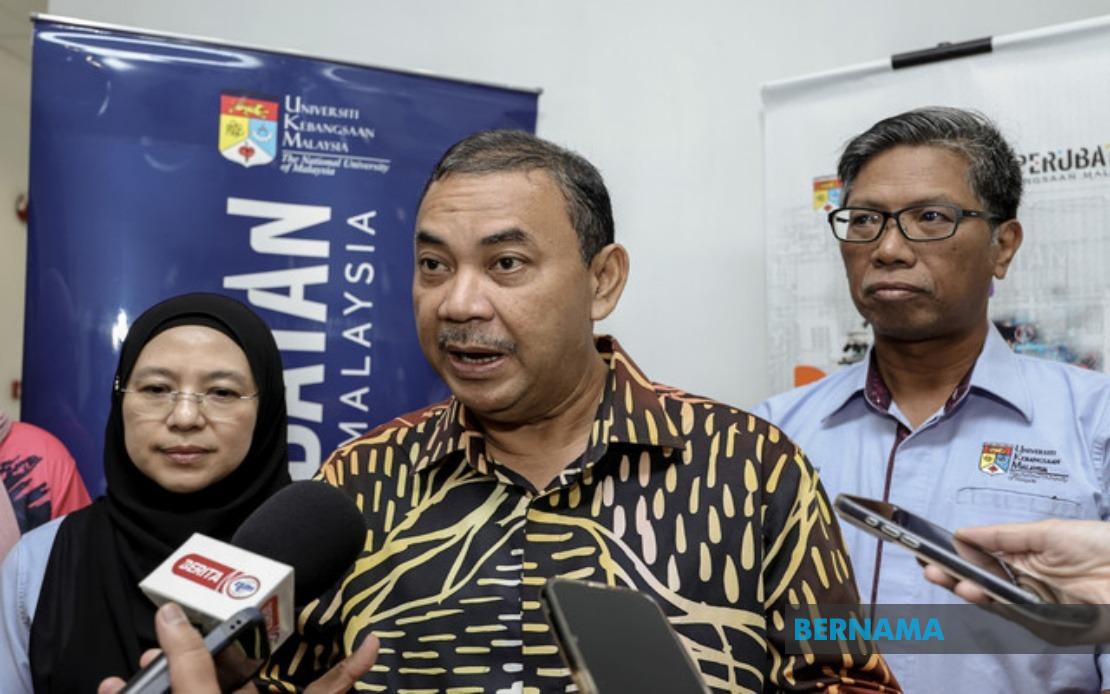
The MADANI Government's track record in investment attraction, economic management and currency stability has gained acknowledgement across multiple stakeholder groups, according to Datuk Azman Abidin, the Prime Minister's political secretary. Speaking during the opening of a science education initiative at Universiti Kebangsaan Malaysia in Kuala Lumpur, Azman underscored that these accomplishments provide a credible foundation for the electorate to extend Datuk Seri Anwar Ibrahim's mandate for a second term in office.
Azman's remarks come amid observations from political analysts that the current administration has performed solidly and merits the opportunity to deepen its reform and excellence agenda through another electoral cycle. The implicit message frames the government's achievements not as temporary outcomes, but as evidence of sustained competence in economic stewardship—a critical consideration for Malaysian voters evaluating leadership continuity. By emphasizing the breadth of recognition "from all quarters," Azman sought to portray these gains as politically neutral assessments rather than partisan claims.
The government intends to amplify public awareness of its initiatives and their tangible benefits to different segments of society through a series of planned announcements before National Day and Malaysia Day celebrations, and ahead of Budget 2027's parliamentary presentation. This sequencing appears designed to maintain momentum in communicating achievements during a politically sensitive period when election timing remains speculative. Such messaging cadence reflects efforts to keep the administration's record salient in public consciousness without appearing overtly campaign-oriented.
Azman expressed confidence that voters would evaluate the MADANI Government's performance and accomplishments with discernment before the next general election. This framing implicitly acknowledges that electoral outcomes depend on public perception of governance effectiveness, while subtly suggesting that objective assessment of the government's record should favour continued administration. The reference to voter wisdom serves both as a democratic courtesy and a rhetorical appeal to rational self-interest—the notion that citizens will recognize and reward competent governance.
Beyond electoral calculations, Azman's broader platform engagement focused on science and technology education as a national priority. He officiated the STEM Exploration 2.0 programme, an initiative designed to identify and nurture scientific talent among secondary school students. This programme's second iteration engaged 200 Form Three students from the Kuala Lumpur, Selangor and Negeri Sembilan corridor, representing an early-stage talent pipeline in fields increasingly critical to Malaysia's economic future.
Azman articulated a vision positioning science, technology, engineering and mathematics education beyond its current status as an optional subject into an essential component of the national curriculum. This pivot reflects recognition that sustained technological competitiveness requires broader population-level engagement with STEM disciplines from secondary education onwards. The reframing of STEM from elective to foundational addresses long-standing concerns among educators and technology sector employers about skills gaps in Malaysia's workforce.
The programme itself encompassed experiential learning components including laboratory experiments, microbiology activities, and demonstrations of emerging medical technologies such as three-dimensional printing applications. These hands-on exposures serve not merely as educational enrichment, but as career awareness initiatives, allowing younger students early exposure to professional pathways in medicine and applied sciences. Such engagement at the secondary level can influence subject selection and tertiary education choices that ultimately shape human capital availability in critical sectors.
Azman's remarks during the STEM programme opening underscore a broader strategic objective: positioning the government as invested in long-term human capital development. In a region witnessing intense competition for technological leadership and high-skilled employment bases, education initiatives targeting scientific talent creation represent visible commitments to future productivity and innovation capacity. Malaysia faces particular pressures in this domain given regional competitors' aggressive investments in STEM education and research infrastructure.
The aspiration to expand the STEM Exploration programme nationwide signals intent to democratize access to science education experiences beyond the Klang Valley region. Such scaling would require coordination across multiple state-level education authorities and sustained funding, reflecting an implicit claim that the government intends sustained commitment to these initiatives through successive budgetary cycles. For states like Johor, Penang and Sabah, programme expansion could diversify regional economic foundations beyond conventional sectors.
By coupling electoral confidence messaging with tangible investments in future workforce development, Azman articulated a governance narrative emphasizing both present-term performance and forward-looking strategic positioning. This dual framing aims to appeal to voters across age cohorts and interest profiles—those concerned with immediate economic conditions, and those investing in intergenerational educational outcomes. The juxtaposition effectively presents governance as encompassing both short-term macroeconomic management and institutional capacity-building for sustained competitiveness.
For Malaysian readers, the political subtext remains clear: as the government enters its mid-term, it is calibrating communication to highlight achievements while simultaneously demonstrating commitment to long-term national challenges. The emphasis on STEM education particularly resonates in a context where youth unemployment and skills mismatches remain policy concerns, suggesting the administration recognizes that electoral support requires engagement with concerns extending beyond quarterly economic indicators into fundamental questions of opportunity creation and social mobility.

