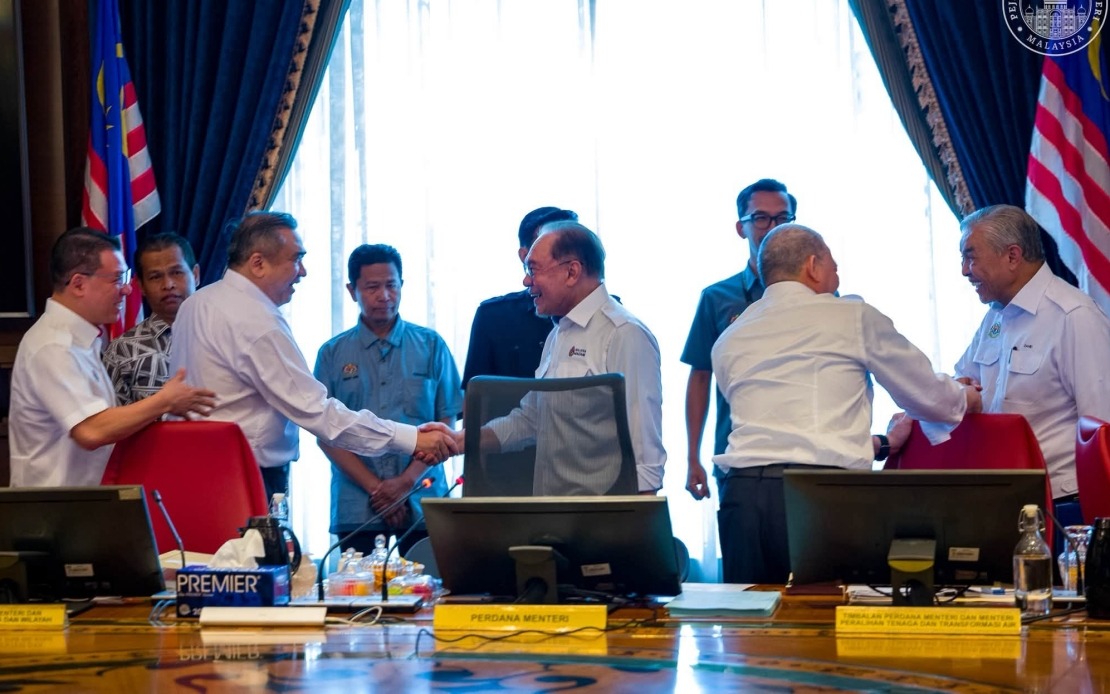
Prime Minister Datuk Seri Anwar Ibrahim has used the traditional medium of Malay poetry to reinforce themes of national cohesion and collective strength, posting a four-line pantun on his Facebook page that celebrates the virtues of solidarity, discipline and the bonds of friendship. The move reflects a carefully calibrated political messaging strategy, positioning himself as a statesmanlike leader even as his coalition engages in vigorous electoral competition against his federal government partners.
The post generated substantial engagement within hours of publication, accumulating more than 11,500 likes and spawning over 1,700 comments from social media users who responded with enthusiasm and, in several instances, contributed their own pantun verses in reply. This level of online traction underscores the resonance of Anwar's cultural messaging approach, which draws on Malaysia's literary traditions to communicate political values in ways that transcend conventional political rhetoric. The comments section evolved into an organic conversation about the themes Anwar had introduced, with many observers noting the Prime Minister's measured and conciliatory tone.
The timing of this poetic intervention carries particular significance given the complex political dynamics currently unfolding across Malaysia's electoral landscape. Negeri Sembilan is heading toward a state election, scheduled for August 1, with early voting set for July 28 following the dissolution of the State Assembly on June 5. The Election Commission has established the regulatory framework, yet the electoral contest itself presents an unusual scenario that tests the stability of Malaysia's governing arrangements.
At the federal level, the Unity Government represents a coalition between Pakatan Harapan, which Anwar chairs, and Barisan Nasional, led by Deputy Prime Minister Datuk Seri Dr Ahmad Zahid Hamidi. This arrangement has proven pragmatic for managing Malaysia's complex political landscape, but it creates inherent tensions when coalition partners must compete for electoral advantage at the state level. In Negeri Sembilan, these tensions have become visible, with PH contesting all 36 state seats while BN is fielding candidates in 25 constituencies alongside a separate pact with Perikatan Nasional.
Anwar's pantun can be interpreted as a subtle but deliberate effort to manage these contradictions. By emphasizing friendship and unity through an artistic medium steeped in Malaysian cultural tradition, the Prime Minister communicates a message that political competition need not undermine governmental stability or national cohesion. The pantun form itself carries historical weight and cultural authenticity in Malaysia, lending the message an authority that conventional political statements might struggle to achieve.
The post was accompanied by photographs from a recent Cabinet meeting, featuring Deputy Prime Minister Dr Ahmad Zahid Hamidi and Transport Minister Anthony Loke among other senior figures, all appearing at ease and in visibly harmonious spirits. This visual component reinforces the textual message, providing photographic evidence of collegial relationships and operational harmony within the government despite the electoral contest occurring at the state level. The careful curation of such imagery demonstrates sophisticated political communication.
The juxtaposition of a cultural appeal to unity against the background of active electoral competition reflects a broader Malaysian political reality. The nation's coalitional governance model requires that partners maintain sufficient cohesion at the central government level while pursuing distinct political advantages in regional contests. This balancing act has become increasingly complex as Malaysia's electoral landscape has fragmented, with multiple coalitions and parties competing for voter support.
Public commentary on Anwar's post has focused substantially on what observers perceive as his statesmanship and willingness to privilege national stability over partisan advantage. Many social media users praised the Prime Minister's approach as befitting his office, interpreting the pantun as a deliberate signal that the Federal Government would remain steady and functional regardless of outcomes in individual state elections. This interpretation suggests that Malaysian voters and political observers recognize the potential risks inherent in coalitional governance and appreciate efforts to manage those risks through measured messaging.
The response to Anwar's post also reflects broader trends in Malaysian political communication, where digital platforms have become central to how leaders engage with citizens and articulate their political vision. The Facebook post generated conversation and cultural participation, with users contributing their own pantun in response. This interactive dimension transformed Anwar's initial message into a collective cultural exercise, deepening engagement and extending the reach of his core themes through organic social media participation.
For Malaysia's broader political ecosystem, this episode carries implications extending beyond the immediate Negeri Sembilan contest. It demonstrates how governing coalitions can sustain themselves even when pursuing divergent electoral interests at subnational levels, provided that leadership maintains visible commitment to central government stability. The approach Anwar has adopted, using cultural and poetic language to reinforce these commitments, offers a template that may influence how Malaysian political coalitions navigate similar tensions in future contests.
The Negeri Sembilan election will provide a test of whether such messaging can indeed preserve unity between federal coalition partners even as they compete vigorously for state-level advantage. The outcome will likely influence how Malaysian political leaders calibrate their approaches to managing coalitional governance in an increasingly fragmented electoral environment. Anwar's pantun represents one element of a broader strategy to maintain institutional stability while allowing legitimate political competition to proceed at appropriate governance levels.

