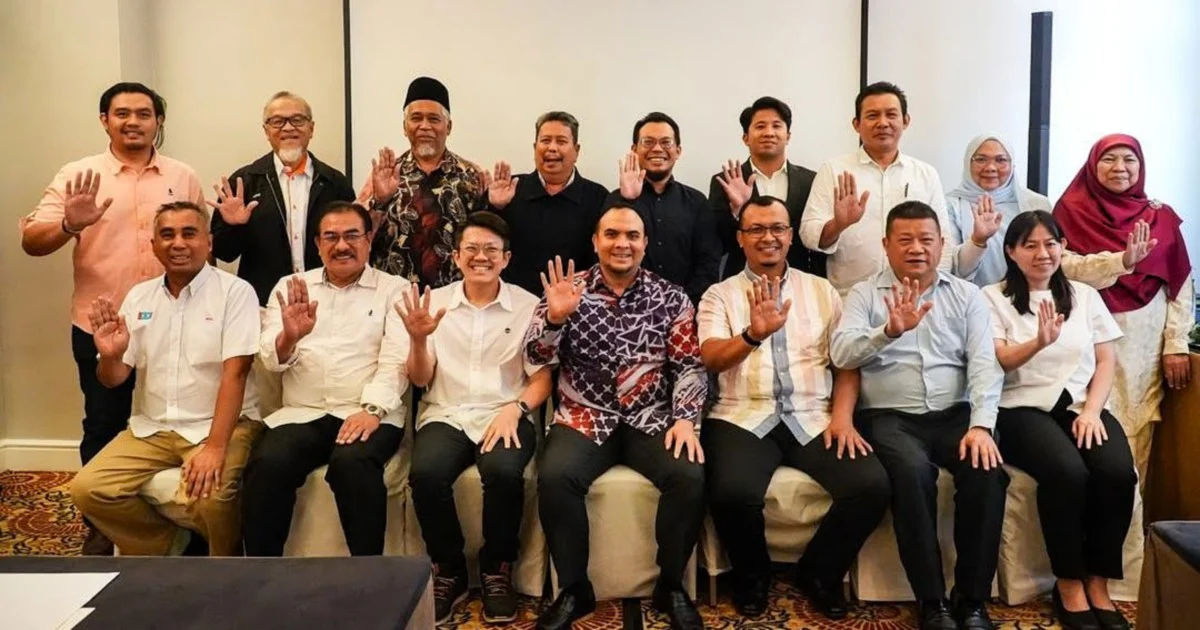
Prime Minister Datuk Seri Anwar Ibrahim has elevated his political secretary, Datuk Ahmad Farhan Fauzi, to lead the Pahang Pakatan Harapan chapter in a move that underscores the prime minister's direct influence over coalition management in the state. The appointment places a trusted lieutenant in a strategically important position as the ruling coalition seeks to strengthen its grip in a state that remains politically competitive and crucial to federal stability.
The decision to assign his own political secretary to head the state coalition leadership represents a calculated approach to party management in Pahang, a state where PH has made electoral gains but faces persistent challenges from the Perikatan Nasional opposition. By positioning someone from his immediate circle in this role, Anwar appears intent on ensuring tighter coordination between federal and state-level coalition operations, particularly given the complex political dynamics at play in Pahang.
Datuk Ahmad Farhan Fauzi's role as political secretary places him at the nexus of the Prime Minister's Office, where he has been instrumental in managing party affairs and political strategy at the highest level. His appointment to chair the Pahang PH chapter suggests that Anwar views maintaining coalition cohesion in Pahang as a priority issue requiring hands-on federal oversight rather than delegation to state-level figures alone.
Pahang's political landscape has been shaped by competing interests within both the ruling coalition and opposition. The state has historically been a stronghold for certain political parties, yet recent electoral contests have demonstrated growing competition. The appointment of a figure with direct access to the Prime Minister's inner circle reflects awareness that Pahang requires active federal engagement to sustain PH's electoral position and prevent defections or internal fracturing.
The move also carries implications for succession planning and leadership development within the coalition. Elevating Datuk Ahmad Farhan Fauzi to a state leadership position publicly visible profile builds his political standing within the broader PH framework, potentially positioning him for future ministerial or senior coalition responsibilities. This trajectory illustrates how federal power structures in Malaysia often intersect with state-level appointments, with trusted aides gaining experience and profile through strategically assigned roles.
For Pakatan Harapan more broadly, the appointment signals continued emphasis on personnel loyal to Anwar's faction and vision for coalition direction. In a coalition comprising multiple political parties with distinct interests and leadership hierarchies, the appointment of a federal official to manage state-level coordination can either strengthen overall coherence or create friction if local party leaders perceive it as external interference in state affairs. The reception from other Pahang PH component parties will likely indicate whether this move generates consensus or latent tension.
Pahang's significance extends beyond state-level politics. As one of Malaysia's larger states with substantial federal electoral representation, its political stability directly affects the federal coalition's overall parliamentary strength. Any shift in Pahang PH's leadership or effectiveness ripples through coalition politics at the national level, making state chairmanship appointments worthy of careful attention from federal leadership.
The timing and mechanism of Datuk Ahmad Farhan Fauzi's appointment also merit consideration. Appointments of this nature typically reflect responses to perceived gaps in state leadership effectiveness or changes in federal strategic priorities. Whether the previous leadership structure in Pahang PH required adjustment, or whether federal leadership sought to strengthen coordination ahead of anticipated political challenges, remains a question that observers of Malaysian politics will scrutinise in coming months.
For Malaysian political analysts, this appointment exemplifies the tight connections between federal executive power and coalition management structures. The Prime Minister's willingness to directly deploy his own political staff to state leadership positions demonstrates how personal networks and trusted relationships remain fundamental to Malaysian political operations, even in the context of formal coalition structures and state autonomous governance.
Looking forward, the success of Datuk Ahmad Farhan Fauzi's tenure as Pahang PH chairman will be measured against several benchmarks including internal coalition harmony, electoral performance in state-level contests, and the prevention of senior defections. As Anwar consolidates his leadership within the federal government and coalition structures, appointments like this reveal the mechanisms through which that consolidation occurs and the careful positioning of trusted allies in critical roles across Malaysia's federal and state political architecture.

