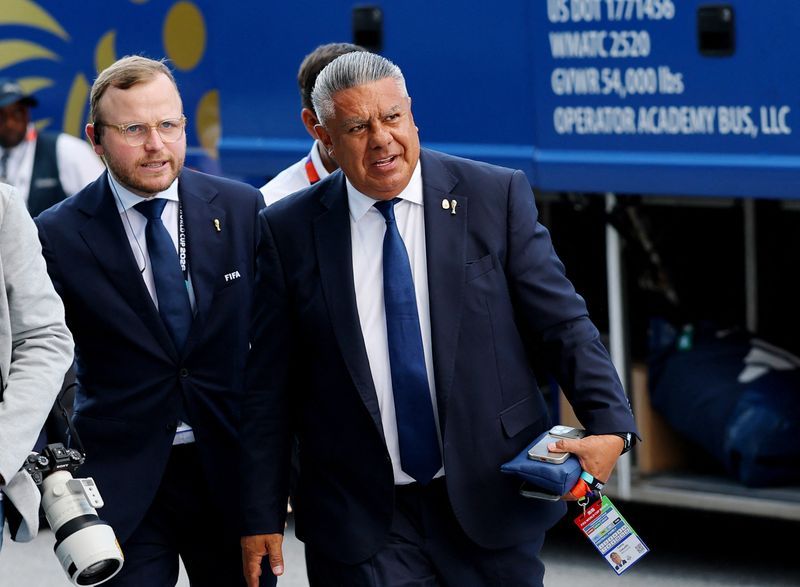
Argentina's football association moved swiftly to refute claims on Wednesday that its president Claudio Tapia or treasurer Pablo Toviggino have been ordered to provide testimony to United States authorities, even as the organisation acknowledged ongoing American legal scrutiny affecting the sport's governance in the country. The denial came after days of intense media speculation following airport encounters between the pair and federal agents, intensifying questions about the financial oversight of Argentine football at a time when the national team's World Cup triumph should have cemented national pride.
The AFA's carefully worded response distinguished between direct legal action against its top officials and broader investigative efforts targeting the organisation itself. While firmly rejecting suggestions that Tapia or Toviggino faced personal legal obligations, the association conceded that an unnamed third party had received a subpoena to appear before a United States grand jury. That third party, the AFA indicated, might be asked to provide information concerning various individuals, including persons employed by the football body, though the statement offered no clarity on the identity or role of this intermediary.
According to eyewitness accounts reported by local Argentine media, federal agents conducted an approximately thirty-minute interrogation of both Tapia and Toviggino aboard a bus positioned on the tarmac at New York's JFK Airport on Monday morning. The timing proved particularly awkward, occurring as the Argentine national squad prepared to board a chartered aircraft returning home following the World Cup final victory. The scene raised immediate concerns about the nature and urgency of the inquiry, though official channels remained cryptic about substantive details.
The investigation's scope appears substantially broader than individual misconduct. According to Infobae, American authorities are examining commercial contracts linked to the AFA that total more than three hundred million dollars. This figure suggests systemic rather than isolated irregularities within Argentine football's commercial arrangements. The probe represents an escalation of international scrutiny that began months earlier when Argentine authorities themselves conducted raids in December targeting suspected money-laundering activities within the sport, indicating that concerns about financial impropriety transcend borders and regulatory jurisdictions.
For Malaysian and Southeast Asian observers monitoring global football governance, the Argentina situation underscores how national sports organisations increasingly face accountability from foreign regulatory bodies. The involvement of United States law enforcement in examining South American football finances illustrates the transnational character of modern sports commerce, where broadcasting rights, sponsorship agreements, and merchandise deals often involve American companies and banking institutions. Any investigation into these revenue streams inevitably intersects with American legal authority.
The AFA's statement explicitly addressed the most contentious allegation circulating in Argentine media: that federal agents had confiscated electronic devices belonging to Tapia. The association categorically denied such seizures occurred, emphasising that no personal property had been taken from either the president or treasurer. This particular denial carries significant weight given how device seizure typically constitutes a dramatic and high-stakes enforcement action, one that would normally trigger immediate legal representation and formal notice.
The mystery surrounding the identity of the third party summoned to testify adds another layer of complexity to understanding the investigation's true direction. This person or organisation may possess documentary evidence, communications records, or transactional knowledge relevant to assessing whether commercial contracts awarded or administered by the AFA involved fraudulent practices, money laundering, or other federal crimes. Without knowing this party's relationship to the AFA, external observers cannot easily assess whether the summons targets a supplier, a financial intermediary, a consulting firm, or someone within the association itself.
The timing of these legal maneuvers—occurring when Argentina's football stood at the pinnacle of global achievement following their World Cup victory—creates considerable awkwardness for the sport's governing structures in the country. The contrast between on-field triumph and off-field legal complications demonstrates how even the greatest sporting achievements cannot insulate organisations from financial accountability requirements. Argentine football's international reputation now faces potential damage from revelations about commercial arrangements, regardless of whether individual officials bear direct criminal responsibility.
For Southeast Asian football administrators and sports ministry officials, the Argentina case provides instructive lessons about international financial transparency. As regional football commerce grows and increasingly involves global broadcasting networks and multinational sponsors, the potential for foreign regulatory action targeting supposedly domestic sporting organisations rises correspondingly. The investigation into AFA contracts suggests that scrutiny no longer remains confined to national borders, and that American authorities particularly will pursue financial investigations affecting their nationals' commercial interests.
The AFA's insistence that Tapia and Toviggino face no personal legal obligations might prove technically accurate while remaining politically damaging. Even in the absence of formal summonses, the detention and questioning of top officials attracts negative publicity and raises public questions about organisational integrity. Argentine football supporters and international observers now harbour legitimate questions about the integrity of commercial arrangements governing their sport, and no categorical denial can fully restore confidence once such doubts take root in public consciousness.
Looking ahead, the investigation's progression will depend significantly on evidence obtained from the unnamed third party and whatever cooperative arrangements American authorities can negotiate with their Argentine counterparts. The existence of parallel probes by both nations suggests information-sharing arrangements may already be in place, potentially accelerating the investigation's timeline. As more details inevitably emerge through either official disclosures or media reporting, the full scope of alleged financial irregularities within Argentine football commerce will likely become clearer.

