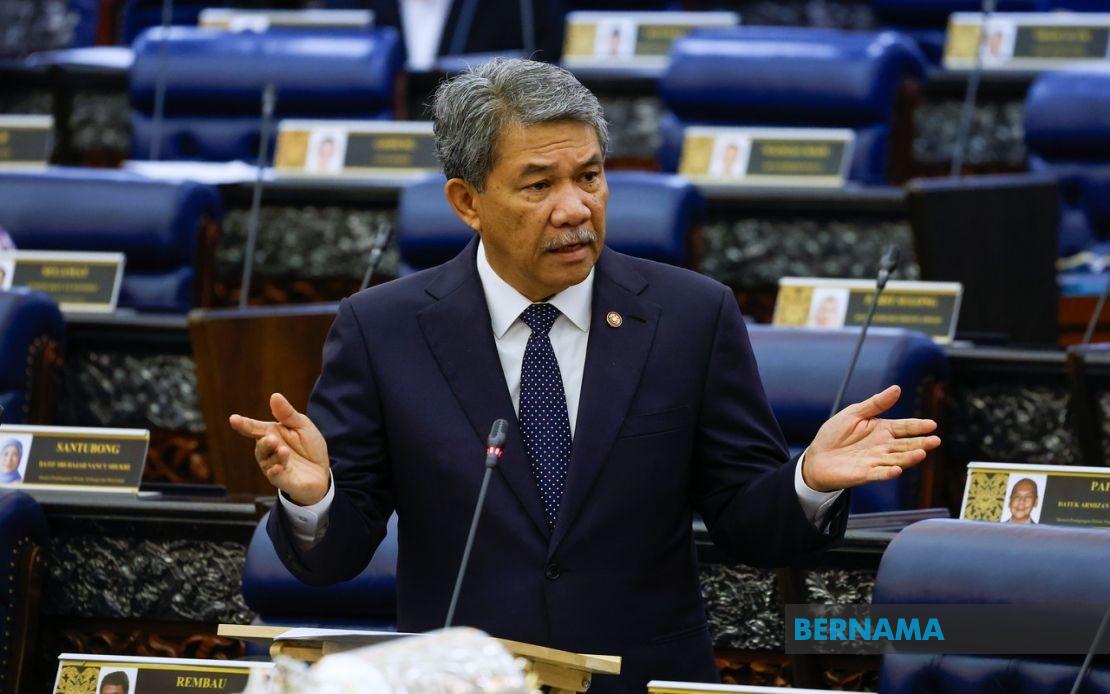
ASEAN is recalibrating its approach to implementing the Five-Point Consensus on Myanmar as regional leaders acknowledge that current efforts have not achieved the breakthrough necessary to resolve the deepening conflict. Foreign Minister Datuk Seri Mohamad Hasan revealed that while the framework remains the cornerstone of ASEAN's peace strategy, member states are now exploring complementary measures to make the initiative more effective. The shift reflects growing concern within the bloc that the consensus alone, despite its symbolic importance, has not translated into meaningful progress on the ground where Myanmar's political crisis continues to claim lives and displace communities.
At the 48th ASEAN Summit held in Cebu, Philippines on May 8, regional leaders tasked their foreign ministers with a more hands-on role in managing the Myanmar situation. Rather than relying solely on the existing framework, ASEAN heads of state directed diplomats to engage informally with Myanmar's various parties to gauge the current landscape and chart a realistic path forward. This decision signals a pragmatic recognition that traditional diplomatic channels and formal consensus statements, while important for maintaining ASEAN's institutional coherence, need to be supplemented by sustained, flexible engagement at multiple levels. The foreign ministers will assess developments and identify concrete next steps that can translate the Five-Point Consensus into actionable outcomes.
Mohamad emphasised during parliamentary questioning that any modifications to the consensus would require approval from ASEAN's highest political level, underscoring the bloc's commitment to maintaining consensus-based decision-making even as it adapts tactics. This constraint reflects ASEAN's founding principle of non-interference but also illustrates a potential limitation: the need for unanimous agreement can slow institutional response to fast-moving crises. The Foreign Minister's statement suggests that ASEAN is seeking to work within its traditional parameters while simultaneously acknowledging that incremental adjustments to implementation strategy are necessary. The distinction between the framework itself and how it is executed provides some operational flexibility without requiring the politically difficult process of renegotiating the original consensus.
Malaysia has advanced a specific proposal to extend Myanmar's six-month ceasefire, which was set to expire at the end of July, into a second phase that would be more comprehensive and sustained. This proposal reflects an understanding that ceasefires, however fragile, create space for dialogue and confidence-building measures. By proposing an extension rather than allowing the ceasefire to lapse, Malaysia aims to maintain momentum and prevent a return to full-scale hostilities that would further entrench the positions of various armed factions. The extended ceasefire would serve as a foundation for the next stage of peace efforts, though success depends entirely on the willingness of Myanmar's military leadership and armed resistance groups to maintain restraint.
Beyond the ceasefire proposal, Malaysia has also called on Myanmar to present a detailed roadmap that outlines the trajectory of the peace process over a defined period. This roadmap should include mechanisms for inclusive dialogue involving all stakeholders—the military government, the National Unity Government, the People's Defence Force, and the various ethnic armed organisations that control territory along Myanmar's borders. The emphasis on inclusivity reflects a lesson from previous peace attempts: settlements imposed by or negotiated between only the most powerful parties tend to prove unstable and may exclude grievances that subsequently reignite conflict. A genuinely inclusive process would be more cumbersome and time-consuming but potentially more durable.
A central concern animating ASEAN's renewed diplomatic push is the fear that prolonged instability in Myanmar could create a power vacuum attractive to external powers with interests in the region. Mohamad explicitly flagged the danger of third-party interference, which could transform Myanmar's domestic conflict into a proxy struggle serving foreign agendas. For Southeast Asia, such a development would be destabilising, potentially drawing in rival powers competing for influence and resources. ASEAN's principle of regional autonomy and non-interference by external actors would be undermined, and Myanmar could become a flashpoint for broader great-power competition. This calculation explains why ASEAN, despite its limited leverage over Myanmar's fractious parties, continues to invest diplomatic effort in finding a regional solution before international actors exploit the vacuum.
The Malaysian government's commitment to engaging with all parties to the Myanmar conflict—spanning the Naypyidaw authorities to the shadow National Unity Government based in exile, the armed resistance movement, and ethnic minority militias—reflects an understanding that no single actor can dictate an outcome. Malaysia's multicultural composition and experience managing communal tensions also position it as a plausible interlocutor with groups from different ethnic and religious backgrounds. However, Malaysia's leverage remains limited; it can facilitate dialogue and offer good offices, but cannot compel any faction to compromise when they believe military or political advantage lies ahead. The success of Malaysian mediation ultimately depends on calculations within Myanmar itself.
The Five-Point Consensus, agreed upon in 2021, outlined goals including immediate cessation of violence, constructive dialogue, humanitarian assistance, and assistance from ASEAN special envoys. Nearly three years later, implementation has stalled significantly. The military junta has resisted meaningful dialogue with opposition forces, humanitarian access remains restricted, and the conflict has actually intensified in many regions. This gap between aspiration and reality has prompted ASEAN's reassessment. Rather than abandoning the framework, which would signal ASEAN's failure and undermine its regional authority, member states are attempting to revitalise its implementation through more intensive diplomatic engagement and practical initiatives like ceasefire extensions.
For Malaysia and other ASEAN members, the stakes in Myanmar's resolution are considerable. Instability drives displacement, creating refugee flows that cross borders and strain host communities. Myanmar's conflict also diverts resources and political attention that could otherwise address broader development priorities across Southeast Asia. Additionally, a Myanmar that remains fractured and contested becomes a potential arena for proxy competition between China and India, as well as involvement by Western powers concerned with regional stability and human rights. ASEAN's ability to maintain regional centrality depends partly on demonstrating that it can broker meaningful progress on major crises like Myanmar's.
The diplomatic strategy now being pursued represents a pragmatic middle ground between two untenable positions: on one hand, passively accepting the status quo while the conflict metastasises, and on the other, abandoning ASEAN's consensual approach in favour of more assertive pressure that would violate the bloc's founding principles and likely prove counterproductive. By tasking foreign ministers with informal engagement, proposing concrete measures like ceasefire extension, and emphasising the need for inclusive dialogue backed by a clear roadmap, ASEAN is attempting to inject new energy into peace efforts. Whether these adjustments prove sufficient to alter the trajectory of Myanmar's conflict will depend significantly on developments within Myanmar itself, where political actors must ultimately choose compromise over continued contest.

