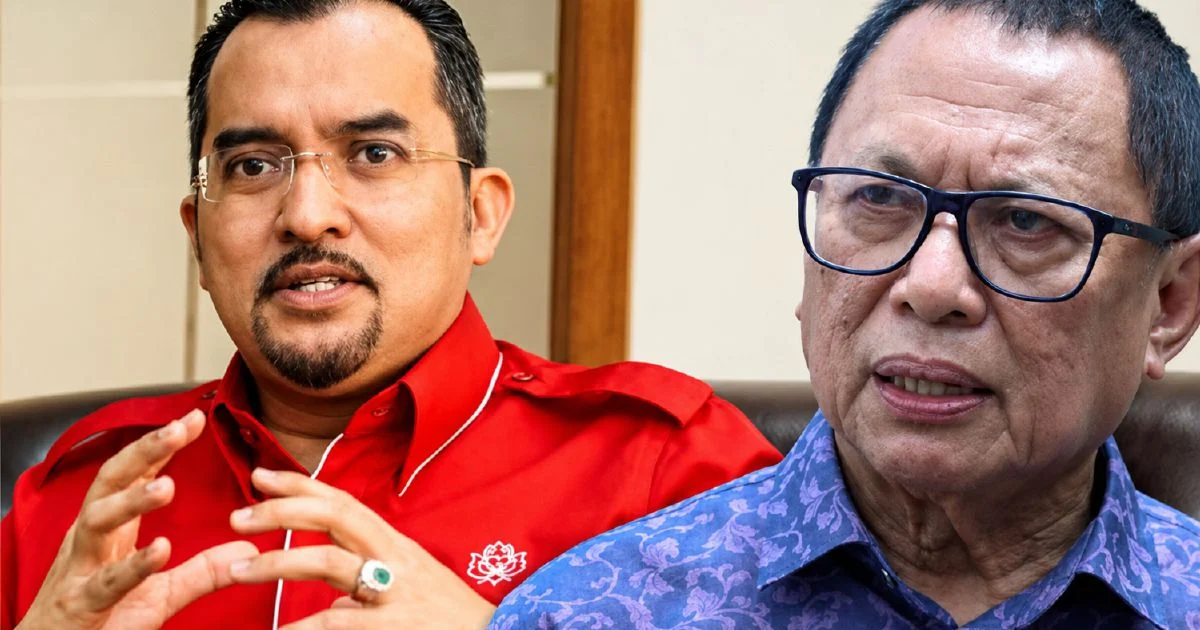
Tension within Umno's upper ranks has escalated following Datuk Dr Mohd Puad Zarkashi's resignation from the party, prompting a forceful rebuttal from secretary-general Datuk Dr Asyraf Wajdi Dusuki. The public exchange between the two senior figures underscores ongoing fractures within Malaysia's dominant Malay-Muslim political organisation, a party that has long projected itself as a monolithic force in national politics despite recurring internal strains.
The dispute centres on allegations that Puad Zarkashi has levelled against party leadership, reportedly involving claims related to interactions with royal institutions. Asyraf Wajdi's response constitutes a deliberate and detailed counter to these assertions, signalling that Umno's leadership is willing to engage in public contestation rather than manage the matter behind closed doors through traditional party machinery. This departure from customary practice suggests the gravity with which senior management regards Puad Zarkashi's accusations.
Puad Zarkashi's exit from Umno represents a significant loss of personnel, particularly given his seniority and the likely visibility his departure carries among party members and the broader electorate. Rather than allowing the resignation to fade from public consciousness, the secretary-general has chosen to engage directly, an approach that carries both tactical advantages and risks. By responding publicly, Asyraf Wajdi attempts to shape the narrative around Puad Zarkashi's motivations and the validity of his grievances, potentially limiting reputational damage to party leadership.
The timing of this internal conflict warrants consideration within Malaysia's broader political landscape. Umno has faced sustained pressure from competing political coalitions and shifting voter sentiment in recent years, making internal cohesion particularly valuable during periods of broader political uncertainty. High-level defections or departures, when accompanied by critical public statements, carry particular weight in Malaysian politics where party machinery remains central to electoral mobilisation and governance structures. Puad Zarkashi's resignation thus functions as both an individual decision and a potential signal to other members regarding organisational dynamics.
Aspects of Puad Zarkashi's claims involving palace matters require careful interpretation. Malaysia's constitutional monarchy occupies a distinctive position within the nation's political framework, and assertions concerning royal interactions typically generate heightened sensitivity. The fact that palace-related allegations feature prominently in this dispute suggests either that fundamental governance questions are at stake, or that such claims serve as particularly potent rhetorical weapons within party discourse. Asyraf Wajdi's counter-response likely aims to neutralise such claims through direct denial or reframing their significance.
From an organisational perspective, this public confrontation reveals the limits of Umno's internal discipline mechanisms. Where such disputes might previously have remained confined to closed committee sessions or handled through hierarchical correction, the emergence of public statements indicates either that reconciliation mechanisms have broken down, or that the departing member believes external pressure and public accountability constitute more effective strategies than internal processes. For observers of Malaysian politics, this transformation in conflict management styles carries implications for how powerfully traditional party structures currently function.
The secretary-general's position as responding party carries inherent advantages in media dynamics. Asyraf Wajdi, as the official spokesperson for party administration, likely commands greater access to party communications infrastructure and media relationships compared to a departing member. His counter-narrative thus reaches audiences through established channels of party communication, potentially amplifying its reach and credibility among party faithful and allied media outlets. This structural advantage may explain his decision to engage rather than dismiss the matter as unworthy of response.
Forensic examination of specific accusations and rebuttals remains limited without detailed disclosure of the underlying claims. However, the very fact that palace-related allegations have surfaced reflects persistent tensions around governance legitimacy and decision-making authority within Umno's command structure. Questions concerning how major party decisions relate to broader constitutional institutions occasionally emerge within Malaysian political discourse, and when they do, they frequently signal deeper disagreements about appropriate channels of authority and accountability.
The implications for Umno's future trajectory merit consideration. Political organisations in Malaysia have historically absorbed internal dissent through mechanisms ranging from quiet resignation to formal expulsion, each carrying distinct signals regarding party health and cohesion. Public disputes involving senior figures risk demoralising rank-and-file members while emboldening competing political entities to highlight Umno's internal weaknesses. For political observers and analysts tracking party dynamics across Southeast Asia's broader context, such episodes provide valuable insight into how long-established political machines manage internal legitimacy challenges.
Looking forward, the trajectory of this dispute will depend significantly on whether additional resignations or public statements emerge from other quarters of the party. Umno's leadership may attempt to contain the situation through party discipline or reconciliation efforts, or the conflict may continue to unfold in public forums. The responses of allied coalition partners and the broader political establishment will also shape how this episode influences perceptions of Umno's governance capacity. For Malaysian political observers, the coming weeks will likely clarify whether this represents an isolated incident or symptomatic of deeper organisational fracturing.

