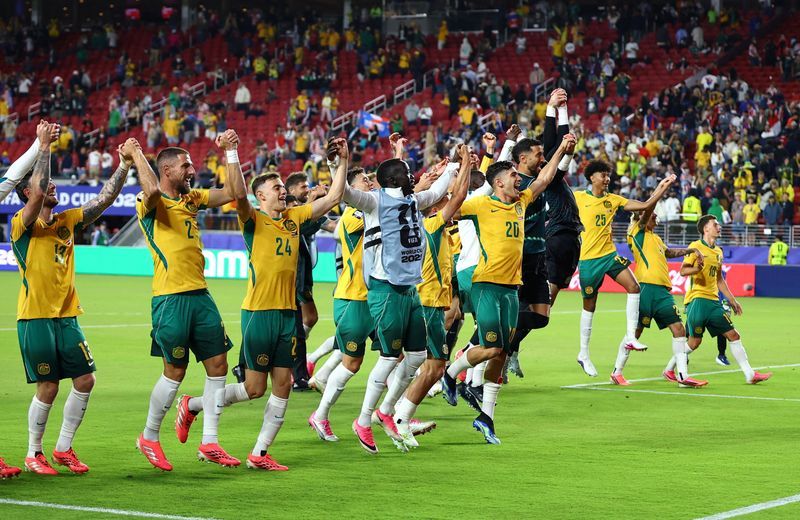
Australia have progressed to the World Cup's knockout phase for the third time in their tournament history, sealing their place in the round of 32 following a tightly contested 0-0 draw with Paraguay at San Francisco Bay Area Stadium on Thursday. The match proved a tactical battle of attrition, with both sides cancelling each other out in a physical contest that lacked the flowing football often associated with football's showpiece event. The Socceroos, guided by manager Tony Popovic, finished as runners-up in Group D behind co-hosts the United States and will now face the second-placed team emerging from Group G, where Egypt and Iran are scheduled to clash with Belgium and New Zealand respectively on Friday.
Popovic's tactical adjustments ahead of the Paraguay encounter demonstrated considerable boldness, with the Australian coach making half a dozen changes to his starting lineup. The reinstatement of lively midfielder Nestory Irankunda and the inclusion of Cristian Volpato in attack signalled the Socceroos' intent to play with greater offensive ambition. These personnel shifts reflected a strategic decision to prioritise attacking opportunities despite the stakes involved—a second-place finish would guarantee passage, though a more convincing performance might have eased Australian supporters' nerves considerably. The tactical shuffle proved the catalyst for Australia's dominance in the opening period, even if their efforts ultimately yielded no tangible reward.
Australia's early dominance centred on their right flank, where the repositioned Jordan Bos—shifted from left back to provide cover for the injured Jacob Italiano—orchestrated several promising incursions into Paraguay's territory. Volpato created space in the attacking third with intelligent movement, fashioning an opportunity for Jackson Irvine within the first moments of play. Irvine's response, however, exemplified the Socceroos' frustrating lack of composure in front of goal, as he powered an angled effort directly at Paraguay goalkeeper Orlando Gill rather than testing the keeper's reflexes. Further attempts by both Bos and Volpato later in the opening 45 minutes drew saves from Gill but lacked the precision or velocity to genuinely trouble the Paraguayan custodian.
Paraguay's first-half performance was markedly subdued, restricted to a solitary effort on goal as Gustavo Alfaro's side absorbed sustained pressure from the Australian midfield and forward line. The South American outfit's tactical approach prioritised compactness and defensive organisation over attacking flair, a pragmatic strategy that frustrated Popovic's more adventurous setup. Paraguay's relative inactivity prompted Alfaro to introduce changes at the interval, bringing Brazilian-born attacker Mauricio into the fray to inject greater dynamism into his team's play. The substitution yielded an immediate attempt as Mauricio tried his fortune from distance five minutes after the restart, though his speculative effort sailed harmlessly beyond goalkeeper Thomas Beach's goal.
As the second half progressed, Paraguay gradually gained ascendancy in territorial possession and attacking initiative, with the energetic Julio Enciso emerging as a focal point for the South Americans' forward momentum. Enciso's direct running and ball-carrying repeatedly unsettled Australia's defensive shape, creating pockets of space that had previously been unavailable. The Paraguayan demonstrator of attacking intent nearly produced a breakthrough goal with approximately eight minutes remaining, when his low drive flashed agonisingly wide of the left post. The trajectory of the match shifted noticeably in the final quarter, as Paraguay pressed for a breakthrough whilst Australia appeared content to preserve their narrow advantage in the group standings.
Australia's defensive resilience proved equal to Paraguay's intensifying pressure, with the Socceroos weathering a sustained barrage of South American attacks without serious jeopardy to their position. In the 89th minute, Bos provided a momentary scare for the Paraguay backline when he burst through the opposition's defensive line and charged into the penalty area from the right, only to see his shot drift past the far post with the goal gaping invitingly. Mauricio offered one final threat when he carved out space on the edge of the Australian penalty area but his tepid, low effort posed no genuine difficulty for Beach, allowing the Socceroos to secure passage with a margin of technical superiority that belied the scrappy nature of proceedings.
Paraguay's progression to the knockout phase remains uncertain despite the draw, with the 2010 quarter-finalists accumulating four points from their Group D campaign. The South Americans' hopes of advancing rest upon finishing among the eight best-performing third-placed teams across all groups, a scenario that requires scrutiny of results from concurrent matches. Paraguay's disappointment at failing to convert their late-match momentum into a decisive goal is tempered by the knowledge that a single victory in their final group fixture would guarantee advancement. The outcome underscores the increasingly marginal nature of qualification mathematics at major football tournaments, where goal difference and head-to-head records frequently determine progression for teams level on points.
For Australia, the achievement represents the continuation of a resurgence in the world football stage after a two-decade absence from World Cup football prior to their return in Qatar four years ago. The Socceroos have now featured in three World Cup tournaments since their initial qualification in 1974, consolidating their position among international football's established nations. The progression to the knockout phase demonstrates the competitive parity that now characterises international football, where historically smaller footballing nations can compete effectively against traditional heavyweights through disciplined tactical execution and strategic player deployment. Popovic's management of squad rotation and tactical flexibility suggests Australia possess the organisational infrastructure to prove competitive in the latter stages of the tournament, though their attacking limitations against a defensive Paraguay will require addressing before facing opponents of greater attacking sophistication.
The immediate implications for Malaysian supporters centre on Australia's potential progression in their half of the draw, with the Socceroos' participation in a tournament contested across North America adding geographical and time-zone considerations to viewing patterns. The outcome also highlights the unpredictability of group-stage football, where accumulated defensive performances and tactical pragmatism frequently overshadow the attacking spectacle that casual supporters expect. The knockout phase promises more open football as teams pursue victory, suggesting Australia's attacking capabilities may yet prove decisive against opponents similarly motivated to pursue three points rather than settle for stalemate.

