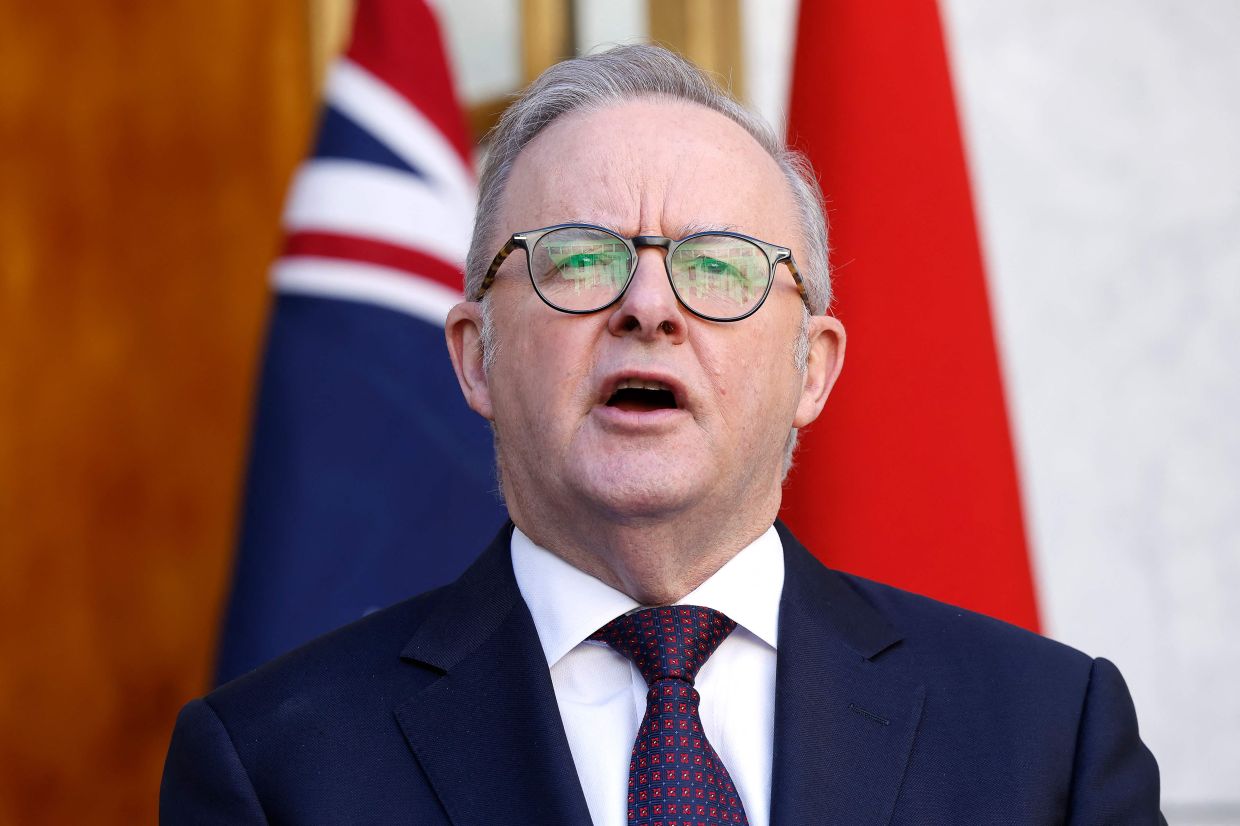
Australian Prime Minister Anthony Albanese finds himself embroiled in fresh diplomatic controversy after declining to apologise on Tuesday for comments he made about a gift from Japanese Prime Minister Sanae Takaichi. The remarks, which surfaced this week from a podcast interview recorded last month, have drawn sharp criticism from opposition politicians who describe his behaviour as disrespectful and insulting to Australia's important regional ally.
The incident represents the second controversy in as many weeks for Albanese, who previously issued an apology for crude sexual references he made during the same Bush Deep podcast interview. In that earlier instance, the Australian leader made explicit comments about singer Kylie Minogue that prompted immediate backlash and a formal apology. However, his handling of the Japanese melon comments demonstrates a markedly different approach, with the Prime Minister flatly rejecting calls for further contrition.
During his conversation with podcast host Nikki Osborne at his official residence, Albanese discussed a gift he received from Takaichi during her May visit to Australia. The Japanese Prime Minister presented him with what he characterised as a "strange" present—a premium Japanese royal melon. What followed was banter that opposition figures have criticised as crossing the line from innocent humour into something far more problematic. When Osborne asked whether Takaichi had smuggled the fruit through Australian customs, Albanese responded with innuendo, remarking that he had "got a couple of melons." The host then made a comparison between Takaichi and actress Pamela Anderson, further extending the inappropriate exchange.
The significance of this incident extends beyond mere office banter. In Japanese culture, premium melons represent far more than ordinary fruit—they occupy a rarefied status as luxury gifts befitting formal diplomatic occasions. According to Japan's former ambassador to Australia, these high-grade melons can command prices exceeding AUS$270, or approximately US$190. The gift itself thus carried considerable symbolic weight as a gesture of respect and goodwill from one major leader to another. Albanese's flippant characterisation of the present and the crude jokes that followed therefore acquire a dimension of cultural insensitivity that extends beyond mere rudeness.
On Tuesday in parliament, when directly confronted with questions about his conduct, Albanese adopted a defensive posture. Rather than engaging seriously with the criticism, he dismissed the underlying premise of the inquiry entirely. "I reject the assertion in the question," he responded tersely, offering no substantive explanation or acknowledgment of why his words might have caused offence. This approach contrasts sharply with his swift contrition over the Kylie Minogue comments, raising questions about consistency in how he calibrates responses to different controversies.
The Prime Minister did attempt to reframe the controversy by emphasising his relationship with his Japanese counterpart. "Prime Minister Takaichi is a friend of Australia and a friend of mine," he stated, suggesting that the tenor of their personal relationship should inoculate him against criticism over how he publicly discussed her gift. This framing, however, may miss the broader point—that comments made in a widely-distributed podcast reach audiences far beyond the immediate parties involved and carry implications for how the bilateral relationship is perceived internationally.
Australia's Foreign Minister Penny Wong sought to manage the diplomatic fallout by characterising Albanese's remarks as misunderstood rather than genuinely offensive. "The prime minister has been clear that he did not mean for those comments to be interpreted in the way they have been by those opposite," Wong told parliament, directing responsibility for the controversy toward opposition politicians rather than the substance of what was said. This defensive posture from the government suggests an attempt to control narrative damage without conceding substantive ground.
The incident carries particular resonance for Southeast Asian observers given the delicate nature of Australia's diplomatic relationships in the region. Japan ranks among Australia's most important strategic partners, particularly given shared interests in regional security and technology cooperation. Public perception of how Australian leaders treat Japanese counterparts influences the broader context of bilateral engagement. While a single podcast exchange might seem inconsequential, accumulating instances of casual disrespect can subtly erode the diplomatic capital essential to maintaining deep partnerships.
For Australian domestic politics, the controversy reflects ongoing questions about Albanese's judgment and professionalism in informal settings. The Prime Minister projects a deliberately casual public persona, presenting himself as relatable and down-to-earth. Yet these latest incidents suggest that this informality, when extended into diplomatic contexts or recorded conversations intended for public consumption, may create unintended consequences. Opposition politicians have seized on both episodes as evidence of poor decision-making at the highest levels of government.
The broader pattern also raises questions about media literacy and technological awareness among political leaders. Albanese's participation in a podcast interview—itself a relatively informal medium compared to traditional news interviews—created a setting where casual conversation was being recorded and would inevitably reach wide audiences. The gap between his apparent sense of the conversation's privacy and its actual reach may partly explain why he felt comfortable engaging in crude banter.
Looking forward, this episode may influence how other regional leaders approach engagements with Australian counterparts. If public commentary about diplomatic gifts becomes fodder for crude jokes, it potentially signals that protocol and respect for cultural norms carry less weight than previously assumed. This subtle message could have ripple effects across the broader landscape of Australian regional diplomacy.
The incident also underscores the ongoing tension between authenticity and propriety in modern political leadership. While voters often respond positively to politicians who present themselves as genuine and unscripted, the boundaries of appropriate informality become blurred when conversations enter the public domain. Albanese's refusal to apologise for the Japanese comments suggests he calculates that his political base will support his position, but the diplomatic costs may ultimately outweigh any domestic benefits of maintaining a defiant posture.

