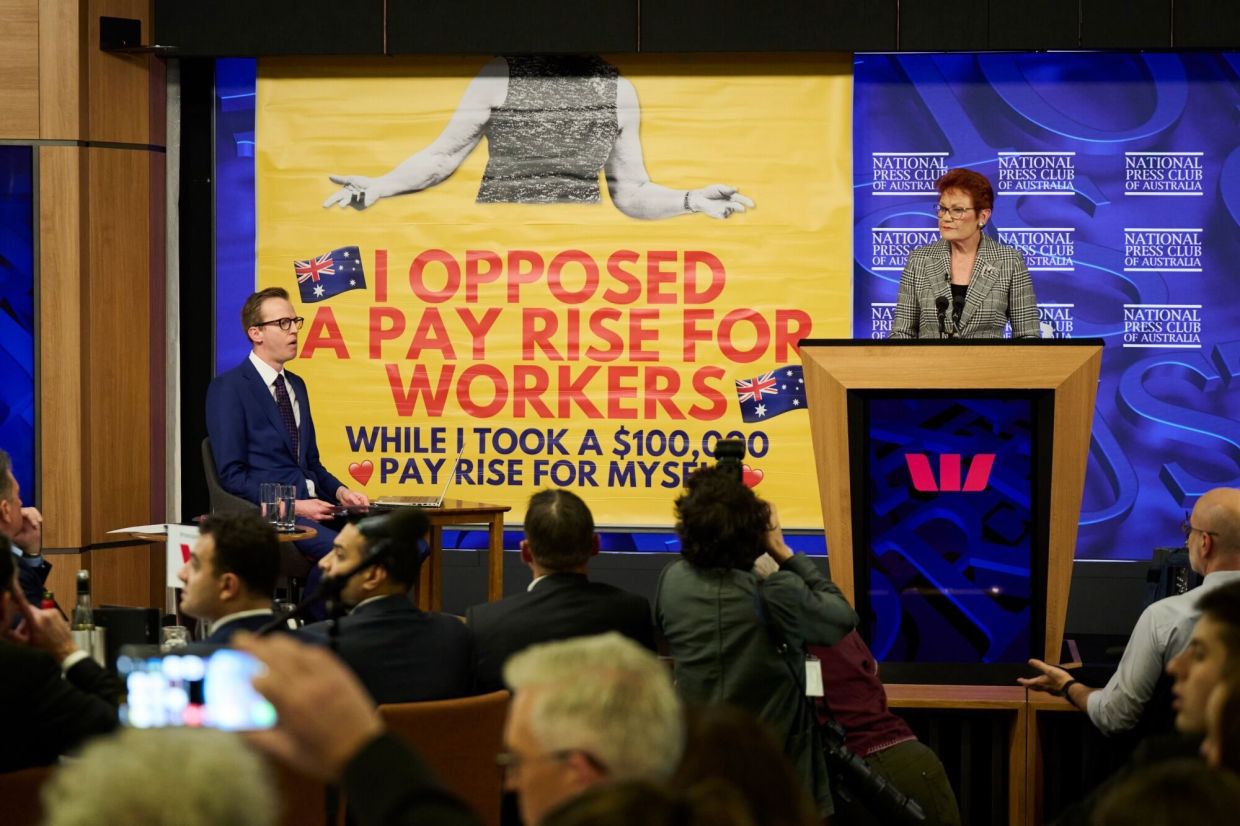
Pauline Hanson, leader of Australia's hard-right One Nation party, has declared that her country must abandon decades of multicultural policy in favour of a monocultural framework. Speaking at the National Press Club in Canberra on Wednesday, Hanson argued that multiculturalism itself lies at the heart of Australia's housing crisis, making the case that extremely high immigration levels have exacerbated affordability challenges gripping the nation. This marked a significant moment in her three-decade political career, being her first address to the prestigious venue.
Hanson's rhetoric distinguishes between what she calls a multiracial society and what she insists must be a monocultural one. "We cannot be a multicultural society," she declared. "We are a multiracial society, but we must be monocultural. Australians must live under the one cultural umbrella." The framing attempts to separate demographic diversity from cultural integration, positioning her argument not as one against racial diversity but rather against what she characterises as the preservation of distinct cultural communities within Australia's borders. This distinction, however nuanced in her presentation, reflects a broader ideological position that has animated populist movements across developed democracies in recent years.
The One Nation leader pledged to significantly reduce migration numbers if her party gains greater political influence, with particular emphasis on restricting entry from regions she described as "immersed in extremism like radical Islam." This language invokes security concerns as a justification for restrictive immigration policy, a rhetorical strategy that has proven politically potent in Western democracies grappling with integration challenges and terrorism concerns. The pledge represents a hardening of Australia's immigration debate beyond economic arguments into cultural and security frameworks.
One Nation has experienced a remarkable surge in public support over the preceding twelve months, capitalising on political instability that followed the collapse of the centre-right coalition government's electoral fortunes in May of the previous year. The party's rising poll numbers reflect broader voter dissatisfaction with establishment politics and growing anxiety about quality-of-life pressures, particularly housing affordability and cost-of-living burdens. Hanson's willingness to make sweeping claims about multicultural policy appears designed to harness this discontent by offering clear villains and straightforward solutions.
Australia's economic environment has deteriorated significantly, with households facing resurgent inflationary pressures, elevated interest rates that have strained mortgage payments, and surging fuel costs partly attributable to regional instability in the Middle East. These material pressures have created fertile ground for populist messaging that attributes complex economic challenges to immigration and green energy policies. Hanson explicitly blamed immigration and the costs associated with pursuing renewable energy transition for Australia's current difficulties, connecting disparate policy concerns into a coherent if oversimplified narrative about national priorities.
Prime Minister Anthony Albanese's Labor government has attempted to address some of these economic pressures through targeted interventions, including a temporary reduction in fuel excise duties to ease immediate cost-of-living burdens and pursuit of tax reforms intended to address housing affordability challenges. These measures reflect a conventional policy response to cyclical economic pressures, seeking to provide relief without fundamentally restructuring the economy or immigration framework. The government's approach represents a middle path between addressing genuine economic concerns and maintaining Australia's established multicultural framework.
Albanese has articulated a counter-narrative to Hanson's populism, characterising the rise of simplified grievance-based politics as a concerning reaction to economic dysfunction rather than a legitimate policy platform. His framing positions populism as symptomatic of real economic problems rather than as a solution to them, arguing that systems failing ordinary citizens create openings for politicians offering scapegoats rather than substantive remedies. This diagnosis suggests that addressing underlying economic issues represents the most effective counter to populist movements.
The debate between Hanson's vision and Albanese's response reflects deeper tensions within advanced democracies about how to balance immigration, cultural integration, and economic management. Australia's immigration system has been substantially more welcoming than many comparable nations, with skilled migration and humanitarian resettlement forming core components of population policy. Hanson's challenge to this framework represents a significant departure from bipartisan consensus that has characterised much of Australian immigration policy since the formal abandonment of the White Australia Policy in the 1970s.
For Malaysia and Southeast Asia, Australia's internal debate carries implications for regional migration patterns and cultural relations. Australia remains a significant destination for Malaysian professionals, students, and skilled workers, with substantial communities established across major cities. Any substantial shift toward restrictive immigration policy could affect opportunities for regional citizens seeking education or employment in Australia. Additionally, the explicit targeting of Islamic communities in Hanson's rhetoric has potential ramifications for interfaith relations and regional perceptions of Australian inclusivity.
The One Nation surge also reflects patterns visible across other developed democracies, where economic anxieties and demographic change have fuelled support for populist movements promising to restore national priority and cultural cohesion. Whether Hanson's party can translate poll gains into sustained political influence remains uncertain, but her prominence in national debate signals that immigration and cultural integration have become central to Australian political competition. The outcome of this debate will shape Australia's trajectory as a multicultural nation and its engagement with Asia-Pacific neighbours.