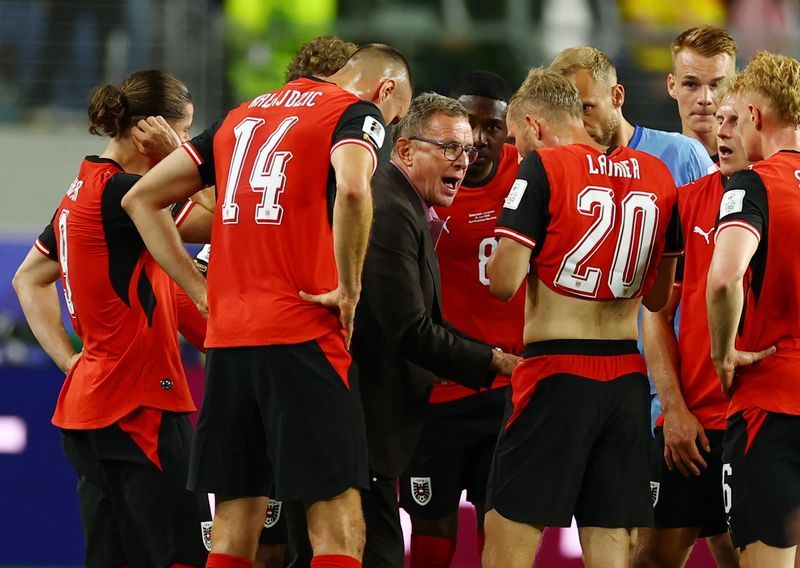
Austria's bid to build on their impressive Euro 2024 form hit a significant bump when they needed a late penalty from substitute Marko Arnautovic to secure a 3-1 victory over World Cup debutants Jordan in California on Tuesday. The Austrian side, widely expected to dominate their first-round clash against the underdog Jordanians, instead found themselves frequently troubled by their opponent's attacking intent and defensive discipline throughout a match that remained far more competitive than pre-game predictions had suggested.
Coach Ralf Rangnick offered no excuses for the unconvincing performance, instead redirecting credit toward Jordan for their resolute approach. Rather than dwell on his team's fragile display, the Austrian tactician highlighted the courage and quality demonstrated by a nation making its World Cup debut. When pressed about Austria's struggles on the pitch, Rangnick's response was unequivocal: Jordan deserved the lion's share of recognition for keeping his favoured side under sustained pressure throughout the encounter.
Rangnick elaborated on his assessment, explaining that the Jordanian team had surprised even his own expectations with their tactical execution and bravery. He acknowledged that while observers had pencilled Austria in as clear favourites heading into the match, the reality on the field proved far different. Jordan's willingness to press high, maintain shape defensively, and create opportunities of their own demonstrated a level of preparation and ambition that contradicted the conventional wisdom about smaller nations at the tournament.
The Austrian coach seized the opportunity to make a broader point about the changing landscape of international football. He emphasised that the World Cup's expansion to 48 teams, a format shift that has drawn criticism from traditionalists, has proven beneficial in enriching the tournament's overall quality and competitive balance. Rather than viewing the expansion sceptically, Rangnick framed it as an opportunity for previously excluded nations to test themselves on the sport's grandest stage, with their participation elevating rather than diluting the competition.
Rangnick's commentary reflected observable reality across the early rounds of the tournament, where several supposed minnows had already produced notable results that challenged conventional hierarchies. Spain's unexpected stalemate with Cape Verde offered a prime example of how tactical discipline and organised defending could frustrate more celebrated opponents. Australia's victory over Turkey similarly underscored how meritocratic modern football had become, where preparation and execution could overcome nominal quality gaps. Haiti's combative display against Scotland further illustrated that smaller nations no longer represented expendable participants, but rather genuine obstacles for established teams.
The coach's observations carried particular weight given Austria's trajectory. The national team had genuinely impressed observers with their performances throughout Euro 2024, establishing themselves as genuine contenders capable of challenging Europe's elite. That tournament success had elevated expectations heading into this World Cup campaign, with many analysts predicting Austria would progress comfortably from their group. The Jordan match, however, provided a stark reality check, suggesting that even well-prepared and talented teams could find themselves struggling against organised, motivated opponents regardless of FIFA rankings or historical prestige.
Rangnick articulated a fundamental truth about contemporary tournament football: the gap between traditional powerhouses and emerging nations has narrowed considerably over the past 15 years. Technical development, improved coaching infrastructure, and greater access to international competition have allowed smaller football nations to close the gap that once existed. Teams that might have been overwhelming favourites two decades ago now cannot assume comfortable victories against opponents from less established football nations.
The immediate challenge confronting Austria now involves facing Argentina, current leaders of Group J following their emphatic 3-0 victory against Algeria. That fixture will test whether Austria can regain their composure and execute with greater precision, or whether the Jordan experience signals deeper vulnerabilities within their squad. Rangnick's diplomatic praise for Jordan should not obscure the fact that trailing Argentina in the group standings represents a precarious position that demands a marked improvement in performance.
Rangnick's willingness to acknowledge opponent strength rather than deflect blame demonstrates his coaching philosophy and experience. His remarks about the expanded tournament format and the genuine competitive quality of World Cup debutants suggest a coach who views international football through a realistic lens, understanding that tournament success increasingly depends on navigating tight matches against well-organised opponents rather than banking on superiority derived from historical advantage or contemporary ranking.
For Malaysian and Southeast Asian readers, Rangnick's analysis carries particular resonance. The improved performance of nations like Jordan illustrates broader global trends in football development, where investment in coaching, facilities, and youth development programmes yields tangible returns on the international stage. It suggests that Asian national teams competing at future World Cups need not accept their conventional underdog status as inevitable, but rather can construct programmes emphasising organisation, tactical discipline, and technical proficiency to compete meaningfully against established powers.