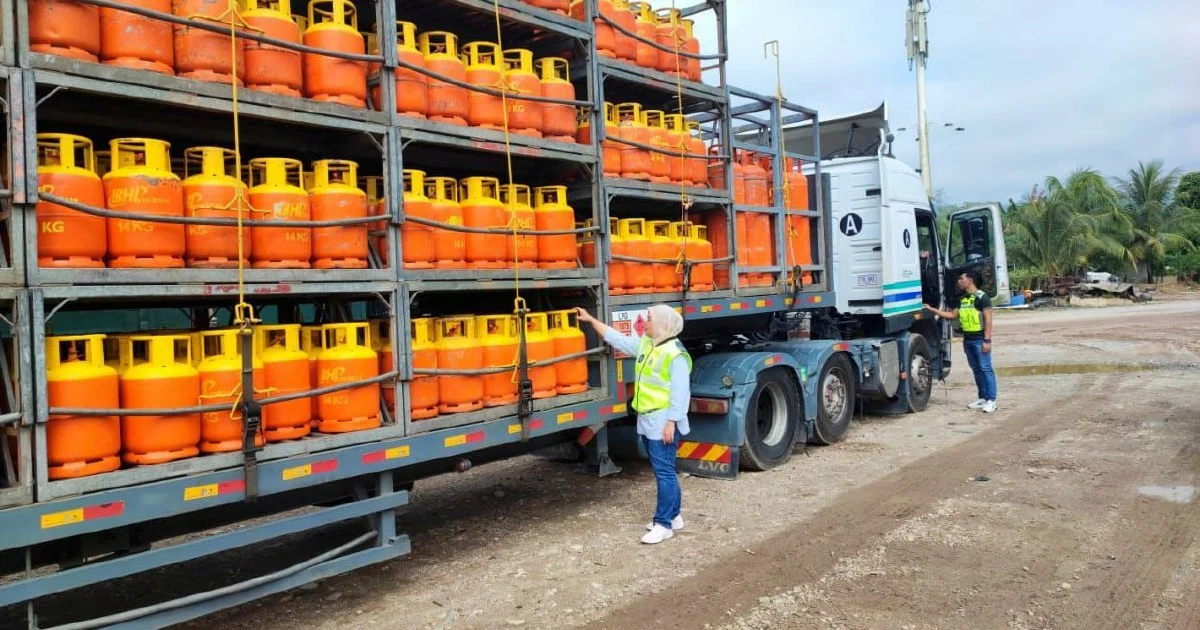
Enforcement officers conducting operations in Bentong have uncovered a significant cache of liquefied petroleum gas (LPG) cylinders valued at RM405,000 stored within a secured compound. The discovery came during a raid on a fenced storage facility where the gas containers were found positioned on a trailer, raising questions about the legality of the operation and regulatory compliance.
The seized cylinders represent a substantial commercial quantity of LPG, suggesting this was more than a small-scale operation. The valuation of RM405,000 indicates the scope of the stockpile and its potential market value, which underscores the economic incentives that may drive illegal LPG trading networks. Such operations typically circumvent proper licensing, safety protocols, and tax obligations that legitimate distributors must maintain.
Liquefied petroleum gas remains a critical fuel source for Malaysian households and businesses, from cooking to industrial applications. The regulatory framework governing LPG supply chains is designed to ensure safety standards, prevent black-market operations, and guarantee consumer protection. When illegal storage facilities operate outside these controls, they pose significant risks not only to the surrounding community but also to legitimate market operators who maintain compliance with government regulations.
The discovery in Bentong reflects broader enforcement challenges across the country as authorities work to combat the underground fuel trade. Pahang, where Bentong is located, has seen various illegal fuel and gas operations detected in recent years, suggesting persistent demand for unregulated supply channels. The fenced nature of the facility indicates deliberate attempts to conceal the operation from public view and regulatory oversight.
Enforcement agencies have intensified raids on suspected illegal LPG facilities as part of coordinated efforts to tighten supply chain controls. These operations typically target storage areas, distribution points, and transportation hubs suspected of handling uncommissioned or smuggled gas cylinders. The success of this Bentong raid demonstrates the effectiveness of intelligence-led enforcement actions in identifying problematic facilities.
The implications for legitimate LPG distributors are substantial, as underground operations undercut prices and distort market competition. Small retailers and gas suppliers operating within regulatory frameworks face unfair competition from these black-market outlets. This dynamic encourages some consumers to patronise illegal channels, creating a vicious cycle that weakens the formal economy and reduces tax revenue for public services.
Safety concerns associated with illegal LPG storage cannot be understated. Properly regulated facilities adhere to stringent safety standards regarding storage temperatures, ventilation, fire prevention measures, and regular inspection protocols. Unsanctioned operations often ignore these requirements, placing workers, nearby residents, and the environment at considerable risk. Gas leaks or explosions at poorly maintained facilities could result in casualties and property damage.
The fenced compound in Bentong suggests an organised operation with infrastructure investment and deliberate concealment measures. Such sophistication points to networks potentially involved in larger-scale smuggling or parallel trading activities. Authorities may use intelligence gathered from this seizure to identify connections to other illegal distribution points or supply sources throughout the region.
For Malaysian consumers, crackdowns on illegal LPG sources ultimately protect market integrity and ensure that regulated pricing structures reflect genuine supply costs. While black-market prices may appear attractive short-term, they often mask compromised safety standards and inconsistent product quality. Supporting legitimate supply chains through licensed retailers ensures accountability and recourse should problems arise.
The enforcement action also highlights resource allocation challenges facing regulatory bodies tasked with monitoring sprawling distribution networks. Bentong's location in a relatively less urbanised part of Pahang may have made the facility less visible to routine monitoring, suggesting that authorities must continuously adapt surveillance strategies to identify emerging illegal operations in varied geographical contexts across Malaysia.
Moving forward, this seizure underscores the importance of public vigilance in reporting suspicious activities. Community members who notice unusual gas storage operations, regular truck movements at unmarked facilities, or suspiciously low prices should contact authorities. Information-sharing between federal enforcement agencies, state-level authorities, and local enforcement bodies remains crucial for sustained effectiveness against entrenched underground trading networks.
The investigation into the Bentong facility will likely reveal details about sourcing, distribution networks, and customer bases served by the operation. Such intelligence helps authorities understand how illegal LPG enters circulation and identify systemic vulnerabilities in border controls, port inspections, or internal supply chain oversight. Continued coordinated enforcement across state lines remains essential for disrupting these networks comprehensively.

