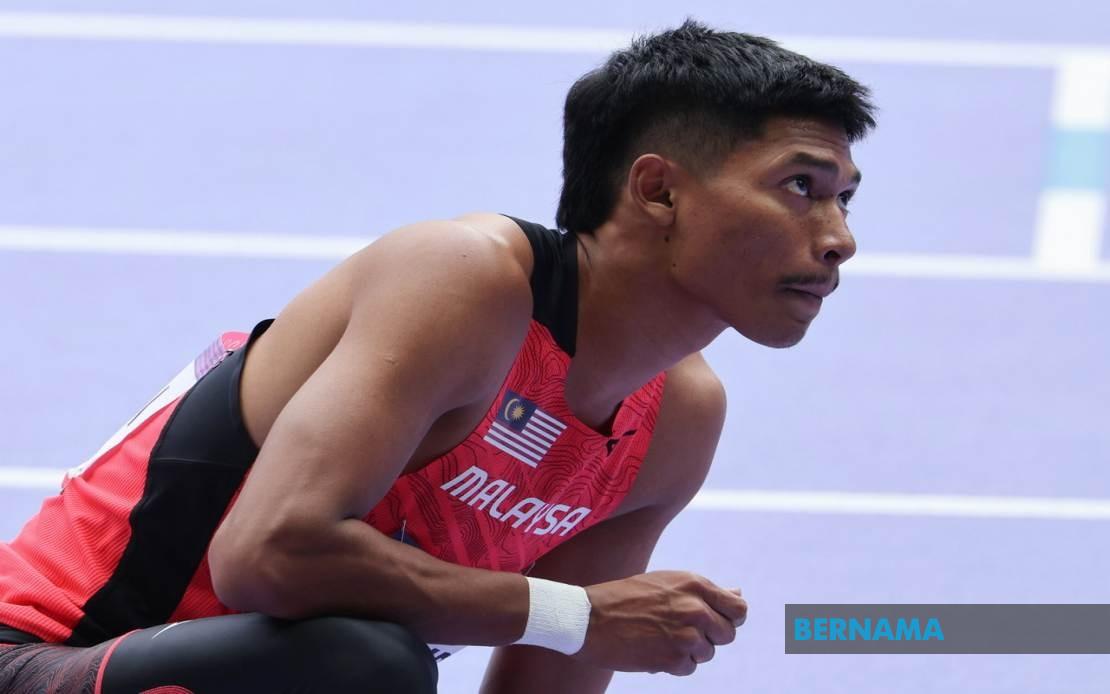
Muhammad Azeem Mohd Fahmi, Malaysia's fastest sprinter and holder of the national 100-metre record at 10.09 seconds, has signalled his intention to remain in Malaysia and pursue his athletic ambitions on home soil after wrapping up his university education at Auburn University in the United States. The 22-year-old's decision represents a significant development for Malaysian athletics, as top-tier sprinters frequently pursue extended training opportunities abroad following university completion. Azeem's choice to base himself domestically reflects both personal priorities and confidence in the local sporting infrastructure to support his continued progression.
The sprinter has been away from Malaysia for four years while studying at Auburn, and he emphasised that family reunification and quality time with loved ones have become paramount considerations in his career planning. This desire to reconnect with his immediate support network—including parents, siblings, and long-standing coaches—appears to have weighed heavily against the potential advantages of remaining in the United States for professional training and competition. For a young athlete at his level, such decisions can carry substantial implications for training quality and competitive exposure, making his prioritisation of personal bonds a notable aspect of his reasoning.
Azeem's training arrangement reflects a hybrid approach designed to maintain the quality of coaching he received overseas while establishing operational headquarters in Malaysia. His American coach Ken Harnden will continue designing his training programmes remotely, ensuring continuity with the methodology that produced his record-breaking performances. This framework allows Azeem to benefit from elite-level technical guidance without requiring permanent relocation to the United States, a compromise that may become increasingly common among Southeast Asian athletes seeking to balance career advancement with regional stability.
Local coach Muhammad Amir Izwan Tan Abdullah will assume day-to-day supervision responsibilities, managing Azeem's daily training sessions and competition preparation within the Malaysian context. This division of labour between international strategic coaching and domestic operational oversight suggests confidence in the capability of Malaysia's local coaching cadre to implement advanced training methodologies. The arrangement also provides an opportunity for knowledge transfer, potentially benefiting other Malaysian sprinters through Amir's exposure to the training principles and techniques employed by Harnden.
For Malaysian athletics, Azeem's commitment to remaining in the country holds significance beyond individual career considerations. The national 100-metre record of 10.09 seconds, while respectable regionally, remains some distance below the competitive standards of neighbouring Southeast Asian nations and global elite sprinters. Azeem's continued presence in Malaysia provides the national athletics programme with a visible ambassador and a benchmark performer who can help elevate domestic sprint standards. His decision to train locally also demonstrates that competitive development at the highest amateur levels is achievable within Malaysia's current sporting infrastructure.
The sprinter indicated that while furthering his academic credentials remains on his radar, immediate priorities centre on athletics. He suggested a potential timeline of several months focusing exclusively on sports before considering master's degree programmes, a pragmatic sequencing that recognises the demands of peak athletic performance. This suggests Azeem intends to maximise his competitive window during his prime years—a critical phase for sprinters whose performances typically plateau or decline in the late twenties. The decision to delay further education reflects maturity in understanding athletic development trajectories.
Azeem's homecoming also occurs at a time when Malaysian athletics seeks to rebuild momentum and international competitiveness. The nation's sprinting programme has produced occasional bright spots, but sustained excellence remains elusive compared to regional competitors. Having a nationally-trained 100-metre record holder competing domestically and potentially representing Malaysia internationally at major championships could help shift perceptions about local athletic capacity. His presence in Malaysian training environments may also inspire younger sprinters to pursue professional athletics domestically rather than assuming overseas migration is necessary for serious development.
The practical considerations of Azeem's training location matter considerably for Malaysian athletics administration and funding. Athletes based domestically consume fewer foreign exchange resources and can more readily participate in local competitions and talent identification programmes. His accessibility also facilitates media engagement and public visibility, elements that help sustain grassroots interest in athletics. From an institutional perspective, retaining top performers domestically strengthens the case for continued investment in local sporting infrastructure and coaching development.
Looking forward, the effectiveness of Azeem's hybrid coaching arrangement will likely influence how other Malaysian athletes approach similar transitions from university to professional competition. Should the combination of remote strategic coaching and domestic supervision yield continued performance improvements and potentially new records, it could establish a replicable model for other sports and athletes. Conversely, if the arrangement proves insufficient for international competitiveness, it may prompt reconsideration of overseas-based training as a necessity rather than preference for Malaysian athletes pursuing elite status.
Azeem's decision ultimately reflects broader considerations about athlete development, family values, and the maturing capacity of Malaysian sports systems. While the allure of American-based training and competition remains strong for many athletes, his commitment to building a career within Malaysia suggests growing confidence that elite preparation is achievable domestically when combined with overseas strategic guidance. The coming years will reveal whether this model can produce the consistency and progression required for truly world-class performances, while simultaneously strengthening Malaysia's domestic athletic ecosystem.

