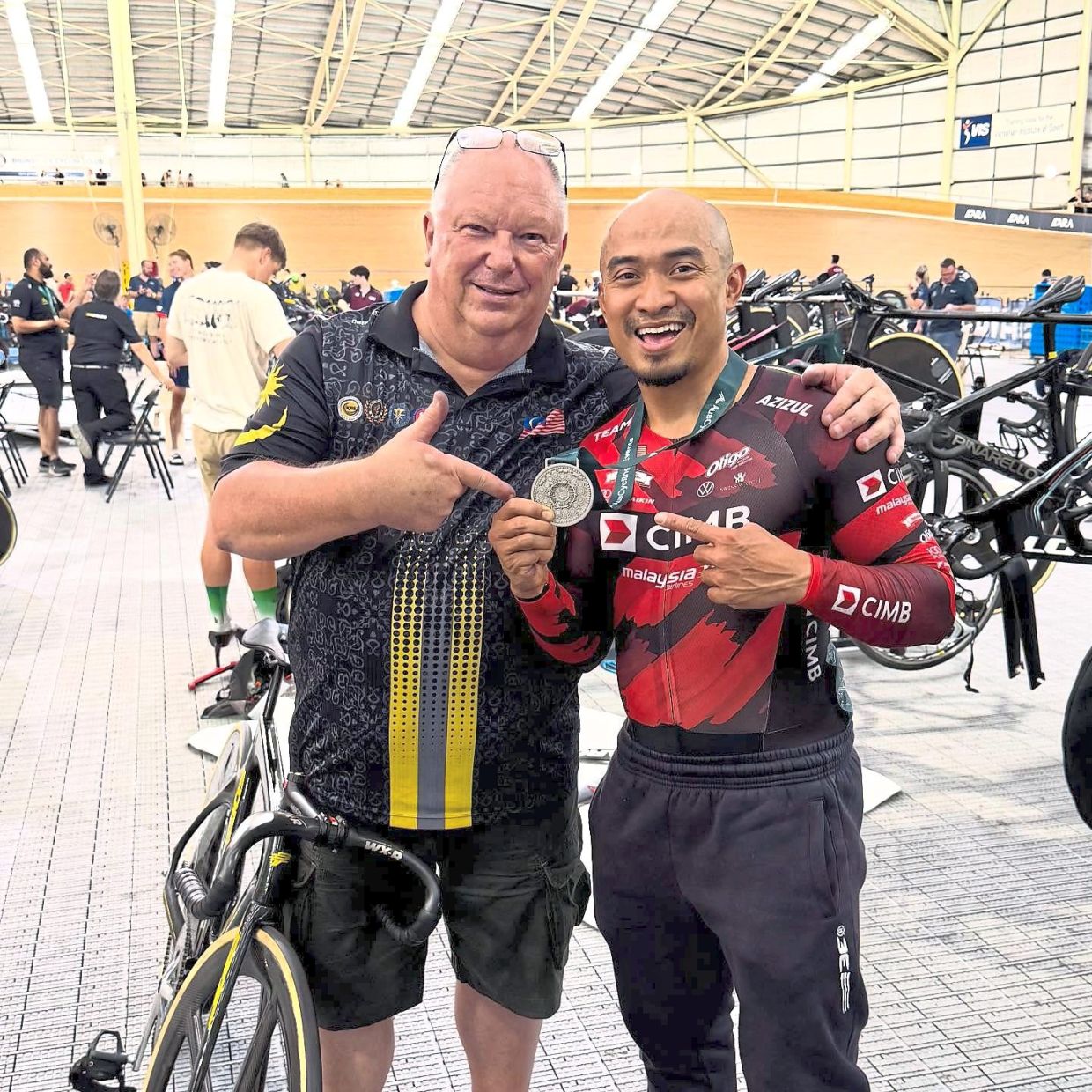
National track cycling's brightest star Azizulhasni Awang has stepped into a fiercely contested debate surrounding technical director John Beasley, accepting that his public defence of the Australian coach may invite considerable personal risk and criticism. The two-time Olympic medallist candidly admitted that defending Beasley—a figure credited with transforming Malaysia's track cycling programme—could make him a target for detractors, particularly if the nation's performance at the upcoming Commonwealth Games and Asian Games falls short of expectations.
Azizul's willingness to put his reputation on the line speaks to the depth of controversy surrounding Beasley's tenure in Malaysian cycling. The technical director has attracted significant public commentary and scrutiny, with critics voicing their views through various channels. Yet Azizul's decision to emerge as a vocal supporter underscores the polarising nature of discussions around Beasley's methods and leadership during his two decades shaping the sport locally. The Tokyo 2020 Olympics silver medallist recognises that alignment with Beasley carries tangible consequences in Malaysia's cycling ecosystem, where performance expectations run extraordinarily high.
In acknowledging these risks, Azizul demonstrated sophisticated understanding of the political and reputational dynamics that accompany high-level sports administration in Malaysia. He articulated his awareness that defending an authority figure invites suspicion and potential retaliation from opposing camps within cycling circles. Should Malaysia underperform at either the Commonwealth Games or Asian Games—two marquee events where cycling medals significantly boost national standing—Azizul anticipates that media commentary and public sentiment may shift, with blame potentially directed toward both Beasley and those who stood beside him.
However, the cyclist's resolve appears unshaken by these prospects. Azizul framed his decision through a deeply personal conviction, stating that he would speak truthfully about matters he believes in and support individuals he feels have genuinely contributed to Malaysian cycling's advancement. This moral framework suggests his defence of Beasley transcends strategic calculation; rather, it reflects his assessment of the technical director's substantive contributions to the sport over the past twenty years. Azizul's willingness to absorb potential backlash demonstrates the respect he holds for Beasley's developmental work and legacy building.
The cyclist drew upon his spiritual beliefs when discussing his preparedness to weather criticism and adverse outcomes. Invoking Islamic concepts of divine will, Azizul expressed confidence that his decisions rest within God's providence, thereby finding psychological fortification against the uncertainty inherent in competitive sport and institutional politics. This spiritual anchoring appears to provide him emotional resilience when contemplating scenarios where performance disappoints and public opinion turns hostile. His faith-based perspective suggests he has made peace with forces beyond his control, including how results may be interpreted by media and observers.
Azizul's public stance arrives at a moment when Malaysian cycling faces considerable scrutiny from multiple directions. The Malaysia National Cycling Federation, led by president Datuk Amarjit Singh Gill, has initiated formal disciplinary action against two individuals affiliated with state cycling bodies. These individuals face show-cause letters for publicly criticising Beasley without following internal administrative procedures, a decision reflecting institutional sensitivity to unauthorised commentary that threatens federation cohesion and reputation. The federation's assertive response suggests management recognises that public disputes over Beasley's competence and methods pose structural risks to cycling's organisational stability.
The disciplinary action highlights the tension between freedom of expression and institutional loyalty within Malaysian sports administration. Those criticising Beasley apparently circumvented formal channels, choosing instead to air grievances publicly—a decision that federation leadership interpreted as reputationally damaging and procedurally improper. Azizul's defence of Beasley, by contrast, functions as public messaging that aligns with federation interests, even as it exposes the cyclist personally to future scrutiny should performance indicators decline.
Looking forward, Azizul has prioritised channelling his energy toward ensuring Commonwealth Games and Asian Games preparations proceed without disruption. He has appealed for unified support from all stakeholders, emphasising that athletes and coaching staff require conducive environments to pursue international success. This appeal implicitly calls for cessation of public disputes around administrative personnel, suggesting that institutional harmony directly facilitates optimal athletic preparation. The message resonates particularly given Malaysia's historical strength in track cycling, where marginal improvements in training conditions and coaching cohesion often determine medal outcomes at continental and regional competitions.
The controversy surrounding Beasley reflects broader questions about the balance between merit-based assessment of coaching effectiveness and institutional loyalty in Malaysian sports. Whether Azizul's defence proves vindicated depends substantially on objective outcomes at forthcoming Games—results that will carry enormous weight in retrospective judgments about Beasley's tenure and the wisdom of supporters like Azizul. Nevertheless, his public commitment to speaking truthfully about Beasley's contributions suggests that for the Tokyo 2020 silver medallist, principles of honesty and gratitude supersede strategic calculations about how public statements might reverberate through Malaysia's cycling community should expectations go unmet.

