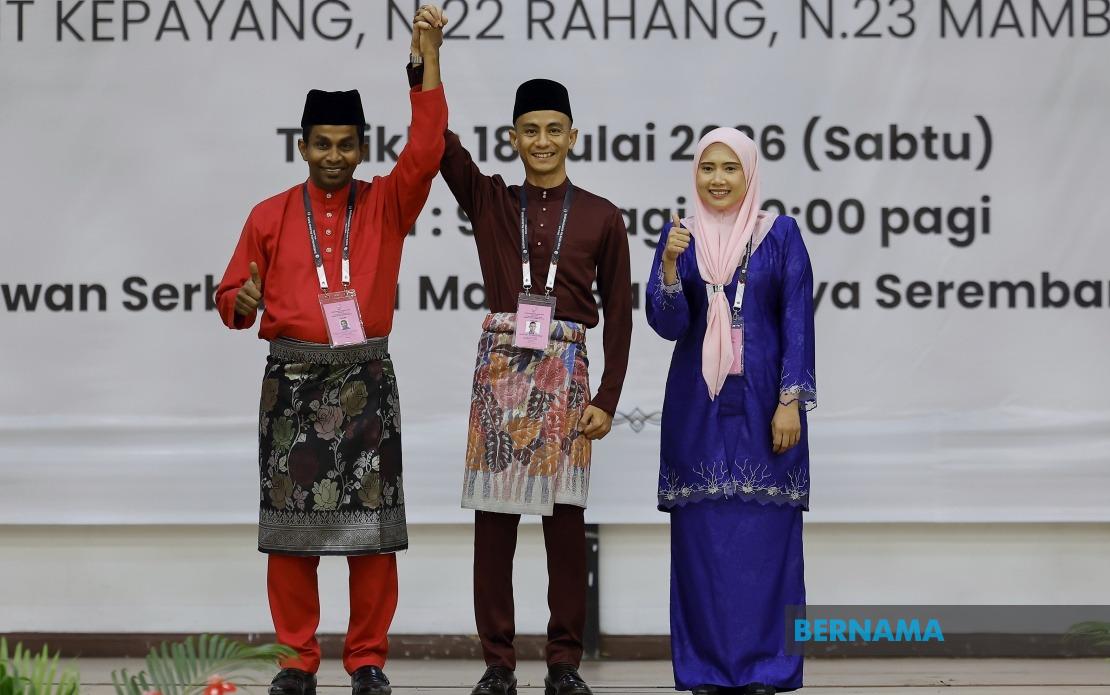
Datuk Ahmad Faez Abdul Razak is stepping into electoral politics for the first time, banking on nearly three years of ground engagement in the Labu state constituency to unseat the incumbent in Negeri Sembilan's 16th state election. The PKR candidate acknowledged the weight of his mission during nomination proceedings in Seremban, describing himself as simultaneously optimistic and nervous as he enters the electoral arena with ambitions to recapture the seat for the Pakatan Harapan coalition.
Ahmad Faez's campaign strategy hinges on leveraging his background as a property developer to navigate what he sees as Labu's defining challenge: accommodating rapid growth without compromising residents' quality of life. The constituency stands at a pivotal juncture, positioned within the Malaysia Vision Valley development corridor spanning 11,000 to 12,000 hectares designated for industrial and residential expansion. This geographic positioning offers substantial economic promise but simultaneously threatens to overwhelm existing communities if expansion proceeds without careful stewardship. Ahmad Faez framed his candidacy as the answer to this tension, positioning himself as someone equipped to guide development while protecting villagers' interests.
Central to his manifesto are youth-focused amenities, a gap he identified through extensive community interaction. The candidate highlighted the absence of dedicated community centres and recreational facilities for younger residents, positioning their establishment as a priority that directly addresses expressed local concerns. This commitment resonates particularly in constituencies experiencing rapid urbanisation, where traditional community structures often struggle to keep pace with demographic shifts. By anchoring his platform in tangible infrastructure promises rather than abstract development rhetoric, Ahmad Faez is attempting to signal both his listening skills and practical problem-solving orientation to voters.
The broader political context shapes this contest considerably. The previous election in 2023 saw Bersatu's Mohamad Hanifah Abu Baker claim victory with a razor-thin majority of just 1,640 votes over Ahmad Faez's PKR predecessor Datuk Ismail Ahmad, who garnered 10,021 votes. This margin suggests the seat remains genuinely competitive and winnable for opposition forces, provided they can consolidate their support. The current three-cornered contest introduces unpredictability, with Barisan Nasional fielding Siti Nur Umaira Hasim as its candidate. Electoral mathematics in such contests often punish divided opposition or government votes, making Ahmad Faez's challenge of building absolute majority support rather than mere plurality increasingly critical.
Negeri Sembilan's state election reflects broader Malaysian political realignment following the 2023 general election. The state's governance dynamics have shifted since that contest, and this electoral exercise provides early indicators of whether Pakatan Harapan can recover lost ground or whether coalition fragmentation continues undermining opposition strength. Ahmad Faez's personal profile as a successful businessman rather than a career politician reflects PH's wider strategy of recruiting candidates with private sector credentials, attempting to counter perceptions of governmental ineffectiveness through evidence of practical business acumen.
The Malaysia Vision Valley project itself warrants closer scrutiny in understanding Labu's electoral significance. Industrial and residential corridors of this magnitude typically generate employment, infrastructure improvements, and property appreciation while simultaneously producing congestion, environmental pressures, and social disruption. Communities at the intersection of development and preservation often experience conflicting interests—some residents benefit economically while others face displacement, environmental degradation, or cultural dissolution. Ahmad Faez's promise to "balance" these competing forces, while rhetorically appealing, lacks concrete mechanisms in publicly available statements. How he would arbitrate between developers' profit motives and residents' welfare preferences remains unclear, though this ambiguity may suit him strategically during campaigning.
Electoral demographics favour neither candidate decisively. The constituency encompasses 32,884 registered voters as of May 31, 2026, distributed across ordinary voters and police personnel alongside their spouses. This composition suggests a mix of urban and suburban populations with varying interests—some prioritising economic opportunity, others emphasising environmental protection or social services. The relatively modest voting population means ground campaign organisation and targeted messaging remain disproportionately important compared to constituencies with larger electorates, where mass media campaigns predominate.
Ahmad Faez's emphasis on his community engagement history—nearly three years of regular presence in Labu—represents a calculated contrast to potential opponents he frames as disconnected from grassroots concerns. This localisation narrative carries particular weight in Malaysian electoral contests, where voters frequently reward candidates demonstrating sustained commitment to constituency welfare over career advancement. Whether this narrative will overcome Mohamad Hanifah's incumbency advantage or narrow the BN candidate's potential appeal remains the election's central question.
The timing of this contest, scheduled for August 1 polling with July 28 early voting, coincides with Malaysia's broader political cycles and economic pressures. Voters' receptiveness to development-focused messaging may depend heavily on prevailing economic sentiment and how effectively rival candidates connect campaign promises to immediate household concerns. Ahmad Faez's strategy of positioning development expertise as a political asset suggests confidence that economic growth arguments retain electoral salience among Labu's voters, even as broader Malaysian politics increasingly emphasises cost-of-living pressures and social equity concerns.
For Pakatan Harapan's strategic interests, Labu represents a recovery opportunity following 2023's losses in Negeri Sembilan. The coalition's ability to field a competitive candidate with credible local credentials and articulated policy priorities signals organisational capability and resource commitment to state-level contests, which often receive less national attention than parliamentary races. Ahmad Faez's maiden electoral contest thus carries implications extending beyond a single constituency, serving as a bellwether for opposition capacity to rebuild support in states where recent performance disappointed party leadership.

