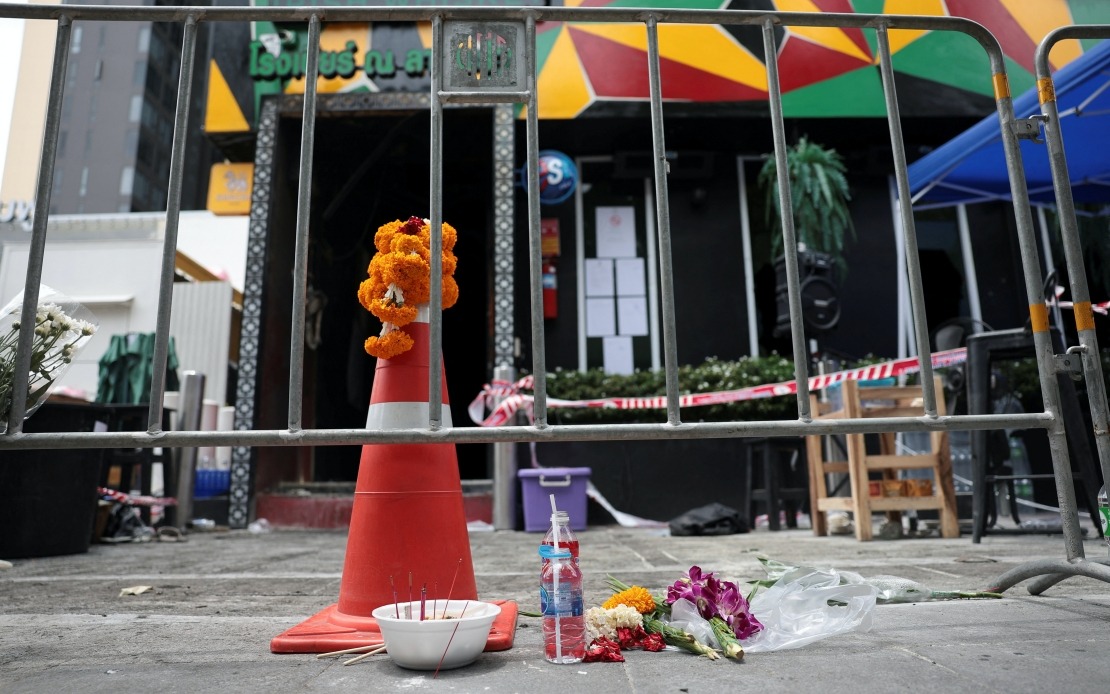
The deadly fire that engulfed an entertainment venue in Bangkok's Lat Phrao district early Monday morning claimed 33 lives, but authorities have now established a critical detail about the circumstances of death: the victims succumbed to toxic gas inhalation rather than thermal injuries. Metropolitan Police Bureau Commissioner Police Lieutenant General Sayam Boonsom revealed this finding on Thursday, providing fresh clarity on the mechanism of the tragedy that has shocked Thailand and drawn international attention to safety standards in entertainment venues across the region.
Forensic analysis identified both carbon monoxide and cyanide in the victims' bodies, pointing to the lethal composition of smoke produced during the fire's rapid spread through the establishment. These gases operate by preventing the body's cellular tissues from absorbing oxygen, a process that can prove fatal within minutes of exposure. This distinction carries significant investigative implications, suggesting that occupants may not have had sufficient warning or escape time once toxic fumes began accumulating in the enclosed space. The findings underscore how modern building fires often claim lives through smoke inhalation rather than direct flame contact, a reality that has reshaped fire safety protocols globally.
Investigators have substantially progressed in mapping out the incident's sequence and contributing factors. Forensic officers completed their examination of the scene, allowing police to focus investigative attention on determining the root cause. Current lines of inquiry centre on potential electrical malfunctions within the building's infrastructure, alongside several systematic safety lapses that likely compounded the disaster. Unauthorised structural modifications to the building's interior appear to have been made without proper oversight, fundamentally altering how fire would propagate through the space. Perhaps most critically, emergency exits were found to be blocked or inaccessible, a violation that transformed what should have been an evacuation route into a fatal bottleneck.
The scale of the investigation reflects the complexity of assigning responsibility in such incidents. Police Lieutenant General Sayam indicated that while no formal charges have yet been filed, authorities are preparing to pursue multiple criminal counts. These potential charges include causing death and injury through negligence, conducting unauthorised structural alterations to the premises, and negligently causing the fire itself. Beyond these core offences, investigators are also examining whether the venue's operators violated entertainment industry licensing regulations and whether the establishment had expanded its operations beyond the scope permitted under its official licence.
The witness interview process has been exhaustive, with police having questioned more than 106 individuals connected to the incident. These statements form the evidentiary foundation upon which prosecutors will eventually construct their case. Each account contributes fragments of information about the fire's origin, the speed of its progression, whether safety announcements were made, and how occupants attempted to respond. Such testimony proves particularly valuable in establishing whether negligent decisions or wilful disregard for safety protocols directly contributed to the scale of casualties.
The human cost of the disaster extends well beyond the immediate death toll. Over 70 people sustained injuries in their attempts to escape or were overcome by smoke and heat. As of Thursday's update, 14 victims remained hospitalised under intensive care, fighting severe burns and respiratory damage. Meanwhile, 44 others had been discharged after treatment, though many will likely face ongoing medical challenges and psychological trauma from their experience. The medical response has placed considerable strain on Bangkok's hospital system and highlighted the resource demands of mass casualty incidents.
For Malaysian and Southeast Asian observers, this tragedy carries pointed lessons about entertainment venue safety standards and enforcement across the region. The presence of blocked emergency exits suggests either regulatory failure or deliberate non-compliance motivated by operational convenience—a pattern that could potentially exist in nightlife establishments throughout Malaysia and neighbouring countries. The discovery of unauthorised building modifications indicates that structural integrity inspections may be insufficient or inadequately resourced to catch such dangerous alterations.
The Bangkok incident represents a critical moment for regional governments to examine their own safety protocols and inspection regimes. Entertainment venues operate under significant regulatory frameworks in Malaysia and elsewhere, yet persistent violations suggest gaps between written standards and actual enforcement. The combination of factors present in the Bangkok case—blocked exits, structural alterations, and potentially deficient electrical systems—could exist in establishments throughout Southeast Asia where regulations exist on paper but monitoring proves sporadic or superficial.
This fire also raises questions about the adequacy of safety training among staff at entertainment venues. Even with properly maintained exits and building systems, trained personnel can make the difference between orderly evacuation and chaos. Whether the Bangkok establishment had conducted fire drills, whether staff understood emergency procedures, and whether clear signage directed occupants to exits remain crucial questions that extend beyond the specific investigation to broader industry standards.
Police have indicated that investigations remain ongoing, suggesting additional revelations may emerge as forensic analysis continues and witness interviews progress. The eventual charging decisions and court proceedings will establish precedent for how Thai law addresses corporate responsibility in disasters where cost-cutting and regulatory non-compliance align to produce catastrophic outcomes. For policymakers across Southeast Asia, this case will likely serve as a cautionary benchmark when evaluating their own venue safety frameworks and enforcement capacity.

