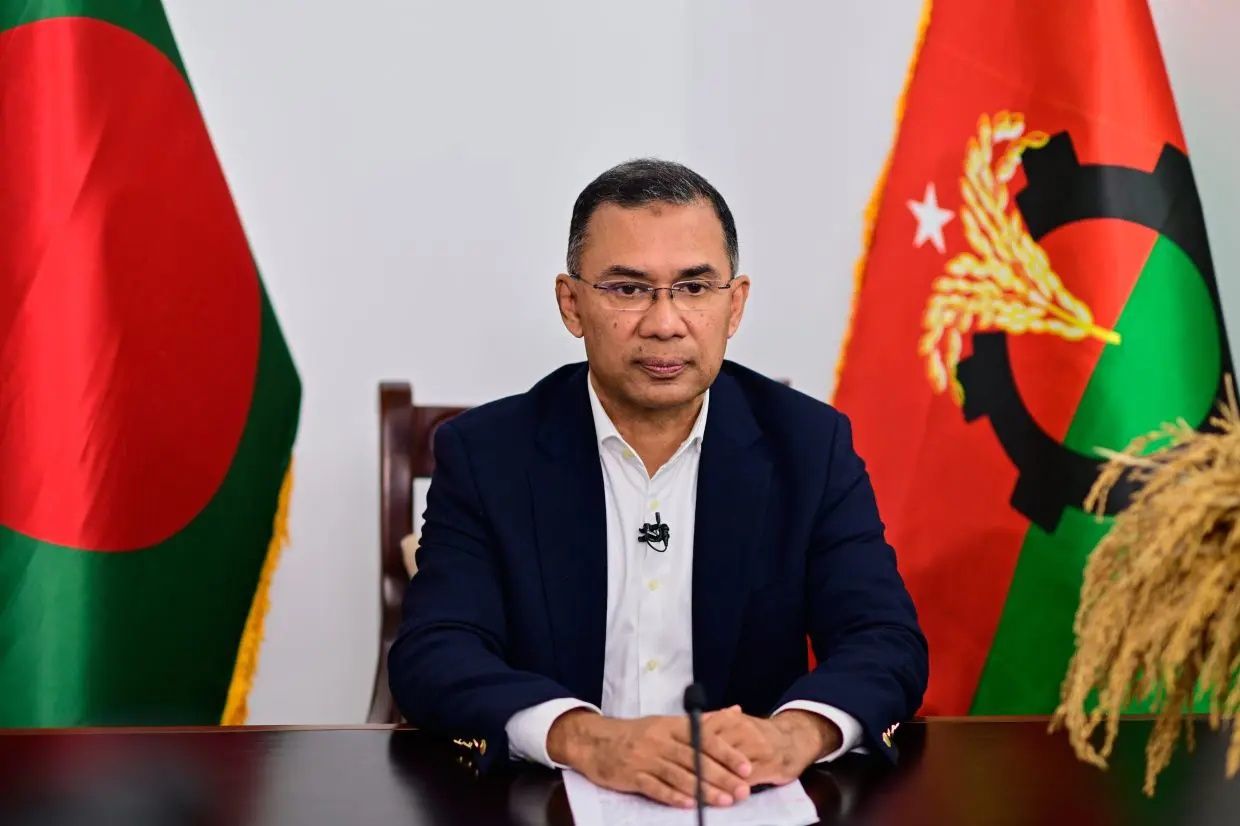
Prime Minister Tarique Rahman of Bangladesh will undertake his maiden overseas visit as head of government this weekend, travelling first to Malaysia on Sunday before proceeding to China on Monday. The choice of destinations carries considerable symbolic weight, as it deliberately sidesteps neighbouring India—historically Bangladesh's closest ally—in favour of two strategically important economic partners. The foreign ministry's announcement of the itinerary signals a calculated recalibration of Dhaka's diplomatic priorities as Rahman seeks to establish his own foreign policy identity following his electoral victory in February and transition from the caretaker administration that had governed the nation of 170 million people since mid-2024.
The timing of Rahman's inaugural tour reflects the complex political inheritance he has assumed. His government emerged from tumultuous circumstances: the popular uprising of 2024 that deposed then-Prime Minister Sheikh Hasina and upended decades of political continuity. That revolution was sparked by widespread grievances over governance and economic management, and it fundamentally disrupted Bangladesh's traditional alignment toward India and the Congress party legacy that Hasina represented. Rahman's decision to pivot toward Malaysia and China for his first diplomatic engagement overseas demonstrates his intent to chart a more diversified and economically pragmatic course than his predecessor, one that emphasises partnership with nations offering tangible investment and trade opportunities rather than relying on historical ties alone.
Malaysia represents a natural and economically significant first stop for the Bangladesh premier. The Southeast Asian nation hosts approximately 800,000 Bangladeshi workers, constituting more than a third of Malaysia's entire foreign labour force. This substantial diaspora reflects decades of economic migration and deep people-to-people connections between the two countries. Beyond the symbolism of addressing the concerns and interests of such a large expatriate community, Rahman's visit will likely focus on labour protections, remittance flows, and employment opportunities—issues of paramount importance to millions of Bangladeshi families whose livelihoods depend on Malaysian employment. The stop also allows Rahman to cultivate closer economic ties with one of Southeast Asia's most developed economies and to position Bangladesh as a partner in Malaysia's regional development initiatives.
China, the subsequent destination, carries even greater strategic implications. According to foreign ministry officials cited by Bangladesh's state news agency BSS, the Beijing leg will concentrate on trade negotiations and infrastructure development projects. Most prominently, this includes potential Chinese involvement in the long-stalled Teesta River project, one of Bangladesh's most ambitious and protracted infrastructure undertakings. The Teesta initiative aims to restore and rejuvenate this critical transboundary waterway through comprehensive dredging operations, embankment reinforcement, and irrigation infrastructure development. The project has faced years of delays and funding constraints, making Chinese participation potentially transformative for Bangladesh's agricultural productivity and water resource management. Beyond Teesta, Rahman is likely to explore broader Chinese engagement in ports, energy infrastructure, and connectivity projects that align with China's Belt and Road Initiative regional strategy.
The diplomatic pivot carries undeniable geopolitical dimensions that extend beyond immediate economic interests. Relations between Bangladesh and India have deteriorated markedly since Hasina's ouster and flight to Indian territory, where she remains in hiding. Dhaka has repeatedly demanded India's extradition of the former premier, who faces serious allegations ranging from crimes against humanity to responsibility for the deaths of protesters during the 2024 uprising. India's apparent unwillingness to surrender Hasina has become a persistent source of friction. Simultaneously, border tensions have escalated, with Indian authorities accused of systematically pushing individuals they classify as undocumented migrants across the Bangladesh frontier, creating humanitarian challenges and straining bilateral relations further. These accumulated grievances have substantially cooled the warmth that traditionally characterised Bangladesh-India relations under Hasina's government.
For Rahman's administration, cultivating stronger ties with China and Malaysia offers multiple strategic advantages beyond the immediate economic benefits. It provides Bangladesh with alternative partnerships that can reduce its vulnerability to pressure from New Delhi and demonstrate to the Indian government that Bangladesh has viable options for development and security cooperation elsewhere in Asia. This diversification strategy reflects a broader reassessment of Bangladesh's geopolitical positioning, particularly given India's long-standing concerns about Chinese influence in South Asia. India has historically viewed Chinese regional engagement with considerable wariness, recognising the competition between the world's two most populous nations for primacy in South Asian affairs and influence over smaller neighbours like Bangladesh.
Rahman's tour also represents an assertion of the new government's legitimacy and competence on the international stage. The caretaker administration that preceded him, while ultimately overseeing a transition to elections, carried the provisional character inherent in interim governance. Rahman's independent foreign policy initiatives underscore that his government commands democratic mandates and possesses the authority to chart Bangladesh's international course. By engaging directly with major powers and demonstrating concrete achievements in trade, infrastructure, and investment negotiations, Rahman can build domestic support and demonstrate tangible benefits flowing from his administration's governance.
The broader context of South Asian geopolitics adds another interpretive layer to this tour. Bangladesh's population of 170 million makes it one of Asia's most significant nations by demographic weight, yet it has historically operated within India's shadow. The 2024 political upheaval created an opening for Bangladesh to reassert greater agency in shaping its own destiny and international partnerships. Rahman's government, while not explicitly anti-Indian, appears committed to constructing a more balanced and diversified set of relationships that maximise Bangladesh's leverage and economic opportunities. This reflects lessons learned during Hasina's government, when alignment too closely with India arguably constrained Bangladesh's ability to pursue independent economic policies and maintain the geopolitical flexibility necessary for a nation of its size and importance.
For Malaysian and Southeast Asian observers, Rahman's visit underscores Bangladesh's growing importance to regional economic integration. As a major source of labour, consumer market, and manufacturing hub, Bangladesh increasingly features in ASEAN's calculations regarding regional supply chains and economic cooperation. Rahman's engagement with Malaysia signals Bangladesh's interest in deeper integration with Southeast Asian economies and potentially closer alignment with ASEAN frameworks. This could have implications for regional trade, investment flows, and security cooperation across the Bay of Bengal and Indian Ocean regions. The visit may also signal Bangladesh's receptiveness to greater ASEAN involvement in its development trajectory, complementing engagement with China and other external partners.
Looking forward, Rahman's diplomatic initiative sets the tone for his government's foreign policy agenda. By beginning with Malaysia and China rather than the traditional pivot to India, he demonstrates willingness to challenge historical patterns and pursue pragmatic partnerships based on mutual economic benefit. This approach, if sustained, could fundamentally alter Bangladesh's role within South Asia and its positioning in broader Asian geopolitics. Whether India will interpret this as temporary recalibration or longer-term strategic reorientation remains to be seen, but the symbolism of Rahman's inaugural journey is unmistakable: Bangladesh under new leadership intends to chart a more independent and economically optimised international course.

