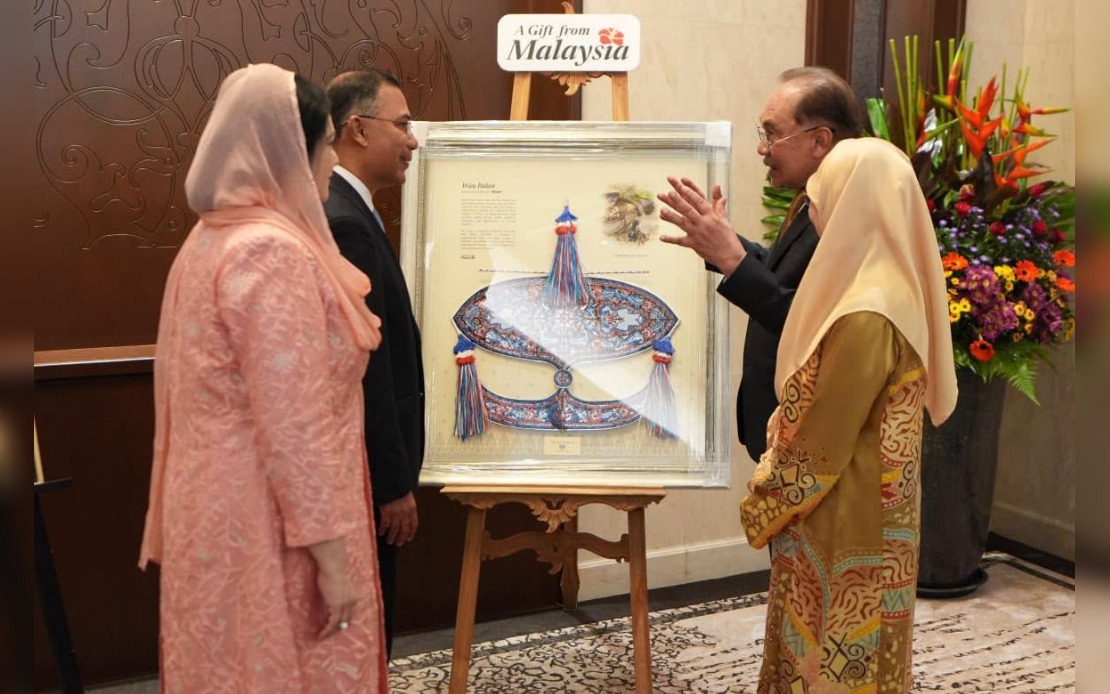
Bangladesh Prime Minister Tarique Rahman wrapped up his maiden state visit to Malaysia on Monday with renewed pledges to fortify the multifaceted partnership binding the two nations. During extensive discussions with Malaysian Prime Minister Datuk Seri Anwar Ibrahim, Rahman articulated his government's determination to elevate cooperation across diverse sectors, positioning the relationship as a cornerstone of regional stability and mutual prosperity in Southeast Asia.
The Bangladesh leader's visit to Kuala Lumpur carries particular significance as it marks his first major diplomatic engagement since assuming office, signalling the importance his administration places on Malaysia as a key bilateral partner. Malaysia hosts one of the largest Bangladeshi diaspora communities in Southeast Asia, with hundreds of thousands of nationals residing and working across the country. This substantial human presence underscores the depth of people-to-people connections that transcend formal government interactions, creating organic networks of cultural, economic, and social exchange that both governments are keen to nurture and formalise.
Rahman, accompanied by his wife Dr Zubaida Rahman, extended formal appreciation to Anwar Ibrahim and his spouse Datuk Seri Dr Wan Azizah Wan Ismail for the hospitality extended during the visit. The warm reception reflected Malaysia's diplomatic approach towards neighbouring Bangladesh, a nation of over 170 million people that serves as a crucial market for Malaysian goods and a labour-rich source for the Malaysian economy. Beyond ceremonial gestures, the visit provided a platform for substantive policy discussions on trade expansion, investment opportunities, and collaborative initiatives in education and technological development.
The Bangladesh Prime Minister also met with His Majesty Sultan Ibrahim, King of Malaysia, underscoring the state-level importance accorded to the bilateral relationship. Such high-level interactions signal to both domestic and international audiences that Bangladesh-Malaysia ties enjoy institutional backing at the highest echelons of power in both nations. For Malaysia, engagement with Bangladesh represents an investment in broader Southeast Asian cohesion and an opportunity to leverage its position as a regional hub for economic and political cooperation.
Rahman's emphasis on historical continuity proved significant, with the Premier referencing his family's extensive involvement in Bangladesh's founding and governance. He acknowledged the legacy of his father, Shaheed President Ziaur Rahman, who presided over Bangladesh during its formative post-independence years, and his mother Begum Khaleda Zia, who served multiple terms as Prime Minister. These references positioned the current visit within a continuum of national leadership committed to Bangladesh's international relationships, suggesting that contemporary policies reflect deeply rooted diplomatic traditions rather than transient political calculations.
The discussions between Rahman and Anwar addressed both bilateral frameworks and multilateral mechanisms through which the two countries cooperate. Bangladesh and Malaysia are both members of regional organisations including ASEAN, the Organisation of Islamic Cooperation, and various sub-regional groupings that facilitate economic and political dialogue. The Premier's characterisation of the partnership as encompassing both bilateral and multilateral dimensions reflects how contemporary international relations operate across multiple overlapping institutional frameworks, where countries coordinate positions and advance shared interests through diverse channels simultaneously.
For Malaysian observers, Bangladesh's commitment to closer ties carries economic implications. The country represents significant potential for Malaysian businesses seeking to expand into South Asian markets, while Bangladesh's manufacturing sector offers complementary opportunities for bilateral industrial cooperation. Additionally, Bangladesh's strategic location connecting South Asia with Southeast Asia positions it as a potential transit hub for regional trade initiatives, a consideration that informs Malaysia's interest in maintaining cordial and substantive relations.
The timing of Rahman's visit reflects broader regional dynamics in South and Southeast Asia. Bangladesh navigates complex geopolitical currents involving larger powers with competing interests in the Indian Ocean and Bay of Bengal regions. Malaysia, similarly positioned in a strategically vital location between the Pacific and Indian Oceans, shares Bangladesh's interest in maintaining balanced relationships and advancing regional multilateralism as a counterweight to great power competition. Closer Bangladesh-Malaysia cooperation on maritime security, regional development, and economic integration serves both nations' strategic interests.
Looking forward, the pledges exchanged during this visit will likely translate into enhanced cooperation frameworks across multiple sectors. Enhanced trade protocols, expanded people-to-people exchange programmes, and deepened institutional connections between governmental agencies will constitute the practical manifestation of the political commitments articulated by both leaders. For Malaysian policymakers and business communities, Bangladesh represents an increasingly important partner as regional economic dynamics shift and diversification of markets becomes strategically necessary.
The successful conclusion of Rahman's inaugural state visit establishes a positive foundation for his tenure as Bangladesh's premier on the international stage. His demonstrated commitment to strengthening Malaysia ties, coupled with the warm reception afforded by Malaysian leadership, suggests that bilateral relations will likely expand during his administration. This trajectory has implications not only for Bangladesh and Malaysia but for the broader Southeast and South Asian regions, where stable, prosperous partnerships between major nations contribute to overall continental stability and economic dynamism that benefits all regional stakeholders.

