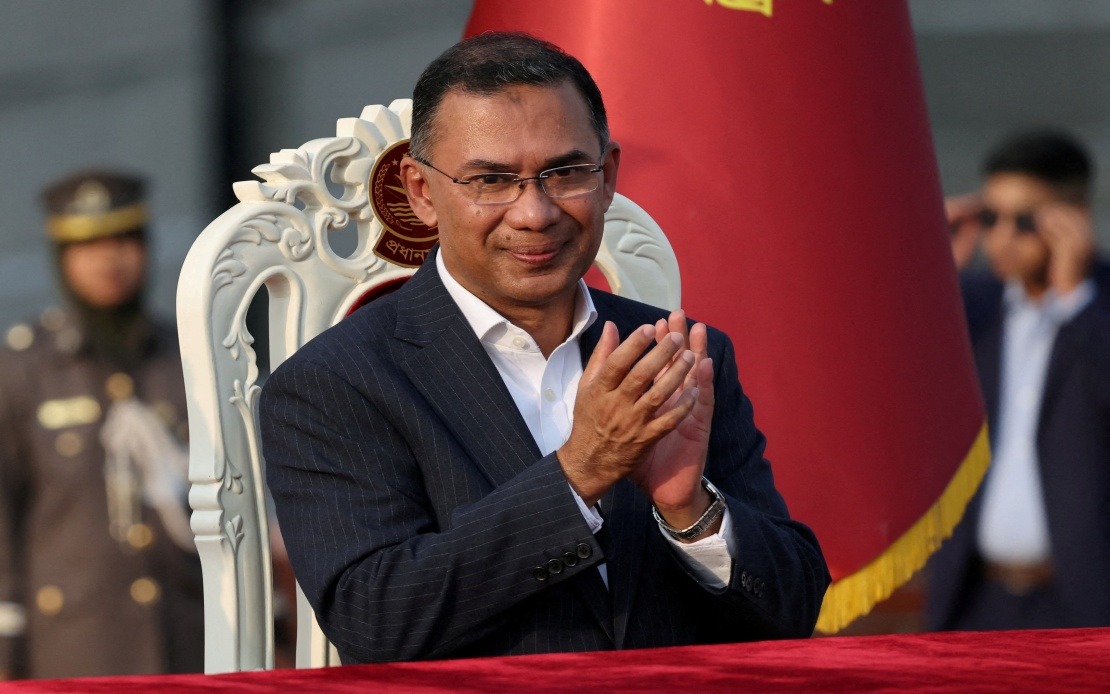
Bangladesh's Prime Minister Tarique Rahman will arrive in Malaysia on June 22 for an official state visit that carries significant symbolic weight as his first bilateral trip abroad since taking office earlier this year. Invited by Prime Minister Datuk Seri Anwar Ibrahim, the visit underscores the importance both nations place on their bilateral relationship and signals Bangladesh's commitment to strengthening ties within the Southeast Asian region during a pivotal period of transition in its governance.
The timing of Rahman's choice to visit Malaysia first among all nations reflects the depth of the Malaysia-Bangladesh partnership and the strategic value both countries see in their cooperation. By coming to Kuala Lumpur as his debut international bilateral engagement, the Bangladesh leader is making a clear diplomatic statement about priorities, particularly given Malaysia's regional influence and the substantial economic relationship the two countries have cultivated over decades of engagement.
The formal programme will commence with a ceremonial welcome at Perdana Putra Complex, followed by comprehensive bilateral discussions between Rahman and Anwar. These conversations will encompass a broad agenda designed to address both consolidating existing cooperation frameworks and identifying new avenues for mutual benefit. The leaders are expected to conduct a thorough review of ongoing initiatives and projects, assessing what has been achieved and charting directions for enhanced collaboration moving forward.
Several strategic sectors have been identified as priority areas for deepened engagement. Beyond traditional trade and investment flows, both governments are keen to explore opportunities in semiconductors, renewable energy, agricultural development, and higher education. These represent emerging domains where Malaysian expertise and technological capabilities could benefit Bangladesh's development trajectory, while Bangladesh's large labour force and growing manufacturing base offer complementary advantages for Malaysian companies seeking to diversify their regional operations and supply chains.
The visit will be formally marked by the signing of multiple bilateral instruments. A memorandum of understanding on cultural cooperation will be exchanged, reflecting the two nations' shared Islamic heritage and broader civilisational connections. Additionally, two exchanges of notes will be executed concerning counter-terrorism research collaboration and investment promotion facilitation, indicating both governments' commitment to security cooperation and creating an enabling environment for private sector engagement across borders.
Trade figures underscore the substantial economic foundation underpinning the relationship. In 2025, bilateral commerce reached RM12.18 billion, with Malaysian exports comprising the dominant portion at RM10.08 billion. This trade imbalance reflects Malaysia's significant petroleum product exports to Bangladesh, a commodity category that has historically formed the backbone of the relationship. Bangladeshi imports to Malaysia totalled RM2.10 billion, dominated by textiles, apparel, and footwear—sectors where the country maintains competitive manufacturing advantages rooted in its substantial labour cost advantages and industrial infrastructure.
Within the broader Asian economic landscape, Bangladesh represents Malaysia's second most significant trading partner in South Asia after India, and ranks twenty-eighth globally. This positioning demonstrates the relationship's maturity and the scale of economic integration already achieved. For Malaysia, Bangladesh offers not merely a market for energy and petrochemical exports but also a source of manufacturing inputs that support downstream Malaysian industries, creating reciprocal economic benefits.
Rahman's delegation will include his spouse Dr Zubaida Rahman, Foreign Minister Dr Khalilur Rahman, and other senior governmental representatives, reflecting the high-level importance attached to the mission. The inclusion of the Foreign Minister ensures that detailed discussions on specific bilateral matters and regional diplomatic issues can be conducted at appropriate technical levels, while the presence of spousal accompaniment adds a ceremonial dimension befitting a state visit of this character.
Beyond the formal bilateral agenda, Rahman's visit occurs against the backdrop of evolving geopolitical dynamics in South Asia and Southeast Asia. Bangladesh's strategic location, significant population, and growing economic relevance make it an increasingly important partner for Malaysia as it navigates complex regional balancing and pursues expanded economic partnerships. For Bangladesh, strengthening ties with a well-established Southeast Asian economy like Malaysia provides opportunities for technology transfer, investment inflows, and integration into regional supply networks that could accelerate its own development priorities.
The official luncheon that Anwar will host adds a diplomatic courtesy element to the visit, providing informal settings for candid discussions and relationship-building beyond formal negotiation contexts. Such functions often prove valuable for addressing nuanced issues and building personal rapport between leaders that can facilitate future cooperation on sensitive matters.
Rahman's choice of Malaysia as the destination for his inaugural official bilateral visit carries implications for Malaysia's regional standing and diplomatic positioning. It validates Malaysia's continued importance as a key player in Asian affairs and suggests confidence in the stability and forward-looking nature of the Malaysia-Bangladesh partnership. For observers monitoring Bangladesh's international orientation and engagement strategies, this visit indicates an emphasis on deepening South-Southeast Asian connections rather than pivoting exclusively toward traditional relationships with larger global powers.
The broader context of these engagements reflects how both nations view their roles in an increasingly multipolar Asian order. Malaysia, with its experience in regional multilateralism and established diplomatic networks, offers Bangladesh a valuable partnership model for navigating complex international waters. Conversely, Bangladesh's vast market potential and strategic location along major maritime trade routes position it as a valuable partner for Malaysia's continued economic expansion and regional influence.

