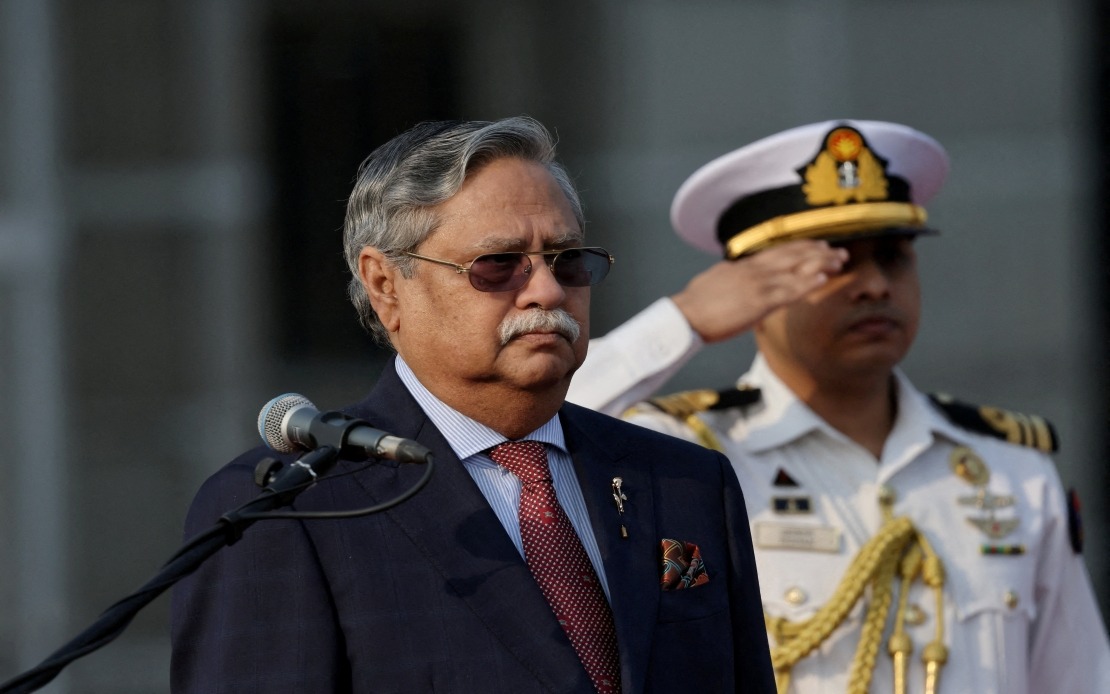
Bangladesh has witnessed a significant constitutional development with President Mohammed Shahabuddin's unexpected resignation on Friday, citing serious health concerns that have rendered him unable to discharge his presidential obligations. The 76-year-old submitted his resignation letter to Parliament Speaker Hafiz Uddin Ahmed, marking an abrupt end to a tenure that was scheduled to conclude in April 2028. This departure represents an unusual interruption of the presidential cycle in the South Asian nation, occurring just over two years into what should have been a full five-year mandate.
Shahabuddin's decision to step down arrives at a particularly sensitive moment in Bangladesh's political landscape, where the country has yet to fully stabilise following the tumultuous events of 2024. The former president had assumed office in April 2023 under the administration of Prime Minister Sheikh Hasina and her Awami League government, a coalition that would eventually collapse in the face of widespread civil unrest. The timing of his departure now, coupled with mounting pressure from opposition figures, suggests that the health justification may be intertwined with broader political considerations affecting the nation's leadership structure.
The constitutional mechanics set in motion by Shahabuddin's resignation will significantly reshape Bangladesh's immediate political trajectory. Under the nation's constitutional framework, Parliament Speaker Hafiz Uddin Ahmed assumes the responsibilities of interim president pending the election of a successor. The constitutional process stipulates that a new president must be elected within a 90-day window, creating an important deadline for Bangladesh's parliament to select its next figurehead. This transition period will be closely watched both domestically and internationally, as it unfolds against the backdrop of ongoing political realignment in the country.
One of the most conspicuous aspects surrounding Shahabuddin's departure involves reports suggesting his contact with Sheikh Hasina during a medical visit to the United Kingdom in May of this year. The ousted Prime Minister, who fled to India following the student-led uprising that toppled her government in summer 2024, allegedly engaged in telephone discussions with the then-sitting president. This reported communication has fuelled speculation about potential political coordination or pressure, though the exact nature and implications of such contact remain ambiguous. That Hasina currently resides in India while facing death sentences in absentia for civilian casualties during her tenure adds another layer of complexity to the narrative.
Sheikh Hasina's political fortunes represent a cautionary tale of rapid reversal in South Asian politics. Once leading a powerful electoral coalition under the Awami League banner, she witnessed the disintegration of her government when student-led demonstrations mushroomed into a broader popular movement demanding her removal. The movement's success resulted in her flight across the border to India, where she has announced intentions to return to Bangladesh later this year, despite the grave legal jeopardy facing her. Her party, the Awami League, has been formally banned in the wake of these developments, effectively removing one of Bangladesh's traditionally dominant political forces from the contemporary electoral arena.
The path to selecting Bangladesh's next president appears relatively predetermined given the current composition of parliament. The Bangladesh Nationalist Party, which now commands a parliamentary majority following the previous government's collapse, will effectively determine the presidency through its control of votes in the legislature. Since Bangladesh's constitutional arrangement vests presidential selection power in parliamentary members rather than popular ballot, the ruling BNP's preferred candidate will almost certainly secure election. This concentration of presidential selection authority within a single party's parliamentary bloc raises questions about institutional checks and democratic representation in the presidential process.
Shahabuddin's relatively brief tenure before resignation distinguishes this episode from typical transitions in presidential systems. His assumption of the presidency in April 2023 occurred within a different political environment, with Hasina's Awami League still commanding executive and legislative authority. The subsequent upheaval that displaced the government fundamentally altered the political environment in which he operated. Serving as president during such a turbulent period, particularly given apparent communications with the deposed Prime Minister, may have positioned him awkwardly between competing political interests and forces within Bangladesh's fractious political establishment.
For Malaysia and other Southeast Asian observers, Bangladesh's constitutional difficulties offer instructive lessons regarding institutional resilience during periods of political flux. The relatively orderly succession mechanism, despite the disruptive circumstances, demonstrates that constitutional processes can function even when underlying political consensus fractures significantly. However, the apparent political dimensions of Shahabuddin's health-related resignation also highlight the vulnerability of supposedly non-partisan institutional positions in contexts where political divisions run deep and opposition movements possess substantial mobilising capacity among the general population.
The 90-day window for electing a new president introduces a defined timeline into Bangladesh's political calendar, potentially allowing other pressing institutional questions to be addressed in a coordinated manner. Beyond presidential succession, the nation must contend with questions regarding the status of the banned Awami League, the future of Sheikh Hasina's return and legal proceedings, and the broader rehabilitation of democratic institutions after their recent severe testing. How the interim presidency is managed during this transition period may establish important precedents for subsequent constitutional crises in Bangladesh's evolving democratic development.
Regional implications extend beyond Bangladesh's borders, as developments in this significant South Asian nation inevitably influence the broader geopolitical and political dynamics of the subregion. India's hosting of Sheikh Hasina, combined with Bangladesh's internal institutional struggles, touches on questions of transborder political relationships and the management of displaced leaders within the region. For Malaysia and ASEAN, Bangladesh's institutional navigation of these challenges provides relevant case studies in democratic system resilience and the mechanisms through which established parties maintain influence during periods of constitutional transition and apparent legitimacy deficits.
The selection of Shahabuddin's successor and the circumstances surrounding his departure will likely dominate Bangladesh's political discourse in the coming months. Whether the elected president can establish genuine legitimacy despite the contested nature of contemporary Bangladesh politics, or whether the office continues to be shadowed by questions about political interference and institutional independence, remains to be determined. The answers to these questions will substantially influence Bangladesh's trajectory toward political stabilisation and whether democratic institutions can rebuild public confidence following their testing by recent events.

