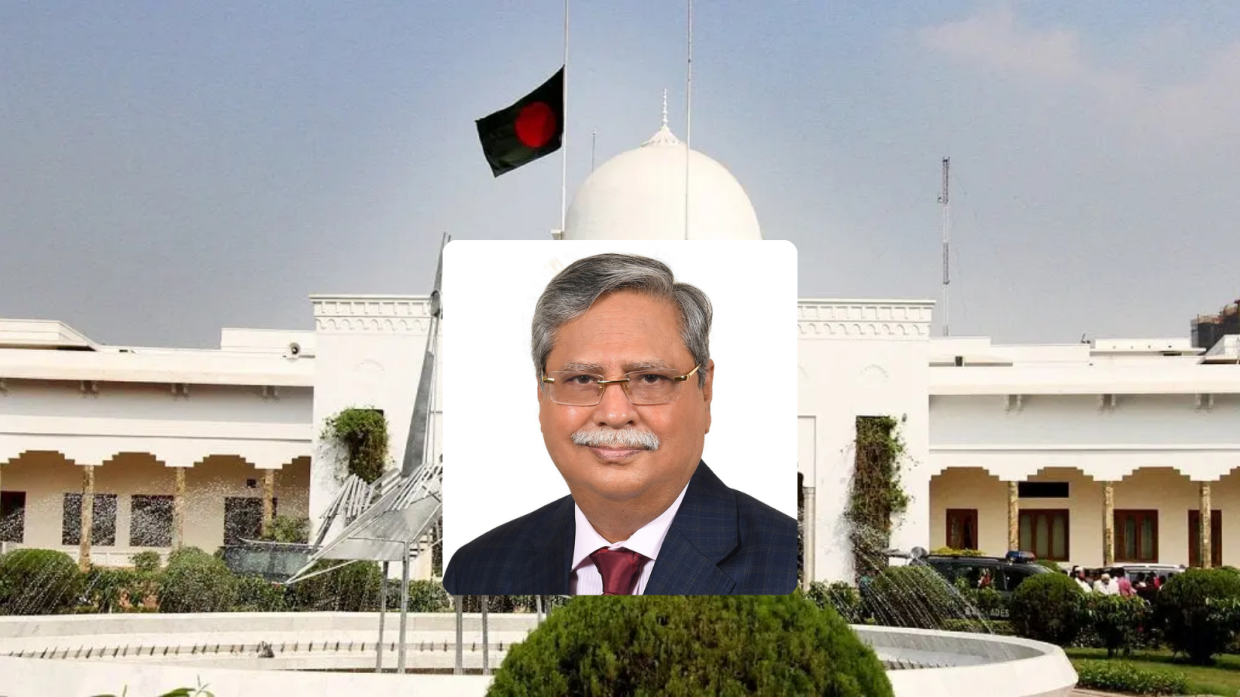
President Mohammed Shahabuddin appears poised to exit Bangladesh's highest constitutional office in the coming days, according to well-placed sources who cite growing political complications and the government's desire to sever ties with the pre-uprising regime. The resignation would mark another significant reconfiguration of Bangladesh's power structure following the dramatic upheaval of July 2024, when mass protests toppled the previous government and fundamentally reshaped the nation's political landscape. Shahabuddin, who assumed the presidency on April 24, 2023, stands alone among top constitutional office holders as a surviving appointee from the administration that preceded the uprising, a position that has increasingly become untenable within the new political order.
The momentum toward Shahabuddin's departure has accelerated in recent weeks, driven by a combination of factors that extend beyond simple constitutional mechanics. Intelligence services reportedly learned of a confidential telephone conversation between Shahabuddin and former Prime Minister Sheikh Hasina during a medical visit to London in May, following which government officials conveyed pressure for him to resign. However, senior figures from the Bangladesh Nationalist Party leadership insist the phone call represents merely one thread in a more intricate tapestry of political calculations. The situation has grown considerably more delicate following Hasina's public announcement that she intends to return to Bangladesh around December 2024 from her exile in India, where she has remained since fleeing the country during the July uprising. Hasina faces a death sentence in absentia and her Awami League party has been officially disbanded, yet her stated intention to return and surrender has triggered alarm bells within the current administration.
Government authorities have grown increasingly concerned about reports that sections of the Awami League are attempting to reorganise internally despite their official proscription. Prime Minister Tarique Rahman responded by directing authorities during a Cabinet meeting on July 17 to intensify their crackdown against the Awami League and its affiliated youth and student wings, signalling that the administration will tolerate no resurgence of the deposed party's organisational infrastructure. Within this context, retaining a president who maintained office throughout the previous era has come to symbolise an uncomfortable continuity that the new government wishes to eliminate. Officials view the presidency as a position that should embody the values and orientation of the post-uprising administration, rather than serving as a vestigial link to the ancien régime.
Shahabuddin's own statements have tracked the shifting political currents with considerable dexterity. In December 2025, while still serving under the interim government led by Muhammad Yunus, the president declared his intention to step down midway through his term following the February parliamentary election, claiming he had endured humiliation at the hands of Yunus's administration. However, after the BNP-led government assumed office, Shahabuddin recalibrated his position, telling a newspaper interviewer on February 24 that he would willingly remain if the government desired his continuation but would resign voluntarily if the administration preferred his departure. This diplomatic formulation essentially placed the decision in the government's hands, allowing Shahabuddin to preserve his dignity while signalling his availability for departure.
Government sources now suggest that the administration has made its preference abundantly clear. A high-level official characterised Shahabuddin's eventual exit as inevitable, stating that retention of a pre-uprising figure in the nation's premier constitutional position is no longer considered strategically wise. Another source revealed that the government has grown dissatisfied with reports that the president has been attempting to reactivate old personal and professional networks, a development that authorities view with suspicion in the current security-conscious environment. The assessment from officials reflects a broader determination to ensure that all power centres align with the post-July 2024 orientation, eliminating any potential alternative power bases or avenues for the previous regime's sympathisers to maintain influence.
The constitutional framework provides clarity regarding succession arrangements, though it offers limited procedural detail about the transition period. If Shahabuddin submits his resignation, the Speaker of Parliament will assume the role of acting president until Parliament elects a replacement, a process that could unfold relatively quickly given the BNP's commanding parliamentary majority. According to sources with access to Bangabhaban, the presidential residence, a formal announcement could emerge within days rather than weeks, with one well-informed contact suggesting that a decision might materialise within forty-eight hours of the reporting date. The president maintains a scheduled meeting with non-resident ambassadors from four countries on July 29, a diplomatic engagement that may proceed regardless of his tenure status or potentially serve as an occasion for managing the transition.
Shahabuddin's prospective departure holds significance not merely for Bangladesh's domestic political trajectory but also for the broader Southeast Asian region's understanding of how post-conflict or post-upheaval governments consolidate authority. Bangladesh's experience demonstrates how even high constitutional offices can become subject to political pressure when administrations prioritise ideological and organisational coherence over institutional continuity or separation of powers. The expected resignation reflects the new government's determination to achieve what it views as necessary political alignment, though international observers may reflect on the implications for constitutional conventions and the independence of non-executive positions. From a Malaysian perspective, the developments in Bangladesh underscore how regional governments navigate the complex relationship between preserving constitutional frameworks and accommodating the political imperatives that emerge following dramatic regime changes.

