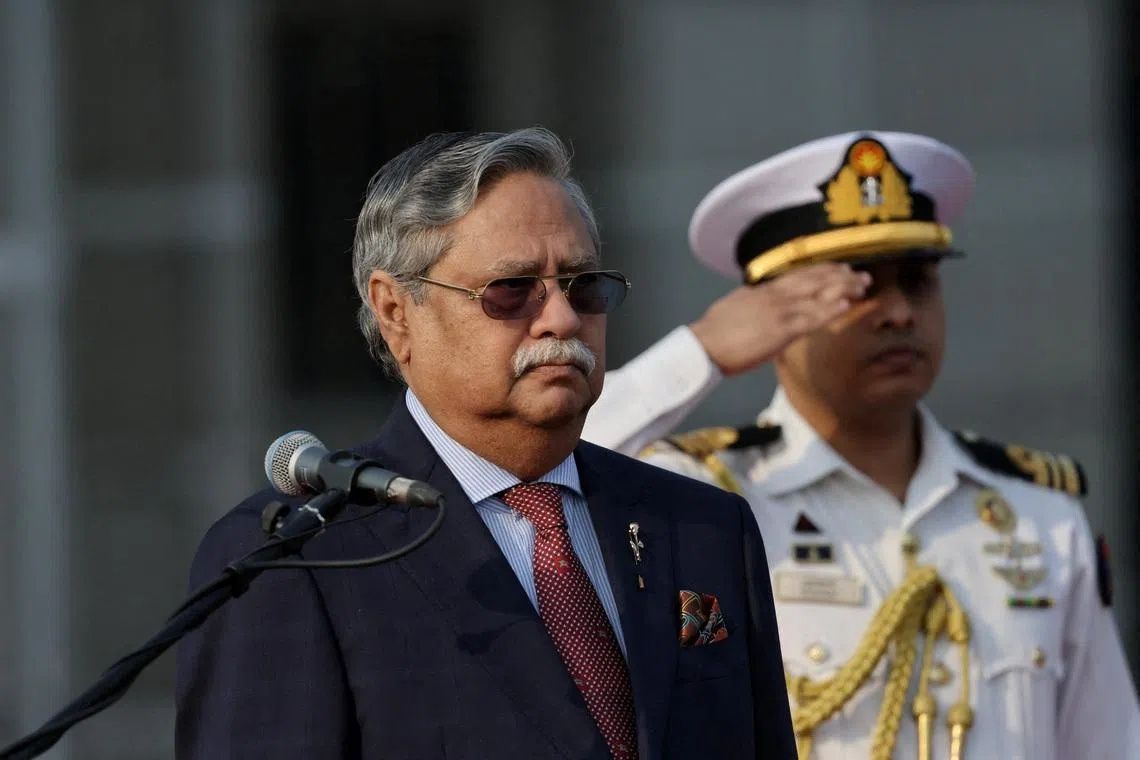
Bangladesh has entered a fresh phase of political instability with the surprise resignation of President Mohammed Shahabuddin, who cited debilitating health concerns in a statement released Friday. The 76-year-old, who has occupied the largely ceremonial post since April 2023, disclosed that recent medical investigations have identified Autonomic Neuropathy, a neurological disorder affecting his nervous system's ability to regulate involuntary functions. Shahabuddin explained that his condition has resulted in occasional episodes of momentary unconsciousness, a development that prompted his decision to step down from the office.
Shahabuddin's departure removes one of the last remaining political allies of former Prime Minister Sheikh Hasina from any position of influence within Bangladesh's governance structure. Having served as Hasina's vice president before his elevation to the presidency, Shahabuddin represented continuity with the previous administration. His resignation now occurs precisely five months before Hasina's anticipated homecoming, a timeline that underscores the precariousness of her political position and the consolidation of power by her opponents within the country's transitional leadership.
The circumstances surrounding Shahabuddin's exit reflect the tumultuous aftermath of the 2024 student-led uprising that toppled Hasina's government and forced her into exile in India. The uprising, initially sparked by grievances over job quotas, evolved into a broader anti-government movement that ultimately overwhelmed her administration's capacity to govern. In the months following her departure, Bangladesh has grappled with establishing interim leadership and navigating competing visions for the nation's democratic future, a process now further complicated by the presidential vacancy.
Hashina's political fortunes have deteriorated significantly since fleeing the country. Her Awami League party, which dominated Bangladeshi politics for years, now faces an outright prohibition on its operations and participation in electoral processes. This ban effectively strips the party of institutional legitimacy and prevents it from organising openly within the country. Compounding this disadvantage, numerous Awami League officials, activists, and lower-level functionaries have either been imprisoned or forced underground by the interim authorities, a pattern suggesting systematic efforts to weaken the party's organisational capacity.
The presidential position, though largely ceremonial in function, carries significant symbolic weight and performs essential constitutional duties within Bangladesh's parliamentary system. While executive authority resides with the prime minister and cabinet in this predominantly Muslim nation of 173 million inhabitants, the president serves as commander-in-chief of the armed forces and performs various ceremonial and constitutional functions. The interim speaker of the Jatiya Sangsad, the national parliament, will assume presidential duties temporarily until parliament elects a replacement, a process that could take weeks or months depending on political negotiations.
Shahabuddin's health disclosure raises broader questions about the vetting processes for high office and the institutional resilience of Bangladesh's political system. His neurological condition, characterised by involuntary loss of consciousness, would reasonably raise concerns about his capacity to discharge his constitutional responsibilities, particularly in scenarios demanding immediate decision-making or ceremonial presence. The fact that such a condition went undiagnosed or unaddressed until his 76th year in office suggests potential gaps in health screening protocols for senior government positions.
The timing of Shahabuddin's resignation merits careful analysis within the context of Bangladesh's political calendar and transition dynamics. Some observers have speculated whether the resignation represents a voluntary health-related decision or reflects broader political pressures within the interim government apparatus. Whether motivated primarily by genuine medical concerns or influenced by subtle political calculations, Shahabuddin's departure signals that Hasina's allies face dwindling opportunities to maintain institutional positions from which they might influence the country's political direction.
For regional observers, particularly Malaysian policymakers monitoring developments in neighbouring South Asia, Bangladesh's political volatility carries implications for regional stability and migration patterns. The nation's 173 million population makes it a significant demographic force in South Asia, and political instability frequently correlates with increased emigration to Southeast Asian countries, including Malaysia. The weakening of Hasina's political position and removal of her supporters from institutional roles may reshape Bangladesh's foreign policy orientation and domestic governance approach, with consequences extending beyond South Asia's borders.
The interim authorities in Bangladesh face pressure to establish credible, inclusive governance mechanisms that command public confidence while managing legitimate demands for accountability from the previous administration. Shahabuddin's exit removes a figure who represented continuity with the pre-uprising order, potentially facilitating the interim government's efforts to distance itself from earlier policies. Simultaneously, his departure deepens uncertainty regarding how Bangladesh will manage the transition toward electoral democracy and what political role, if any, figures associated with the previous administration might retain in the country's emerging political order.

