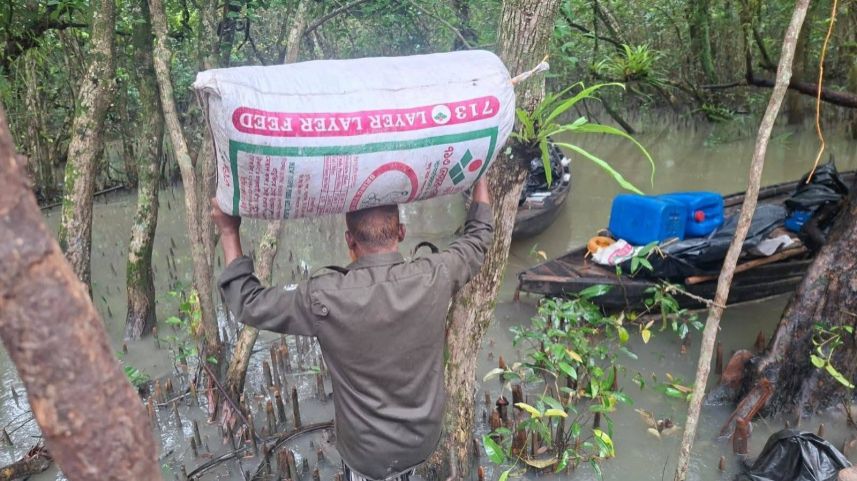
Bangladesh forest authorities have cracked down on a clandestine operation processing shrimp with poisonous chemicals inside the Sundarbans, one of the world's largest mangrove forests and a UNESCO World Heritage Site. The Chandpai Range authorities conducted a dawn-to-dusk raid on July 30 in the Charaputia area, targeting three illegal camps deliberately hidden at the mouths of remote waterways within the Sundarbans East Forest Division. The operation, overseen by Divisional Forest Officer Rezaul Karim Chowdhury, represents a significant enforcement effort against environmental crimes that conservationists say are systematically poisoning the region's fragile ecosystem.
The three suspected processing camps operated along three separate channels: Kaga Khal, Indurkani Khal and Chhoto Hormal Khal. When forest officials arrived on site, two of the locations had already been abandoned by the operators, suggesting either advance warning or a carefully planned rotation designed to minimize the risk of detection. The third site, however, yielded substantial evidence of active production. Officials recovered two sacks of dried shrimp that appeared to be finished product, approximately five maunds of fresh shrimp arranged for drying, two litres of suspected poison in liquid form, two operational boats, two fishing nets designed specifically for trawling, three sacks of rice used for processing, and various other equipment required for the operation.
The discovery revealed the industrial scale of what authorities had initially classified as isolated incidents. The presence of fresh shrimp emitting a detectable chemical odour prompted forest officials to destroy the entire cache immediately, preventing potentially contaminated product from entering commercial supply chains. This precaution underscores the serious health implications of the operation and suggests that officials possessed genuine concern about the toxicity levels involved. During the same enforcement action, officials also seized a separate boat carrying 95 crab traps after its operators abandoned their vessel and fled into the dense forest, indicating the prevalence of multiple illegal extractive activities occurring simultaneously across the region.
The chemicals used in the processing represent a particularly insidious environmental threat. According to Noor Alam, coordinator of Sundarban Rokkhay Amra, a conservation advocacy group, the poison methodology is fundamentally altering the Sundarbans' ecological integrity. The contaminated water kills aquatic organisms across the food chain, disrupts breeding cycles, and renders nursery grounds unsuitable for juvenile fish and crustaceans. This approach differs from conventional shrimp processing, which relies on salting or sun-drying, and suggests operators have adopted this method either to accelerate production cycles or to achieve specific commercial qualities that justify the environmental cost.
The emergence of poison-treated dried shrimp in local markets near Khulna has created a parallel public health crisis. Residents from surrounding upazilas, including Kachua, report that such products have only recently become visible in neighbourhood markets like Badal Bazar, despite dried shrimp never being conventionally available in these localities. The sudden appearance raises questions about distribution networks and suggests a coordinated commercial operation rather than opportunistic fishing. Mehadi Hasan Khan, a student from the area, articulated the consumer vulnerability: buyers have no reliable mechanism to identify whether shrimp has been processed legitimately or contaminated with toxic chemicals, creating a situation where unknowing consumers may be ingesting potentially dangerous residues.
The Sundarbans already faces mounting environmental pressures from multiple sources, making the emergence of poison-based processing particularly damaging. Illegal logging operations systematically extract valuable timber species, while poaching networks target endangered wildlife including Bengal tigers and river dolphins. Unregulated fishing depletes fish stocks faster than breeding populations can recover, and climate change has accelerated mangrove loss through increased salinity, storm surge, and changing precipitation patterns. Habitat degradation compounds these challenges by reducing available breeding and feeding grounds. The introduction of chemical contamination adds a new dimension to this crisis by poisoning the water column itself, the fundamental medium through which the entire ecosystem functions.
The connection between these illegal shrimp operations and broader criminal networks remains unclear but concerning. The sophisticated coordination evident in the camps' locations, the apparent advance warning that allowed some operators to flee, and the multiple enforcement challenges suggest involvement by organized actors rather than subsistence fishing communities. The shift toward chemical processing implies access to specific compounds, knowledge of their application, and sufficient profit margins to justify the investment and risk. These factors point toward commercial enterprises operating with financial backing and logistical support systems.
Forest official Rezaul Karim Chowdhury committed to intensifying enforcement operations, pledging continued raids to dismantle illegal activities. However, such pledges require sustained resource allocation, adequate personnel training in chemical identification and evidence collection, and coordination between forest authorities, coastguard operations, and local law enforcement. The remoteness of the Sundarbans and its dense geography create fundamental challenges for consistent monitoring. The waterway-based nature of illegal operations allows operators to relocate quickly, establishing new camps faster than authorities can conduct follow-up raids.
The case preparation underway will determine whether charges extend beyond camp demolition to include environmental contamination, poisoning, and commercial conspiracy. Bangladesh's legal framework provides mechanisms for environmental prosecution, but enforcement inconsistency has historically undermined deterrence. If convicted operators face only minimal penalties, the financial incentives driving the operation will likely persist.
For Malaysia and other Southeast Asian nations, the Sundarbans case offers crucial lessons. Similar illegal fishing and processing operations exist throughout the region's coastal zones, particularly in less-monitored mangrove areas. The emergence of chemically-processed seafood in regional markets suggests cross-border trading networks that may reach Malaysian consumers. Strengthening maritime enforcement, establishing regional intelligence sharing on illegal processing operations, and developing consumer awareness about contaminated seafood sources would protect public health while addressing ecosystem degradation. The Sundarbans represents a warning: environmental crime in these critical habitats proceeds until enforcement capacity matches operational sophistication.

