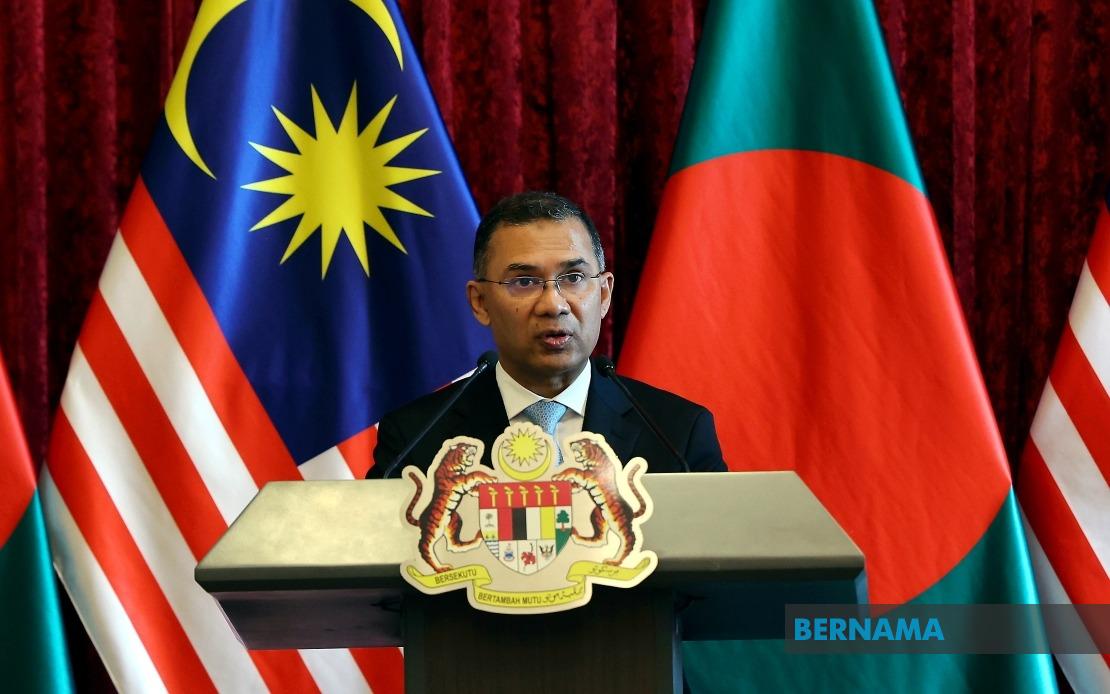
Prime Minister Tarique Rahman's two-day visit to Malaysia this week marked a significant diplomatic moment for the newly appointed Bangladeshi leader, who travelled to Putrajaya at the invitation of Prime Minister Datuk Seri Anwar Ibrahim. The trip, which concluded on Monday, represents Rahman's first bilateral journey since taking office in February 2026, underscoring the importance both nations place on their relationship within the broader South Asian and Southeast Asian context.
During joint remarks at a press conference, both leaders emphasised their mutual determination to deepen institutional cooperation through established channels. Rahman highlighted that Bangladesh and Malaysia have committed to enhancing collaboration via the joint commission mechanism alongside regular consultations between their respective foreign ministers. Such institutional frameworks provide continuity and structure to bilateral engagement, ensuring that progress on shared interests is not dependent on individual personalities or ad-hoc diplomatic efforts.
The visit yielded tangible outcomes in the form of three formal agreements. A Memorandum of Understanding on Cultural Cooperation was signed alongside two Exchanges of Notes addressing Counter-Terrorism Research and Investment Promotion and Facilitation. These instruments reflect the multifaceted nature of contemporary bilateral relations, extending beyond traditional trade and diplomatic channels into security cooperation and economic facilitation—areas critical for regional stability and prosperity.
Country-to-country economic ties have grown substantially, with 2025 trade data revealing a robust commercial relationship valued at RM12.18 billion. Malaysian exports dominated this exchange at RM10.08 billion, predominantly petroleum products, while Bangladesh exported RM2.10 billion worth of goods, primarily textiles, apparel and footwear. These figures illustrate how Malaysia serves as a crucial market for Bangladeshi manufactured goods while simultaneously providing essential energy resources to its South Asian partner.
Within Malaysia's broader trade portfolio, Bangladesh holds significant standing as the second largest trading partner, export destination and import source across the entire South Asia region, trailing only India. This positioning reflects both the scale of Bangladesh's economy and its integration into Malaysian commercial networks. As a nation heavily dependent on energy imports and vulnerable to global petroleum price fluctuations, Bangladesh benefits considerably from stable supply relationships with established exporters like Malaysia.
Rahman also drew attention to Malaysia's diplomatic support for Bangladesh's campaign for the presidency of the 81st session of the United Nations General Assembly, a bid that carries considerable prestige within the international community. This endorsement represents more than ceremonial backing; it signals Malaysia's recognition of Bangladesh's growing role in global affairs and willingness to champion its regional partner's international ambitions.
The two leaders engaged in substantive discussions concerning geopolitical developments with direct implications for South and Southeast Asia. Notably, they exchanged perspectives on the situation in West Asia, a region whose stability affects global energy markets, international shipping lanes, and regional security architectures. For Malaysia—a country with significant Muslim populations and maritime interests—and Bangladesh—a nation with comparable concerns—coordinated diplomatic positions on Middle Eastern affairs hold practical importance.
Both governments reaffirmed their commitment to collaborative engagement within multilateral organisations, reflecting recognition that many contemporary challenges transcend national borders. From climate change and pandemic preparedness to maritime security and counterterrorism, the United Nations system and other international bodies provide essential forums where nations coordinate responses to transnational threats. Bangladesh and Malaysia's emphasis on partnership within these structures suggests aligned interests in maintaining a rules-based international order.
Rahman's inaugural bilateral visit carries symbolic weight for his administration. Having assumed office relatively recently, his choice to undertake this journey to Malaysia signals the new government's priority on strengthening regional partnerships and continuing constructive engagement with neighbouring economies. For Malaysian policymakers, the visit represents an opportunity to deepen ties with a country of 170 million people whose strategic location, demographic significance, and economic trajectory make it increasingly consequential for regional balance.
The counter-terrorism cooperation agreement addresses shared security concerns in an era when transnational militant networks pose risks across South and Southeast Asia. Research collaboration in this domain enables both nations to develop evidence-based approaches to preventing radicalisation and disrupting terrorist financing networks that operate across borders. Such cooperation requires sustained institutional effort and technical exchange.
The investment promotion agreement reflects mutual interest in facilitating cross-border capital flows. As Bangladesh continues industrialisation and infrastructure development, Malaysian investors—with established expertise in manufacturing, energy, and services sectors—may find opportunities in the Bangladeshi market. Conversely, Bangladeshi enterprises seeking regional expansion might leverage Malaysian expertise in global supply chains and financial markets.
Rahman's visit occurred within a broader context of evolving South Asian geopolitics, where regional nations increasingly recognise the value of strengthening extra-regional partnerships. By reinforcing ties with Southeast Asian economies like Malaysia, Bangladesh positions itself within a more diverse diplomatic ecosystem, reducing dependence on any single power while accessing varied expertise, markets, and security partnerships.
The cultural cooperation framework reflects understanding that people-to-people connections and educational exchange form the foundation of sustained diplomatic relationships. Through academic partnerships, cultural festivals, and artistic collaboration, both societies develop deeper familiarity and mutual appreciation, creating constituencies within each nation invested in continued friendly relations.

