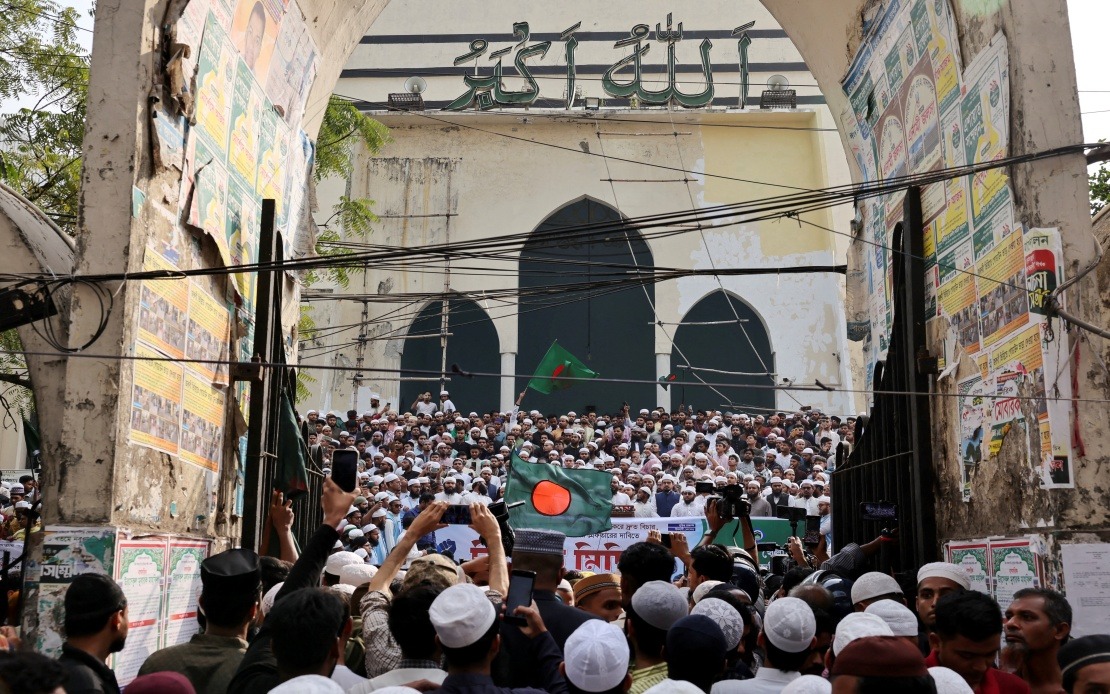
A special tribunal in Bangladesh delivered capital punishment sentences on Sunday against three senior police officers for their involvement in the deaths of demonstrators during the tumultuous 2024 uprising that precipitated the fall of the government. The International Crimes Tribunal, chaired by Justice Md Golam Mortuza Mozumder and comprising three judges, handed down the verdicts in absentia, targeting figures who held commanding positions within Bangladesh's law enforcement hierarchy during the period of civil unrest.
The three condemned officers include Habibur Rahman, the former commissioner of the Dhaka Metropolitan Police, along with Md Rashedul Islam, who previously served as an additional deputy commissioner within the same force, and Md Mashiur Rahman, the former chief of Rampura Police. All three remain at large, having evaded arrest despite the tribunal's pronouncement. Rahman has the distinction of already facing a separate death sentence in another criminal proceeding, underscoring the cascade of legal consequences emerging from the period of instability.
The tribunal simultaneously imposed sentences of life imprisonment extended by an additional twenty years on two other defendants in the consolidated case. Among those receiving this extended custodial sentence is Tariqul Islam Bhuiyan, formerly a sub-inspector at Rampura Police Station. These individuals similarly remain fugitives from justice, their whereabouts unknown to authorities. The collective sentencing reflects the judiciary's determination to hold accountable those responsible for extrajudicial killings during the crisis period.
The charges centred on crimes against humanity, with particular emphasis on several incidents that drew international attention and domestic outrage. The tribunal convicted the officers on evidence related to the fatal shooting of a young man who was apprehended while hanging from a building in Dhaka, alongside the deaths of two additional individuals within the capital during the trajectory of events. These specific incidents became particularly notorious after video footage spread across social media platforms, generating widespread condemnation and accelerating the momentum of anti-government demonstrations across the nation.
The 2024 uprising represented a watershed moment in Bangladesh's contemporary political history, fundamentally altering the nation's governance structures. According to United Nations documentation, approximately 1,400 individuals lost their lives during the period of civil disturbance, with thousands sustaining injuries. The overwhelming majority of casualties resulted from gunfire discharged by members of the security forces, with responsibility traced to personnel operating under the direction of the Awami League administration. This casualty toll ranks among the most severe consequences of internal conflict in the region during recent decades.
The uprising ultimately achieved its primary objective when Prime Minister Sheikh Hasina, whose government had authorised the military response to protests, departed Bangladesh in August 2024 and sought refuge abroad. Her exit represented a dramatic capitulation following weeks of escalating confrontation between demonstrators and state apparatus. The prior November, the same tribunal had already sentenced Hasina herself to death in a separate proceeding addressing crimes against humanity, establishing a legal framework for investigating governmental accountability at the highest levels.
The tribunal's systematic approach to prosecuting those responsible for the violence demonstrates Bangladesh's commitment to transitional justice mechanisms following the political upheaval. By targeting law enforcement personnel at multiple hierarchical levels, from senior commanders to lower-ranking officers, the judiciary signals that accountability extends throughout institutional structures rather than concentrating solely on political leadership. This comprehensive approach reflects international standards for addressing mass casualty events through legal channels.
For Malaysia and broader Southeast Asian observers, Bangladesh's judicial reckoning carries significant implications regarding state accountability and the boundaries of permissible force during civil unrest. The region has experienced numerous episodes where security forces deployed against demonstrators, raising persistent questions about proportionality and restraint. The tribunal's willingness to impose capital sentences on high-ranking security officials, despite their current fugitive status, establishes precedent regarding the seriousness with which neighbouring states might evaluate similar circumstances.
The continuing fugitive status of the condemned officers presents ongoing enforcement challenges for Bangladesh authorities and the international community. Unlike trials producing convictions of politically prominent figures who may eventually surrender or be apprehended, tracking individuals dispersed across state borders demands coordinated law enforcement cooperation. The absence of extradition treaties with certain countries where these individuals may have sought refuge complicates enforcement prospects, leaving questions about whether the death sentences will ultimately result in actual incarceration.
The sequential nature of the tribunal's verdicts against multiple echelons of the former administration and security establishment suggests that investigations into the 2024 violence continue expanding. Additional trials may follow, potentially ensnaring other officials whose roles in directing or implementing the violent response are subject to ongoing examination. This extended process of accountability necessarily prolongs public confrontation with the traumatic events while simultaneously offering victims' families the prospect of legal vindication.

