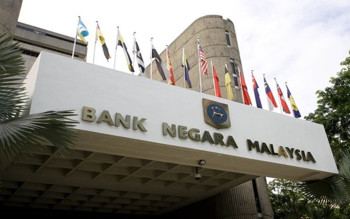
Bank Negara Malaysia formally cautioned Tabung Haji on five separate occasions about a widening chasm between the hajj savings fund's assets and liabilities, according to Dr Zulkifli Hasan, the Minister in the Prime Minister's Department (Religious Affairs). Speaking during a parliamentary briefing on the Royal Commission of Inquiry report into TH's operations, Zulkifli disclosed that these official warnings—addressed to both the TH chairman and the religious affairs minister at the time—went unheeded by the institution's management, despite the gravity of the situation.
The central concern that prompted BNM's repeated warnings was the financial instability it created within Malaysia's broader economic system. According to Zulkifli, TH's deteriorating position represented a potential systemic risk to national financial stability, raising alarm bells among banking regulators who feared contagion effects throughout the financial sector. That such formal cautions from the central bank proved ineffective speaks to deeper governance failures within the institution, where leadership apparently disregarded regulatory directives intended to safeguard depositors' interests and broader economic security.
The warnings from BNM were not isolated regulatory expressions of concern. They were reinforced in 2017 when the Auditor-General issued a formal reprimand, documented within the 2017 Financial Statements Report. Critically, the Auditor-General's censure focused on accounting irregularities that suggested deliberate misrepresentation of TH's financial health. Specifically, the institution had altered its impairment policy twice within a single year—an unusual and suspicious maneuver—ostensibly to inflate reported profits for 2017 and obscure the true extent of financial deterioration.
These revelations underscore a pattern of institutional deception that extended well beyond simple negligence or incompetence. The dual policy changes within months represented a calculated effort to present a rosier financial picture to stakeholders and the public, potentially buying time for leadership while masking mounting problems. Such accounting gymnastics are particularly troubling within a religious and social institution that holds the sacred savings of millions of Malaysian Muslims preparing for the pilgrimage to Mecca.
Following the regulatory reproaches, TH's reconstituted board took a critical step by engaging PricewaterhouseCoopers, the international audit powerhouse, in 2018 to conduct a comprehensive reassessment of the institution's actual financial position and historical performance. This external audit was intended to subject TH's records to rigorous, independent scrutiny according to internationally recognized accounting standards—a measure that should have been taken years earlier. The PwC investigation delivered damning findings that quantified the scale of financial mismanagement.
The audit revealed that of TH's reported total assets worth RM4.6 billion, merely RM556 million had been professionally valued by qualified valuers. This staggering disparity—with over 88 percent of claimed assets lacking proper professional validation—demonstrated that TH's balance sheet was fundamentally unreliable. The implication was stark: the institution had been operating on the basis of unsubstantiated figures, raising serious questions about the actual value of depositors' accounts and the institution's true solvency position. For Malaysian pilgrims who had contributed to TH for decades, often from modest incomes, this discovery was particularly troubling.
The broader investigation into TH's governance and operations culminated in the Royal Commission of Inquiry report, which was established by the government in 2021 and formally presented to the Yang di-Pertuan Agong on August 30, 2022. When the 211-page RCI document was finally released publicly on July 29, it provided comprehensive documentation of institutional weaknesses spanning the 2014-2020 period—the critical years when TH's financial position deteriorated most severely. The report identified numerous governance failures, operational deficiencies, and management lapses that collectively explained how such substantial financial distress had accumulated unaddressed.
Among the RCI's recommendations was a package of 25 suggested improvements aimed at fundamentally restructuring TH's operations, governance framework, and financial management practices. These recommendations addressed systemic vulnerabilities that had enabled the earlier financial manipulation and misrepresentation to persist unchecked. The fact that 75 percent of these recommendations had been implemented by July 30—just days after the report's public release—suggested that TH's current leadership was moving with urgency to address the identified deficiencies and restore institutional credibility.
For Malaysian stakeholders, particularly the millions of Muslims with savings held in TH accounts, the revelation of five BNM warnings and subsequent financial manipulation represents a sobering failure of institutional oversight and management accountability. The central bank's regulatory authority, while clearly exercised through formal warnings, proved insufficient to compel remedial action from TH leadership before substantial damage had accumulated. This raises critical questions about the adequacy of oversight mechanisms for religiously significant financial institutions that operate with public trust and handle savings ear-marked for sacred religious obligations.
The path from initial BNM warnings through external audit findings to the RCI report charts a course of institutional neglect and financial mismanagement that took years to fully expose and address. The challenge now facing TH and its regulatory overseers lies in rebuilding public confidence in an institution that had betrayed the trust of millions of depositors. Implementation of the RCI recommendations must be thorough and verifiable, supported by strengthened governance structures and more robust regulatory oversight to prevent recurrence of similar failures. For Malaysian Muslims globally, restoring TH to financial health and operational integrity is not merely an administrative matter but a religious and social imperative tied to one of Islam's five pillars.

