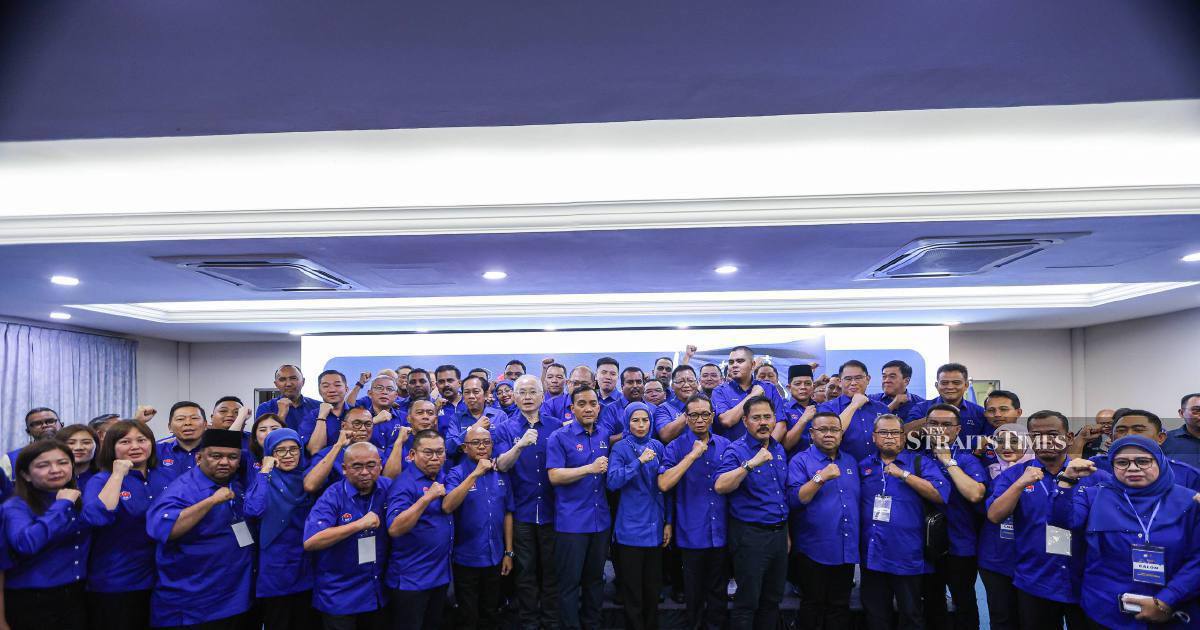
Barisan Nasional has formally unveiled its complete candidate list comprising 56 contenders for the Johor state election set for July 11, signalling the coalition's strategic preparation for what is expected to be a closely contested electoral battle in the southern state. The revelation of the full slate represents a critical juncture in BN's campaign strategy, as the coalition seeks to maintain its political dominance in Johor—a state that has traditionally served as a crucial power base for the ruling establishment.
The unveiling ceremony in Johor Baru represents more than a routine administrative exercise in Malaysian electoral politics. It reflects BN's confidence in fielding seasoned and fresh candidates across the state's legislative constituencies, even as the coalition faces mounting competition from resurgent opposition forces. The timing of the announcement allows BN's machinery to mobilise ground operations and build momentum ahead of the formal campaigning period, a standard tactical approach deployed by established political coalitions throughout the region.
For Malaysian political observers, the composition of BN's candidate roster offers crucial insights into the coalition's internal power dynamics and strategic priorities. The distribution of party tickets among component parties—particularly United Malays National Organisation (UMNO), Malaysian Chinese Association (MCA), and Malaysian Indian Congress (MIC)—reflects negotiated arrangements that balance representation, electability, and inter-communal political considerations. These allocation decisions often reveal shifting influence within the coalition structure and provide early indicators of which constituencies party leadership deems most winnable or strategically significant.
Johor's electoral landscape has undergone substantial transformation over the past decade, with demographic shifts, urbanisation, and changing voter preferences reshaping competitive dynamics across many state constituencies. BN's candidate selection process must account for these evolving ground realities, ensuring nominees possess not only party loyalty but also credibility within their respective constituencies and appeal to increasingly diverse voter groups. The challenge becomes particularly acute in urban areas and mixed constituencies where traditional community networks have weakened and performance-based assessments of political representation carry greater weight.
The July 11 election date carries significance beyond its immediate context, occurring within a broader pattern of state-level electoral contests that collectively shape Malaysia's overall political trajectory. Results in Johor will inevitably influence calculations regarding potential federal-level political reorganisation, coalition stability, and the relative positioning of BN, Pakatan Harapan, and other political groupings in national politics. State elections increasingly function as referendum-style contests where voters express judgement on both state and federal government performance, rendering local races susceptible to national political currents.
Opposition parties will undoubtedly scrutinise BN's candidate announcements for strategic vulnerabilities, attempting to identify constituencies where their own candidates possess competitive advantages. The revelation of BN's full slate initiates an intensive period of cross-party assessment and counter-positioning, as rival coalitions refine their campaign strategies based on opponent selections. Political analysts will examine factors including incumbent status, prior electoral performance, demographic fit between candidates and constituencies, and available party resources to project likely competitive dynamics across individual races.
For Johor's electorate, BN's candidate list represents the human face of the coalition's governing vision and commitment to the state's development agenda. Voters will evaluate nominees based on personal integrity, track records of public service delivery, responsiveness to constituent concerns, and alignment with their own policy priorities. In contemporary Malaysian politics, candidate selection has become substantially more consequential as voters demonstrate reduced tolerance for perceived incompetence or corruption, demanding representatives who deliver tangible improvements in local infrastructure, economic opportunity, and public amenities.
The campaign period ahead will test BN's capacity to leverage administrative advantages, party machinery efficiency, and financial resources against opposition parties that continue expanding their organisational reach and refining messaging approaches. Coalition candidates must navigate complex terrain encompassing state-specific issues, national political controversies, economic concerns, and evolving expectations regarding democratic accountability and good governance. Campaign effectiveness will depend partly on candidates' ability to articulate compelling narratives regarding their individual contributions to constituent welfare and BN's broader vision for Johor's future.
Regional observers recognise that Johor results may carry implications extending beyond Malaysian borders. The state's strategic location, economic importance as a manufacturing and investment hub, and integrated regional connections with Singapore and other neighbouring jurisdictions mean that political stability and governance quality carry cross-border significance. Any substantial shifts in Johor's political orientation could influence broader Southeast Asian perceptions regarding Malaysia's political trajectory and investment climate, thereby affecting regional economic and strategic calculations.
As BN's campaign machinery engages voters across Johor's 56 constituencies, the coalition's proven organisational capacity and deep-rooted community networks will be tested against mounting demands for responsive, accountable, and performance-oriented governance. The full candidate slate now publicly announced commits the coalition to contesting every available seat, a strategically aggressive posture that reflects confidence despite acknowledged political headwinds. Whether this comprehensive candidacy approach translates into proportionate electoral gains will depend on factors ranging from voter turnout patterns and swing constituencies to effectiveness of campaign messaging and broader national political developments occurring between announcement and election day.

