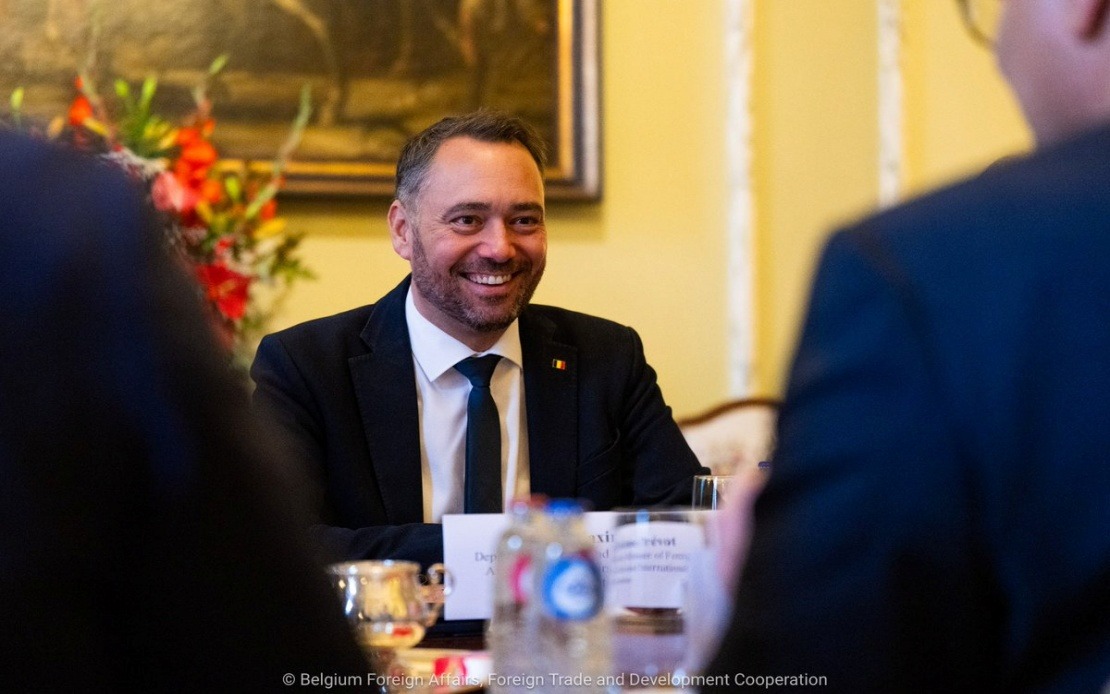
Belgium's Deputy Prime Minister and Foreign Minister Maxime Prévot arrives in Malaysia this week for a two-day working visit focused on strengthening bilateral ties and exploring strategic cooperation in clean energy, critical minerals, and Islamic trade. The visit, beginning Thursday, represents Prévot's inaugural trip to Malaysia since taking office in February 2025, signalling renewed European interest in deepening engagement with Southeast Asia's largest economy.
The centrepiece of the visit will be a meeting between Prévot and Malaysian Deputy Prime Minister Datuk Seri Fadillah Yusof on Wednesday, July 2. Fadillah's dual portfolio as Energy Transition and Water Transformation Minister underscores Malaysia's strategic priority in this area and the importance placed on these discussions. Both officials will conduct a comprehensive review of the Malaysia-Belgium relationship while charting fresh directions for mutual benefit, with particular emphasis on renewable energy development, rare earth element sourcing and processing, and halal sector expansion.
Renewable energy cooperation carries particular significance for Malaysia's long-term development strategy. The country has set ambitious targets for renewable energy adoption and faces growing international pressure to demonstrate commitment to climate goals. Belgium, as a developed European economy with substantial experience in renewable technology and grid modernisation, offers valuable technical expertise and investment opportunities. The discussions will likely explore technology transfer arrangements, joint research initiatives, and potential Belgian involvement in Malaysia's expanding solar and offshore wind sectors.
Rare earth elements represent another critical dimension of the bilateral conversation. These minerals are essential for modern manufacturing, renewable energy technologies, and defence applications. Malaysia has historical expertise in rare earth processing and remains a significant player in global supply chains. Belgium's industrial base and EU connections could facilitate market access and investment partnerships that strengthen Malaysia's position in this strategically important sector, particularly as Western nations seek to diversify supply chains away from over-reliance on China.
The halal industry dimension reflects Malaysia's positioning as the global halal hub and standard-setter. Belgium, with its diverse Muslim population and growing halal market awareness, represents both a consumer market and a gateway to broader European halal commerce. Cooperation in certification standards, product development, and trade facilitation could benefit Malaysian halal exporters while positioning Belgium as a European leader in this rapidly expanding sector.
Beyond bilateral matters, Prévot will address the 39th Asia-Pacific Roundtable organised by the Institute of Strategic and International Studies Malaysia. This platform provides an opportunity to articulate Belgium and the European Union's vision for regional security, economic cooperation, and multilateral governance. His remarks will likely address geopolitical developments including maritime security, trade tensions, and the EU's strategic autonomy in an increasingly multipolar world—issues of direct concern to Malaysian policymakers.
The visit schedule includes an audience with Sultan of Perak Sultan Nazrin Muizzuddin Shah, reflecting the formal diplomatic protocol extended to high-level foreign dignitaries. This ceremonial element underscores the respect accorded to bilateral relations and Malaysia's constitutional monarchy traditions.
Trade data illustrates the substantial economic foundation underlying these discussions. Bilateral commerce reached RM9.74 billion in 2025, with Malaysian exports accounting for RM6.85 billion—reflecting Malaysia's competitive advantages in manufactured goods, agricultural products, and resource-based industries. Belgian imports of RM2.89 billion represent machinery, chemicals, and specialised equipment. These figures demonstrate a relationship extending well beyond diplomatic courtesy into genuine commercial interdependence.
Belgian investment commitment has grown measurably. As of 2025, sixty-seven approved projects involving Belgian participation represent RM5.1 billion in committed capital and are projected to generate 4,605 employment opportunities across Malaysia. This investment pipeline spans multiple sectors including manufacturing, technology, and services, indicating Belgian corporate confidence in Malaysia's business environment and market stability. These projects represent long-term commitments that anchor bilateral relationships beyond individual political administrations.
For Malaysia, this visit arrives at a critical juncture. The country is accelerating its energy transition while simultaneously seeking to secure supply chains for critical materials supporting both domestic development and export-oriented manufacturing. Belgium's experience bridging industrial competitiveness with environmental sustainability offers practical lessons. Additionally, European markets remain crucial for Malaysian exporters, and strengthening high-level political relationships facilitates trade negotiations, regulatory alignment, and investment flows.
The visit also carries significance for Malaysia-EU relations more broadly. Belgium holds the presidency of the Council of the European Union periodically and influences EU policy toward Southeast Asia. High-level visits by senior Belgian officials often precede broader EU engagement strategies. Prévot's discussions in Kuala Lumpur may inform European positions on regional trade, security cooperation, and technology partnership.
Energy security considerations underpin these conversations with particular urgency. Malaysia's manufacturing sector depends heavily on reliable, affordable energy. Renewable energy expansion offers pathways to both cost reduction and environmental compliance with growing international standards. Belgian expertise in renewable integration, energy storage, and grid management directly addresses Malaysian priorities as the country balances economic growth with climate responsibility.
The timing of this visit reflects broader geopolitical recalibration. European governments are actively cultivating relationships across the Indo-Pacific region, responding to strategic competition and supply chain vulnerabilities exposed by recent global disruptions. Belgium's engagement with Malaysia should be understood within this context of European repositioning toward Asia and the Indo-Pacific as zones of critical strategic and economic importance.

