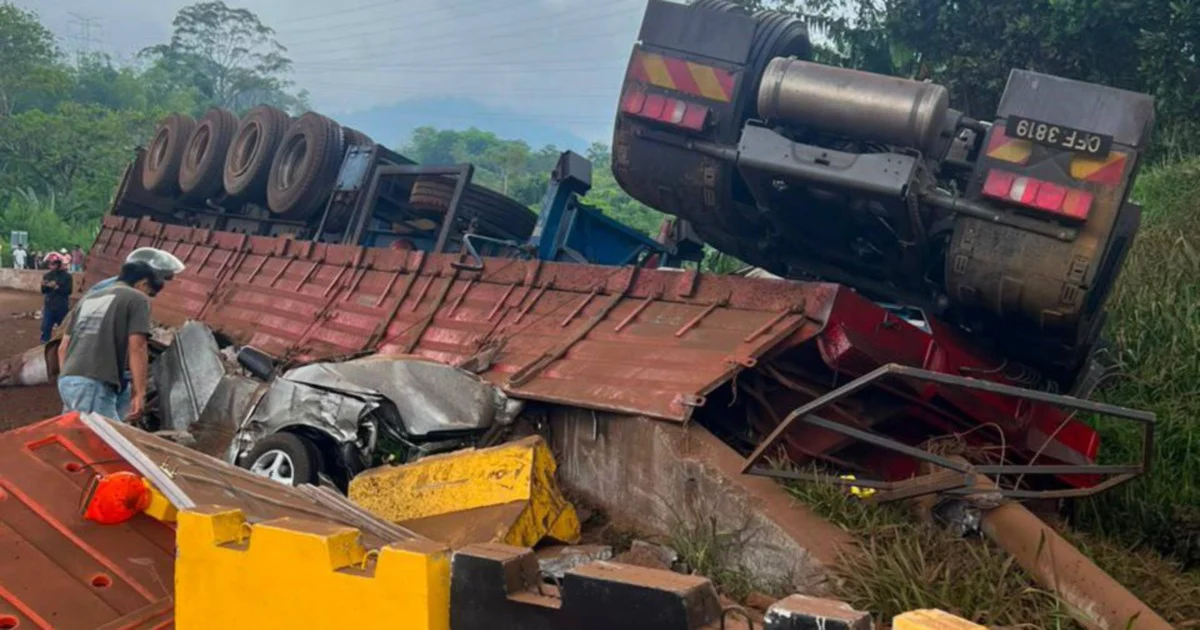
A trailer driver who was at the wheel during a catastrophic collision on the Karak Expressway in Bentong has been released on police bail while authorities continue their investigation and prepare their case for prosecution. The June 14 incident claimed four lives and has intensified scrutiny on road safety standards on the busy expressway corridor that connects the Klang Valley to Pahang.
The release of the driver on bail represents a standard procedural step in Malaysia's criminal justice system, where suspects awaiting prosecution may be permitted temporary freedom subject to strict conditions set by investigating officers. The decision to grant bail suggests that police have gathered sufficient preliminary evidence to lodge charges but recognise that continued detention is not immediately necessary to secure the driver's attendance at future court proceedings.
The Karak Expressway, officially known as the East Coast Expressway's western section, serves as a critical transportation artery for commercial traffic and commuters travelling between the Klang Valley and Pahang. The stretch through Bentong, located in Pahang's northwestern region, has historically witnessed heavy truck and trailer traffic due to its role in connecting Malaysia's industrial heartland with the eastern states. Fatal accidents along this corridor have prompted repeated calls from safety advocates for enhanced enforcement and stricter compliance with speed limits and vehicle maintenance standards.
Tragedies of this magnitude typically spark immediate attention from the Road Transport Department and police traffic units, who undertake detailed reconstructions of collision scenes to establish causation factors. Investigators examine vehicle condition records, driver fatigue patterns, road surface conditions, weather circumstances at the time of impact, and vehicle loading configurations. In cases involving commercial vehicles such as trailers, mechanical failure and improper load distribution frequently emerge as contributory factors, particularly when heavy goods are inadequately secured or when brake systems have not been properly maintained.
The four fatalities resulting from this incident underscore the devastating consequences that can unfold when commercial vehicles are involved in high-speed collisions on expressways. Unlike urban accidents where lower speeds may permit survival, expressway crashes typically occur at velocities that leave minimal margin for driver error or mechanical failure. Passengers in smaller vehicles struck by fully-laden trailers face exponentially higher mortality risks due to the disparity in vehicle mass and the inadequate protective structures surrounding them.
Police bail conditions typically restrict the driver's movements, requiring regular reporting to designated police stations and prohibiting travel beyond specified boundaries without permission. These conditions serve the dual purpose of ensuring the suspect's availability for court appearances while permitting the individual to maintain employment or family responsibilities during the investigative phase. The duration of bail and the eventual court proceedings could extend for several months given the complexity of accident reconstruction and the severity of charges anticipated.
For Malaysian road users and transportation industry stakeholders, fatal expressway accidents represent persistent challenges that have resisted previous intervention efforts. While vehicle technology has advanced considerably, human factors including driver fatigue, inadequate rest periods, and pressure to meet tight delivery schedules remain significant accident contributors within the trucking sector. Many commercial drivers operate under intense competitive pressures that incentivise rapid transit over safety compliance, creating systemic vulnerabilities that individual enforcement cannot entirely remedy.
The outcome of this investigation and subsequent prosecution will carry important signalling value within Malaysia's transportation industry. Penalties imposed on the driver and potentially on fleet operators or vehicle maintenance contractors will influence safety culture and investment decisions across the sector. Industry observers suggest that genuine improvements in expressway safety require coordinated approaches combining enhanced law enforcement, vehicle technology standards, driver training and rest period regulations, and workplace culture shifts within logistics companies that prioritise safety metrics alongside delivery performance.
The Bentong collision adds to accumulating evidence that the Karak Expressway requires sustained attention from transport authorities. Traffic engineers have examined geometric design elements and sight lines along various problem sections, while the Road Safety Institute has recommended additional enforcement presence during peak traffic periods and stricter penalties for traffic violations. However, the translation of such recommendations into measurable safety improvements has proven slower than public expectations and bereaved families' demands for accountability.
As the investigation proceeds toward prosecution, the deceased individuals' families will await clarification regarding the circumstances that transformed a routine commercial journey into a tragedy. Their pursuit of legal accountability and answers about whether negligence, mechanical failure, or systemic failures contributed to their loss will occupy courtroom proceedings over forthcoming months. Beyond the specific legal outcome, this incident continues a broader conversation about whether Malaysia's approach to expressway safety and commercial vehicle regulation adequately protects the travelling public.

