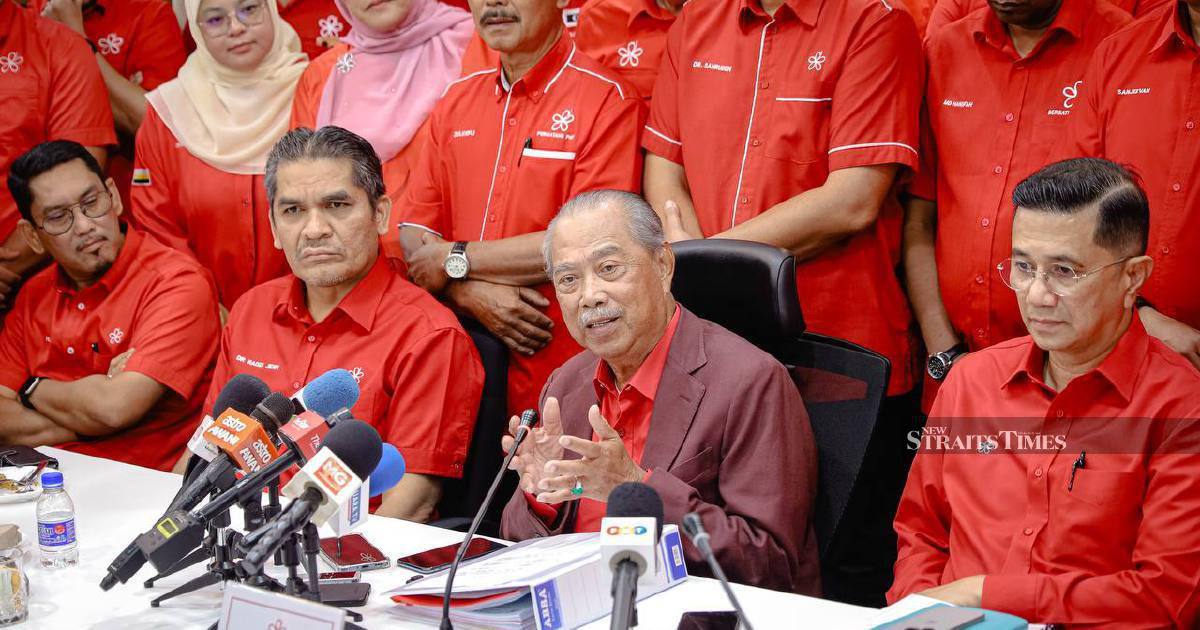
Bersatu has signalled its readiness to directly challenge PAS in Johor's coming state election should the two Perikatan Nasional partners fail to reach agreement on seat distribution. The position, articulated by Bersatu president Tan Sri Muhyiddin Yassin, reflects mounting tensions within the ruling coalition as both Islamist-leaning parties jockey for legislative influence in the economically important southern state.
The statement carries significant weight given Bersatu's central role in Malaysia's political architecture over recent years. Since the 2022 general election, the party has been instrumental in shaping federal governance, and its willingness to contemplate electoral confrontation with PAS suggests negotiations over seat allocations have reached a delicate impasse. For observers of Malaysian politics, such declarations typically signal that behind-the-scenes discussions have become contentious, with both parties seeking to maximize their gains from voter support bases that increasingly overlap geographically.
Johor represents a crucial testing ground for Malaysia's coalition dynamics. As Malaysia's second-most populous state with significant economic activity centred on manufacturing, shipping, and services, control of the state assembly has ramifications beyond local governance. Electoral outcomes in Johor often foreshadow broader national political shifts, making seat negotiations there particularly high-stakes. If Bersatu and PAS contest the same constituencies, voters in competitive districts would face a genuine choice between two Malay-Muslim focused parties claiming similar constituencies within the same ruling coalition—an unusual and potentially destabilizing scenario.
The mechanics of coalition seat allocation typically involve back-channel negotiations months before elections, with each party presenting demographic data, incumbency records, and organizational strength in specific constituencies to justify their claims. When these negotiations falter, it often indicates fundamental disagreements about which party deserves priority in particular areas. Bersatu's public willingness to challenge PAS suggests the party believes it can credibly contest Johor seats and potentially outperform expectations, particularly in urban and semi-urban constituencies where its support base has shown growth.
PAS, as the larger coalition partner with longer-established grassroots networks, traditionally commands significant presence in Johor's more rural and semi-rural areas, especially in constituencies with higher concentrations of Malay-Muslim voters prioritizing Islamic governance credentials. However, Bersatu has cultivated support among similar demographics while also appealing to voters seeking alternatives to PAS's stricter religious positioning. This overlap creates the possibility of fratricidal competition where both parties ultimately weaken their collective position against opposition coalitions seeking to capitalize on PN divisions.
The implications for Malaysian and Southeast Asian politics warrant careful attention. Coalition stability matters enormously for Malaysia's institutional credibility at a time when the country has experienced multiple changes of government since 2018. International investors and regional partners monitor whether Malaysia's political arrangements can function reliably. Public conflicts between coalition members risk signalling governmental instability and competence questions that extend beyond electoral calculations into perceptions of administrative capacity and policy consistency.
For Johor voters specifically, the prospect of PN partners contesting identical seats presents both opportunity and risk. It offers genuine electoral choice within a ruling coalition framework, potentially enabling voters to differentiate between parties rather than accepting predetermined alliances. Conversely, it fragments PN's vote in ways that could enable opposition coalitions—whether Pakatan Harapan, DAP-led formations, or independent candidates—to capture constituencies through vote-splitting among PN supporters unable to coordinate effectively.
Historically, Malaysian coalitions have weathered internal seat allocation disputes through compromise brokered by senior leaders and facilitated by party machinery accustomed to negotiated settlement rather than public confrontation. Muhyiddin's willingness to state publicly that Bersatu will contest against PAS if necessary represents an unusual escalation, suggesting either that negotiations have genuinely broken down or that Bersatu seeks to strengthen its bargaining position through public posturing that demonstrates resolve to party members and supporters.
The timing of such statements typically precedes concrete campaign preparations. If Bersatu follows through on this position and nomination processes result in overlapping candidates in significant numbers of constituencies, the Johor election would mark a notable departure from conventional PN operational patterns. Such an outcome would provide opposition parties with unprecedented opportunities to position themselves as stabilizing forces offering coherent governance alternatives to a visibly fractured coalition.
Regional observers in Southeast Asia, particularly in neighbouring Singapore and Indonesia, track Malaysian coalition politics carefully given cross-border economic linkages and historical regional engagement patterns. A coalition fracture in Johor could ripple through Malaysia's diplomatic positioning and policy continuity, potentially affecting everything from port operations and trade corridors to maritime security arrangements that have regional significance.
For now, Muhyiddin's statement functions both as acknowledgment that serious disagreements exist and as pressure on PAS negotiators to accommodate Bersatu's demands in ongoing seat allocation discussions. Whether this produces settlement or genuine electoral confrontation will become apparent as nomination deadlines approach and campaign machinery activates. The outcome will substantially shape not only Johor's political composition but also the stability and trajectory of Malaysia's broader coalition-based governance framework heading into the next electoral cycle.