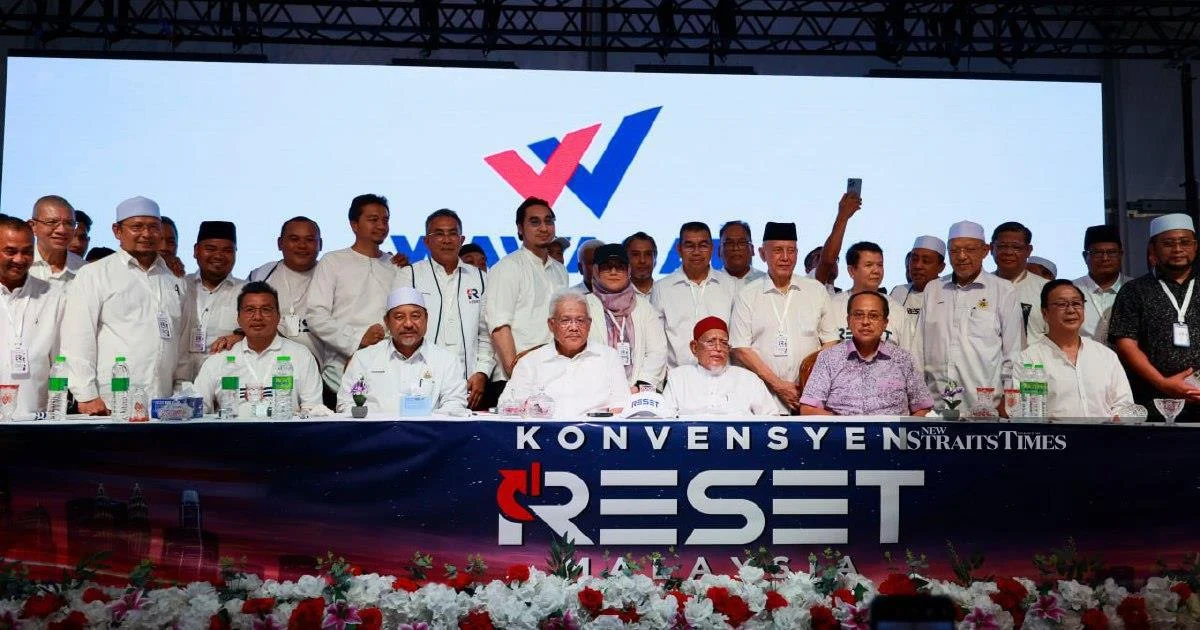
Malaysia's fragile opposition coalition experienced fresh turbulence yesterday as Bersatu intensified scrutiny of a hastily convened PN Supreme Council meeting the previous evening, specifically targeting the admission of Wawasan into the bloc and questioning whether the session adhered to established constitutional requirements.
The tension highlights deepening fractures within Perikatan Nasional, the political alliance formed to challenge Pakatan Harapan's grip on government. For months, the coalition has struggled to maintain cohesion between its component parties, and procedural disputes over high-level decision-making now threaten to deepen these divisions. The controversy over Monday night's meeting illuminates how even technical governance questions can escalate into serious threats to alliance stability, particularly when component parties harbour competing interests and harbour suspicions about unilateral action.
Wawasan's incorporation into the PN framework represents a significant strategic development for the opposition bloc, potentially reshaping its electoral positioning ahead of future contests. However, Bersatu's objections focus on the mechanics of the decision rather than its substance, suggesting that internal protocol breaches matter as much as strategic considerations within the alliance structure. The timing of the emergency session—conducted on Monday evening—raises legitimate questions about whether all component parties received adequate notice and opportunity to deliberate before such a consequential decision moved to a vote.
Within Malaysia's multi-party system, coalition agreements typically contain provisions governing how major decisions proceed through their supreme councils. These mechanisms exist precisely to prevent scenarios where dominant partners unilaterally advance decisions affecting all members without consultation. Bersatu's formal challenge signals its unwillingness to accept what it perceives as executive overreach, regardless of the chairman's authority to call emergency sessions. This posturing reflects broader anxieties about power distribution within PN and whether smaller component parties retain meaningful influence over strategic direction.
The PN chairman's decision to convene the emergency meeting without what Bersatu characterizes as appropriate lead time creates a procedural opening for challenging the Wawasan admission's validity. Should Bersatu succeed in its legal or constitutional arguments, the entire matter could require reconsideration through regular channels, delaying Wawasan's formal integration and potentially generating substantial embarrassment for the bloc. Conversely, should the chairman's prerogatives prove sufficient under PN's constitution, Bersatu faces the uncomfortable position of accepting an unfavourable outcome while its objections remain on record.
This episode reflects patterns familiar throughout Southeast Asian opposition politics, where governing coalitions frequently fracture not over ideological divides but over questions of procedure, representation, and equitable power-sharing. PN assembled as a deliberate counter to Pakatan Harapan's dominance, yet its component parties—each with distinct organizational interests and constituency bases—struggle perpetually to align on fundamental questions. Bersatu's challenge, whether ultimately successful or not, demonstrates that unity cannot be simply decreed but requires continuous negotiation and respect for agreed protocols.
For Malaysian political observers, the immediate concern centres on whether this procedural dispute escalates into broader recrimination within PN. Previous disagreements have triggered walkouts, public criticism, and occasionally party departures, fragmenting opposition strength precisely when unified opposition messaging might otherwise prove valuable. The optics of internal quarrelling over technical governance matters, while potentially justified on procedural grounds, invariably damage public perceptions of coalition competence and fitness to govern.
Wawasan's status remains ambiguous pending resolution of Bersatu's challenge. The party-bloc appears positioned to capitalize on any governance vacuum within PN, attracting disillusioned members from component parties frustrated by what they perceive as bullying or marginalization. Simultaneously, other PN members may resent what they view as Bersatu's obstructionism, potentially fracturing behind-the-scenes relationships already strained by months of strategic disagreements and competition for electoral seat allocations.
The broader regional dimension also merits consideration. Southeast Asia's opposition coalitions regularly experience precisely this form of internal strain as smaller partners guard their autonomy against absorption by larger or more dominant component organizations. Thailand, Indonesia, and the Philippines have all witnessed opposition blocs unravel through similar dynamics—initial coalition unity gradually eroding as parties prioritize institutional survival over collective objectives. Malaysia's situation differs in scale and context, yet the underlying mechanics prove remarkably consistent across the region.
Moving forward, PN leadership faces a credibility test regarding their commitment to inclusive decision-making processes. Acknowledging procedural shortcomings and reconvening discussions through proper channels might restore confidence, albeit at the cost of modest delay. Alternatively, doubling down on the chairman's authority risks further alienating Bersatu and signalling to other component parties that institutional equality remains subordinate to executive prerogative. Either path carries political consequences that will reverberate through PN's internal dynamics for months ahead.

