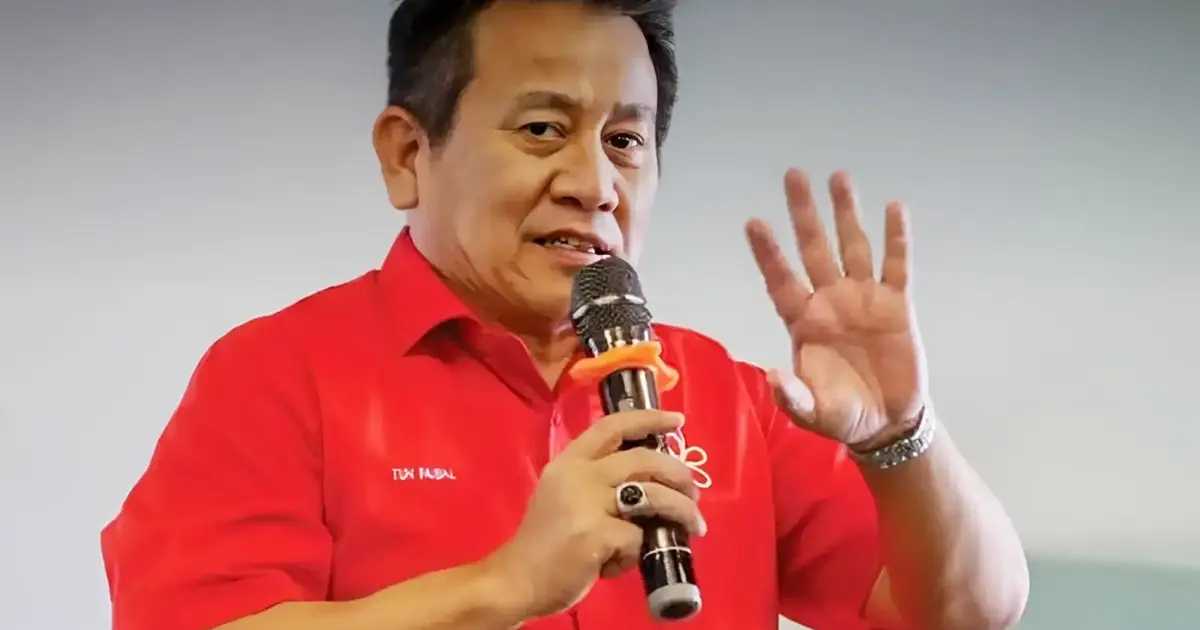
Tun Faisal Ismail Aziz has openly questioned the rationale behind convening emergency meetings of the Perikatan Nasional Supreme Council, arguing that the structure renders such gatherings functionally redundant when critical decisions ultimately require validation from individual coalition member parties. His scepticism strikes at the heart of how the opposition alliance coordinates its political strategy and makes binding commitments across its diverse membership.
The Bersatu President's critique exposes a fundamental structural weakness within PN's governance framework. If the Supreme Council—ostensibly the coalition's highest decision-making body—cannot implement resolutions without seeking approval from each constituent party's leadership, then the council effectively lacks autonomous authority. This creates a two-tier ratification process that complicates swift, unified responses to political developments requiring rapid consensus.
For Malaysian readers familiar with coalition politics, this distinction carries practical implications. The separation of supreme council authority from individual party approval mechanisms has historically plagued multi-party alliances in Malaysian politics. When Pakatan Harapan governed, similar tensions between federal-level coordinating bodies and party-specific interests occasionally undermined coalition cohesion. PN appears to be grappling with comparable institutional challenges that complicate its positioning as a unified opposition bloc.
Tun Faisal's observation suggests underlying disagreements within PN about decision-making protocols and power distribution among its major components, principally Bersatu, Umno's faction, and the Malaysian Islamic Party. Each party maintains distinct electoral bases, ideological commitments, and strategic interests that do not always align, making consensus-building genuinely difficult. The requirement for multiple approval layers may reflect these tensions rather than represent sound governance design.
The comment also highlights Bersatu's positioning within the coalition hierarchy. As a party formed relatively recently compared to Umno and PAS, Bersatu may feel subordinated within PN's decision-making architecture. If the Supreme Council's determinations require downstream party approvals that could overturn or modify those decisions, then parties with stronger grassroots organisations and larger parliamentary contingents potentially exercise disproportionate influence over the coalition's ultimate direction.
From a Southeast Asian perspective, coalition stability matters considerably. Malaysia's political system depends on maintaining relatively stable governing or opposition alliances that can form governments or effectively challenge those in power. When major coalitions like PN develop internal structural problems, the broader political system becomes less predictable. Investors, trading partners, and regional governments monitor Malaysian political cohesion as an indicator of institutional stability and governance capacity.
Historically, Malaysian opposition coalitions have struggled with coordination. The original Pakatan struggled to prevent member defections and manage differing party interests. PH faced similar challenges during its governance period. PN's current structural predicament suggests the coalition has not yet fully resolved how to balance collective decision-making with individual party autonomy—a challenge inherent to multi-party alliances operating in Malaysia's political environment.
Tun Faisal's willingness to voice these concerns publicly rather than manage them internally indicates either growing friction within PN or an attempt to pressure coalition partners toward clearer decision-making protocols. Public criticism of coalition structures can signal that a party feels its interests are insufficiently protected within existing frameworks. For Bersatu, which has experienced dramatic political swings and shifting alliances, maintaining leverage within PN likely remains a paramount concern.
The substantive governance issue Tun Faisal raises deserves serious consideration from coalition architects and political scientists studying Malaysian politics. If emergency meetings cannot generate binding decisions without subsequent party endorsement, they become largely theatrical exercises in consultation rather than instruments of strategic coordination. This raises questions about whether PN can respond effectively to political crises that demand rapid, unified action without internal delay.
Looking forward, PN faces a choice: either clarify and strengthen the Supreme Council's decision-making authority with explicit prior agreement that decisions binding all parties, or acknowledge that the council functions primarily as a consultative forum with actual authority residing in individual parties. The first approach requires component parties to surrender some autonomy; the second accepts looser coalition integration. Neither solution is straightforward given PN's diverse membership.
Tun Faisal's intervention may prompt broader conversations within PN about restructuring its governance model to prevent future redundancy and ensure swift decision-making during political crises. How the coalition addresses this structural critique will reveal whether PN can overcome internal friction or whether these institutional weaknesses will continue constraining its effectiveness as a cohesive opposition force in Malaysian politics.

