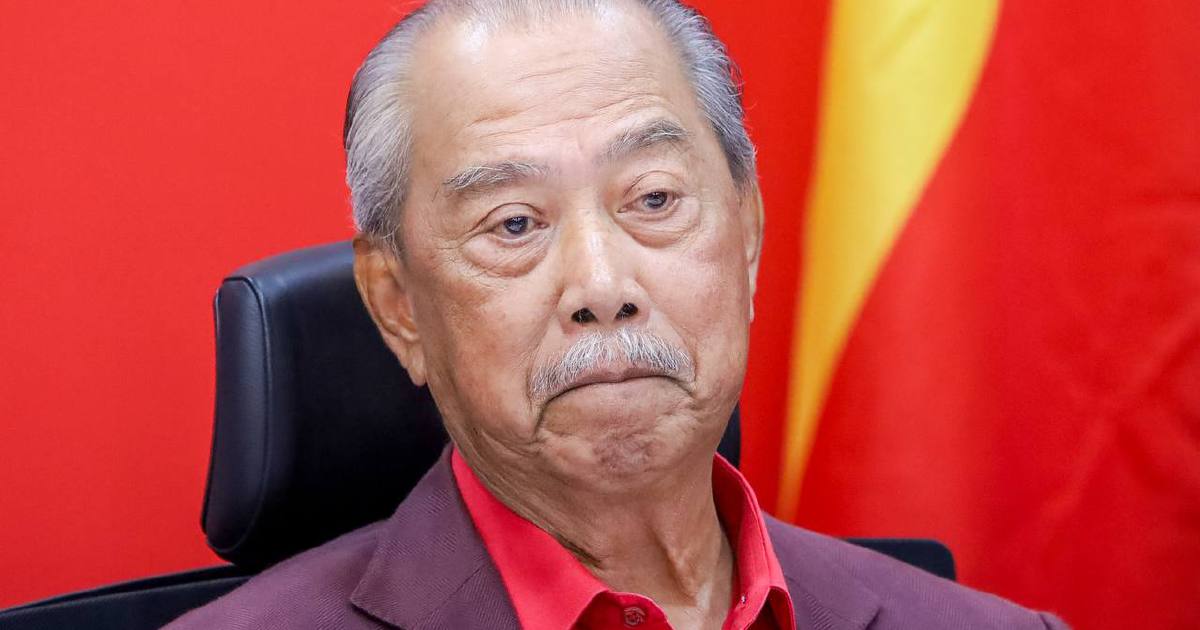
Parti Pribumi Bersatu Malaysia has affirmed its continuing commitment to Perikatan Nasional, with the party's leadership announcing it will field candidates in the forthcoming Johor and Negri Sembilan state elections under the coalition's shared symbol rather than fielding independent candidates. Party president Tan Sri Muhyiddin Yassin made this declaration, signalling stability within the opposition alliance even as Malaysia's political landscape remains fluid ahead of several significant electoral contests.
The decision represents a significant anchor point for Perikatan Nasional, which has endeavoured to position itself as a credible alternative political force following its loss of federal power in 2020. By committing publicly to remaining within the coalition framework and adopting its logo for state-level campaigns, Bersatu effectively underscores the alliance's cohesion at a critical juncture when internal strains could easily fracture the grouping. This move demonstrates that despite periodic tensions between coalition members, the broader strategic calculus favours maintaining unified electoral operations.
Bersatu's presence carries particular weight in both Johor and Negri Sembilan, where the party commands meaningful grassroots networks and parliamentary representation. The party's choice to contest under the PN banner rather than pursue individual party candidacies suggests confidence in the coalition's electoral machinery and branding, though it also indicates acceptance of a subordinate positioning relative to larger coalition components. The logistics of coordinating campaign activities, candidate selection, and resource allocation across multiple parties within a single electoral battle require substantial organisational capacity, and PN's track record on such coordination has been uneven.
The timing of this announcement carries strategic implications for the opposition bloc's broader repositioning effort. Malaysia's electoral cycle has accelerated markedly over recent years, with multiple state contests scheduled or anticipated across the peninsula. For Perikatan Nasional to function effectively as a national alternative, it must demonstrate capacity to field competitive candidate slates across geographically dispersed regions whilst maintaining ideological coherence and party discipline. Bersatu's reaffirmation of loyalty addresses one potential vulnerability, yet questions persist regarding the coalition's ability to manage larger ambitions, particularly as federal elections draw closer.
Negri Sembilan presents particular complexities given the state's historical voting patterns and the influence of Umno's traditional stronghold in the region. Perikatan Nasional's penetration into such territories remains incomplete, and relying on a unified coalition symbol in elections where voters retain strong attachment to established parties carries inherent risks. Conversely, the strategy allows component parties to shelter beneath collective branding whilst pursuing localised strategies that resonate with state-specific constituencies. The calibration between emphasising coalition unity and accommodating state-level particularity will substantially influence electoral outcomes.
Johor, meanwhile, represents different terrain altogether. The state has historically tilted towards Umno-led coalitions, though demographic shifts and political volatility in recent years have created openings for alternative political configurations. Bersatu's decision to participate under PN colours in a state where it has cultivated support over several electoral cycles signals determination to contest seriously rather than merely maintain symbolic presence. The party's experience governing at federal level, though disrupted, potentially offers campaign narrative advantages when positioned against competitors lacking such recent executive experience.
Within the broader Malaysian political ecosystem, Perikatan Nasional occupies an increasingly defined position as the primary opposition force at national level, particularly following Pakatan Harapan's continued governance in several states. The coalition's internal dynamics, however, involve perpetual tension between ideological factions and pragmatic electoral alliances. Bersatu's anchor role reflects both the party's substantial parliamentary numbers and the particular ideological affinity between Bersatu's leadership cadre and Perikatan Nasional's broader philosophical orientation. The party's commitment to remaining within PN effectively forecloses speculation about realignment toward competing opposition configurations.
Financial and organisational commitments for state-level campaigns accumulate quickly, and parties must calibrate spending across multiple simultaneous contests. By adopting coalition branding, Bersatu gains access to collectively-managed campaign infrastructure and messaging platforms, though this also implies surrendering some autonomy over tactical decisions. The trade-offs between centralised coalition management and individual party prerogatives become particularly acute during state elections, where local factors and personalities heavily influence voter behaviour.
Muhyiddin's explicit statement appears designed to settle internal speculation and external questioning regarding Bersatu's fundamental allegiances. Opposition figures and analysts have periodically questioned whether various component parties genuinely committed to long-term coalition permanence or instead treated membership instrumentally, shifting alignment as circumstances changed. The party president's declaration, therefore, functions as both internal consolidation mechanism and external messaging to supporters, party cadres, and ordinary voters regarding institutional stability.
Looking forward, the forthcoming Johor and Negri Sembilan contests will provide tangible measures of Perikatan Nasional's capacity to translate stated unity into effective electoral performance. The results will likely shape subsequent calculation regarding additional state elections and the ultimate federal contest, determining whether the coalition can genuinely challenge the Madani government's apparent electoral dominance. Bersatu's commitment, whilst welcome for coalition coherence, ultimately depends upon demonstrating competitive viability once voting actually commences.