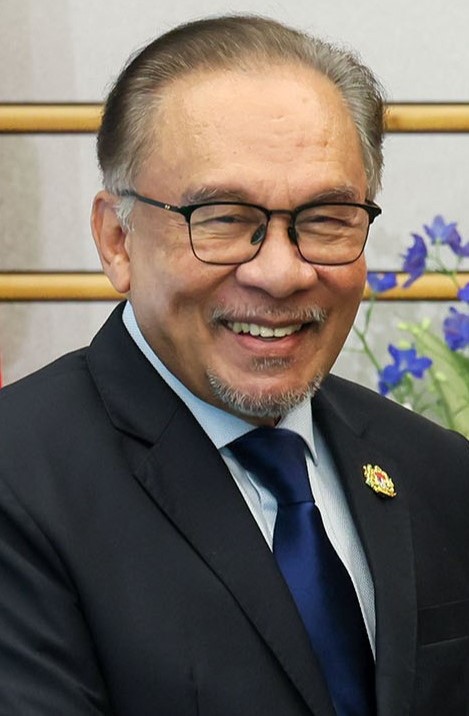
Bersatu has reaffirmed its commitment to remaining a member of the Perikatan Nasional coalition, with party president Tan Sri Muhyiddin Yassin making the declaration at the party's headquarters in Petaling Jaya on June 16. The announcement comes as the party prepares for two significant state polls scheduled for mid-year, signalling that Bersatu intends to contest both elections under the PN banner rather than independently or as part of any alternative political arrangement.
The two upcoming state elections—Johor on July 11 and Negeri Sembilan on August 1—represent crucial tests for the PN coalition's viability. By confirming that Bersatu will use the PN logo in both contests, Muhyiddin is publicly cementing the party's electoral strategy and, by extension, its political identity at a time when coalition stability remains uncertain. This unified branding across state-level campaigns suggests that PN intends to present a cohesive front to voters despite recent strains among its component parties.
Muhyiddin's statements carried an unmistakable emphasis on constitutional procedure and consensus-building within the coalition framework. He explicitly noted that no single party within PN possesses the unilateral authority to eject another member, highlighting instead that any such action would require adherence to the coalition's constitution and agreement from all relevant parties. This careful legal positioning reflects underlying tensions that have recently surfaced within PN's leadership structure, tensions that the party leadership appears determined to manage through procedural formality rather than allowing them to escalate into open conflict.
The timing of Muhyiddin's announcement gains additional significance when viewed against the backdrop of PAS's earlier decision to terminate all forms of political cooperation with Bersatu. The Islamist party's move represented a notable rupture in PN cohesion, raising questions about the stability of the broader coalition at a moment when it needed to present unity ahead of electoral contests. Muhyiddin's firm restatement of Bersatu's commitment to PN appears designed to counteract any perception that PAS's withdrawal signals a broader unravelling of the alliance.
For Malaysian political observers, the Bersatu-PAS split underscores the inherent fragility of coalition politics in the country's current landscape. Both parties had been part of PN's founding structure, yet fundamental disagreements—likely rooted in ideological differences and competition for influence—proved sufficient to trigger PAS's departure. The fact that Bersatu continues to insist on its PN membership despite losing a major coalition partner suggests either considerable confidence in the alliance's remaining strength or, conversely, a recognition that abandoning PN would leave the party politically isolated.
Muhyiddin's emphasis on constitutional procedures and consensus also carries implications for how PN might manage internal disputes going forward. By framing party removal as impossible without due process and broad agreement, he is effectively raising the bar for any future coalition disciplinary action. This approach could protect Bersatu from arbitrary expulsion but also potentially weakens PN's capacity to enforce discipline among its members—a structural vulnerability that opposition parties might seek to exploit.
The presence of senior Bersatu figures at the Supreme Leadership Council meeting where this announcement was made—including vice-presidents Datuk Dr Radzi Jidin and Datuk Seri Ahmad Faizal Azumu, as well as secretary-general Datuk Seri Mohamed Azmin Ali—underscored the statement's official status and the united front the party wished to project. This gathering of the party's top leadership suggested that the decision to reaffirm PN membership had been deliberately chosen and collectively endorsed rather than representing an isolated pronouncement by Muhyiddin.
For Johor and Negeri Sembilan, the PN contests will test whether the coalition's remaining structure can deliver electoral results. Both states have distinct political dynamics and voter demographics that may respond differently to PN's messaging in the absence of full coalition unity. Johor, in particular, has historically been a significant political arena where electoral outcomes carry weight beyond the state level, influencing perceptions of coalition strength nationwide.
The Malaysian political environment has become increasingly fragmented in recent years, with multiple political blocs competing for dominance and coalition arrangements constantly shifting. Bersatu's reaffirmation of its PN commitment must therefore be understood not only as an internal coalition matter but also as a strategic positioning exercise within this broader competitive landscape. The party is signalling to voters, potential allies, and internal members that it has chosen the PN platform as its chosen vehicle for political advancement.
Muhyiddin's careful insistence on constitutional protocols and consensus-building also reflects a broader trend in Malaysian politics toward more legalistic approaches to coalition management. Rather than relying on informal understandings or personality-driven relationships, party leaders increasingly invoke formal procedural requirements when defending their positions. This shift may offer greater predictability but could also create rigidity that hampers coalition adaptability.
As the Johor and Negeri Sembilan elections approach, the strength of Bersatu's commitment to PN—and PN's ability to function effectively as a coalition despite the PAS departure—will become apparent through electoral performance. These contests will provide the first substantial test of whether the remaining PN members can coordinate effectively and whether voters continue to view the coalition as a viable political option. The results will likely shape not only state-level politics but also calculations about coalition viability ahead of any future general election.