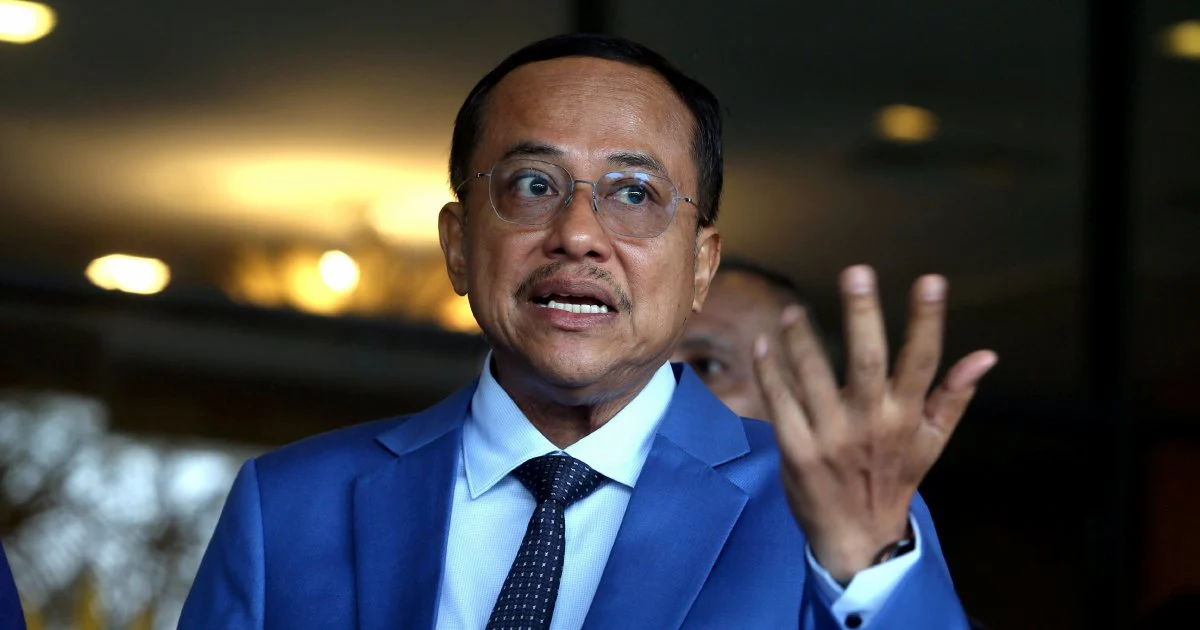
The internal tensions within Perikatan Nasional have intensified with fresh accusations that the coalition's chairman is failing to exercise meaningful leadership during a period of significant political instability. Bersatu information chief Datuk Tun Faisal Ismail Aziz has launched a pointed critique of Datuk Seri Dr Ahmad Samsuri Mokhtar's stewardship of the opposition bloc, suggesting that the PN leader has neglected his primary obligation to serve as an impartial arbiter and decision-maker for the entire coalition rather than advancing the narrow interests of any single member party.
The dispute underscores a persistent challenge that has plagued PN since its formation: the difficulty of maintaining cohesion among ideologically diverse and competing parties that are bound together primarily by a shared opposition to the ruling Pakatan Harapan administration. When component parties clash over strategy, resources, or public positioning, the coalition chairman's authority becomes crucial to preventing fractures that could render the entire alliance ineffective. According to Bersatu's complaint, Samsuri has failed to demonstrate this essential leadership capacity, instead behaving as though his responsibility extends only to PAS, the largest party within the coalition.
This criticism carries particular weight given Malaysia's contemporary political landscape, where opposition coalitions have become increasingly fragmented and unstable. The inability of PN's leadership to maintain internal discipline and unity could have ramifications far beyond the coalition's internal machinations, potentially affecting the balance of power in parliament and the country's broader political trajectory. For Malaysian voters and observers, such dysfunction raises serious questions about whether PN can present itself as a credible alternative government capable of managing complex national challenges.
Bersatu's grievances appear rooted in a fundamental disagreement about how PN should navigate current political crises and opportunities. When a coalition chairman fails to act decisively or appears to favour one component party over others, it creates an environment where smaller parties feel marginalised and larger ones grow emboldened to pursue unilateral courses of action. This dynamic has historically weakened opposition movements across Southeast Asia, as the competing ambitions of coalition members supersede the collective interest in maintaining organisational strength.
The accusation that Samsuri has "forgotten" his coalition chairmanship in favour of his apparent role as a de facto PAS leader is particularly damaging because it directly questions his fundamental fitness for the position. In political coalitions, the chairman is expected to transcend party loyalties and operate as a custodian of the broader alliance's interests. When members perceive that the chairman cannot or will not do this, confidence in the coalition's ability to function coherently evaporates. Bersatu's public articulation of this concern suggests that private discussions between the parties have failed to resolve the underlying issue.
For Malaysian observers, these developments are significant because they occur against a backdrop of the federal government's own challenges with coalition management. Pakatan Harapan has faced its own internal divisions and leadership questions, making the state of the opposition coalition equally consequential. A weakened and dysfunctional PN could actually benefit the ruling coalition by default, even if the government itself faces legitimacy questions. Conversely, a PN that could overcome its internal conflicts and present a unified front would create genuine political competition and pressure on the current administration.
The description of Samsuri's approach as "very irresponsible" indicates that Bersatu views this not merely as a difference of opinion but as a dereliction of duty that threatens the coalition's viability. Responsibility in a leadership position entails making decisions that may not please all parties equally, communicating clearly about coalition strategy, and ensuring that resources and opportunities are distributed fairly. When a leader fails to exercise these functions, the resulting vacuum gets filled by competing parties pursuing their own agendas, which inevitably destabilises the entire structure.
This conflict also reflects deeper questions about PN's original raison d'être. Formed initially as a vehicle to challenge Pakatan Harapan, the coalition never developed a robust institutional framework for internal dispute resolution or a shared ideological platform that could bind its diverse membership. Unlike some successful political coalitions elsewhere, PN lacks mechanisms for regular consultation and consensus-building among its constituent parties. This structural weakness becomes apparent whenever significant disagreements emerge, as appears to be happening now.
The timing of these public criticisms is also noteworthy. In Malaysian politics, complaints about coalition leadership typically emerge when internal discussions have broken down and parties feel compelled to appeal to their respective supporters and the broader public. This suggests that relationships between PN's leadership and component parties have deteriorated to a point where dialogue alone is insufficient, necessitating public pressure to force changes in how the coalition operates or who leads it.
For Bersatu specifically, maintaining visibility and relevance within PN becomes increasingly important given its diminished parliamentary representation compared to PAS. By publicly calling out the chairman for failing to exercise impartial leadership, Bersatu is signalling both to its own members and to the broader political community that it will not be sidelined or treated as subordinate to larger coalition members. This is a strategic necessity for smaller parties in any coalition arrangement.
The resolution of this dispute will likely determine whether PN can function as a coherent political force going forward. If Samsuri addresses these concerns through more engaged and balanced leadership, the coalition might stabilise. Conversely, if the criticism intensifies and other parties join Bersatu in questioning his suitability for the role, leadership change could become inevitable. Either scenario would have implications for Malaysia's opposition politics and the broader competitive landscape between the government and its challengers.